
Mimathyma ambica — Indian purple emperor
Mimathyma ambica, the Indian purple emperor, is a nymphalid butterfly of Asia known for its iridescent purplish sheen, forest canopy habits, and resemblance to other 'emperor' butterflies.
Overview
Mimathyma ambica, commonly called the Indian purple emperor, is a species in the brush-footed butterfly family (Nymphalidae). It occurs in parts of Asia and is noted for a subtle iridescence on the dorsal wing surface that gives adults a purplish or bluish appearance under certain lighting.
Image gallery
4 Images


Identification and characteristics
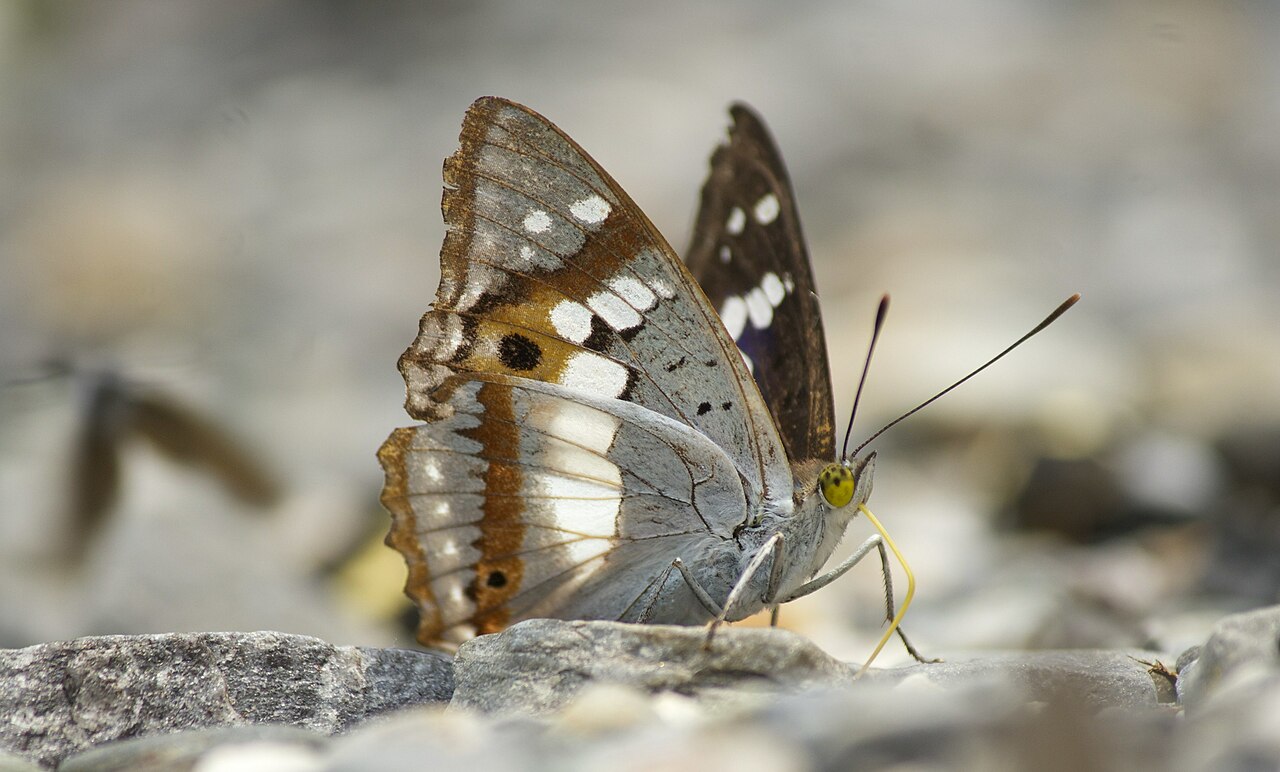
Adults typically show a contrast between darker ground color and lighter or iridescent reflections on the fore- and hindwings. Wing undersides tend to be more cryptic, helping resting butterflies blend with bark or leaves. Like other members of its family, it has reduced forelegs and a robust body.
Range, habitat and ecology
The species is native to regions of South and Southeast Asia, where it inhabits wooded landscapes such as deciduous and semi-evergreen forests. Adults are often associated with the forest canopy but may descend to tree trunks, trails and clearings to feed. Larvae develop on the leaves of woody plants and pupate on stems or sheltered surfaces.
Behavior and life cycle
- Flight: Adults are strong fliers; males may be territorial and engage in hilltopping or perch-and-sally behavior.
- Feeding: Adults commonly visit flowers for nectar and may also take tree sap, rotting fruit or other nutrient sources typical for nymphalids.
- Reproduction: Eggs are deposited singly or in small groups on host plants; caterpillars feed until pupation.
Significance and distinguishing facts
Although not as extensively studied as some temperate 'emperor' species, Mimathyma ambica is of interest for its iridescent wing scales and its role in forest butterfly communities. It can be confused with related emperor and admiral butterflies, but attention to wing pattern, size and behavior helps with identification.
Conservation status depends on local habitat conditions: maintaining forest habitat and host plant availability supports populations. For general references on nymphalid biology and identification, consult regional field guides and entomological resources.
Related articles
Author
AlegsaOnline.com Mimathyma ambica — Indian purple emperor Leandro Alegsa
URL: https://en.alegsaonline.com/art/65114