
Middle finger (third digit of the human hand)
The middle finger is the third digit of the hand. This entry explains its anatomy, movements, common injuries, cultural meanings of the gesture, and historical origins.
Overview
The middle finger, often called the long finger or third digit, sits between the index finger and the ring finger on the human hand. It is typically the longest finger and forms the central axis of the palmar surface. In anatomy texts it is referred to as digitus medius, digitus tertius, or digitus III.
Image gallery
2 Images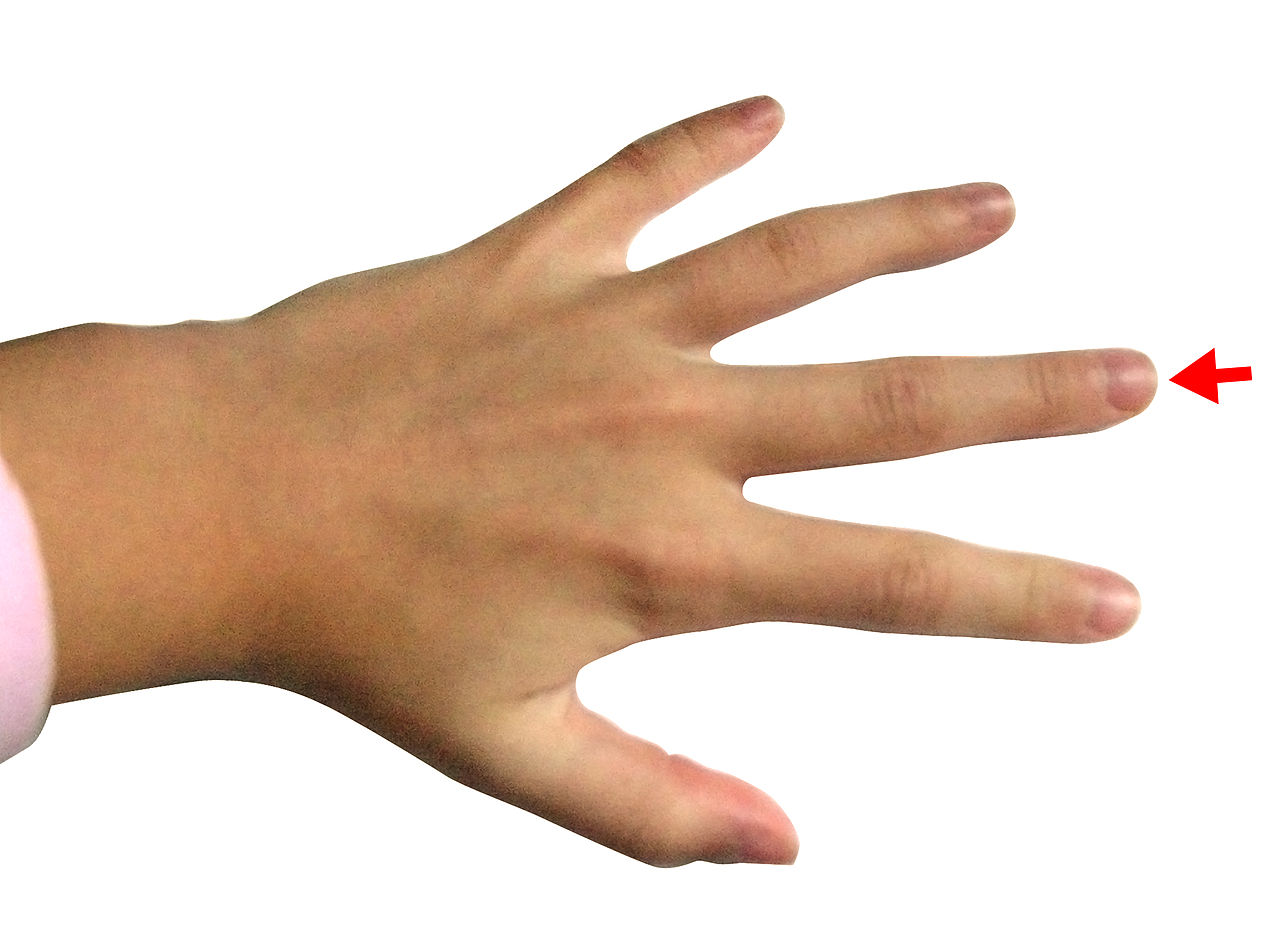

Anatomy and function
Structurally, the middle finger consists of a metacarpal bone and three phalanges (proximal, middle, distal) joined by the metacarpophalangeal (MCP), proximal interphalangeal (PIP) and distal interphalangeal (DIP) joints. Flexion is produced mainly by the flexor digitorum superficialis and flexor digitorum profundus tendons; extension is achieved by the extensor digitorum communis. Sensation on much of the palmar surface of the middle finger is supplied by the median nerve. Its length and central position contribute to precision grips, power grips and many fine motor tasks.
Common injuries and clinical notes
The middle finger is susceptible to sprains, dislocations, tendon injuries and fractures. Specific conditions include mallet finger (injury to the DIP extensor insertion), boutonnière deformity (central slip injury at the PIP), and osteoarthritis or inflammatory arthritis affecting the finger joints. Treatment ranges from splinting and physical therapy to surgical repair for severe tendon or bone damage.
Cultural meanings and gesture
Beyond biology, the middle finger has a prominent role as a communicative gesture. When extended alone it is widely recognized in many cultures as an obscene or insulting sign, variously called "giving the finger," "flipping the bird" or "flipping someone off." Context, intent and local customs determine whether the gesture is perceived as playful, provocative or deeply offensive. The expression of offense with this finger has social and sometimes legal implications, depending on situation and jurisdiction. See general discussion of gesture and social meaning.
History and etymology
The use of the middle finger as a deliberate insult dates back at least to classical antiquity. It appears in historical records and literature as a phallic or contemptuous sign; Roman writers used the Latin term digitus impudicus (indecent finger). Over centuries the gesture persisted and spread, taking on modern colloquial names and appearing frequently in popular culture, protests, and informal communication.
Notable distinctions and related uses
- The middle finger plays a central mechanical role in both gross and fine motor hand functions and is important to overall grip strength.
- Variations in length, dexterity and sensitivity occur among individuals and populations; these differences may affect tool use and handwriting.
- While commonly used as an insult in many Western cultures, other societies have different taboo gestures; understanding offense and context is important when communicating across cultures.
For anatomical study and clinical reference, consult standard medical sources on anatomy and hand surgery. Further reading on gesture and social meaning can be found in works on nonverbal communication and cultural anthropology.
Related articles
Author
AlegsaOnline.com Middle finger (third digit of the human hand) Leandro Alegsa
URL: https://en.alegsaonline.com/art/64677