
Mexicali: border capital of Baja California
Mexicali is the capital city of Baja California, Mexico, located on the US border opposite Calexico. A desert industrial and agricultural center with roughly 900,000 residents and a distinct cross-border culture.
Overview
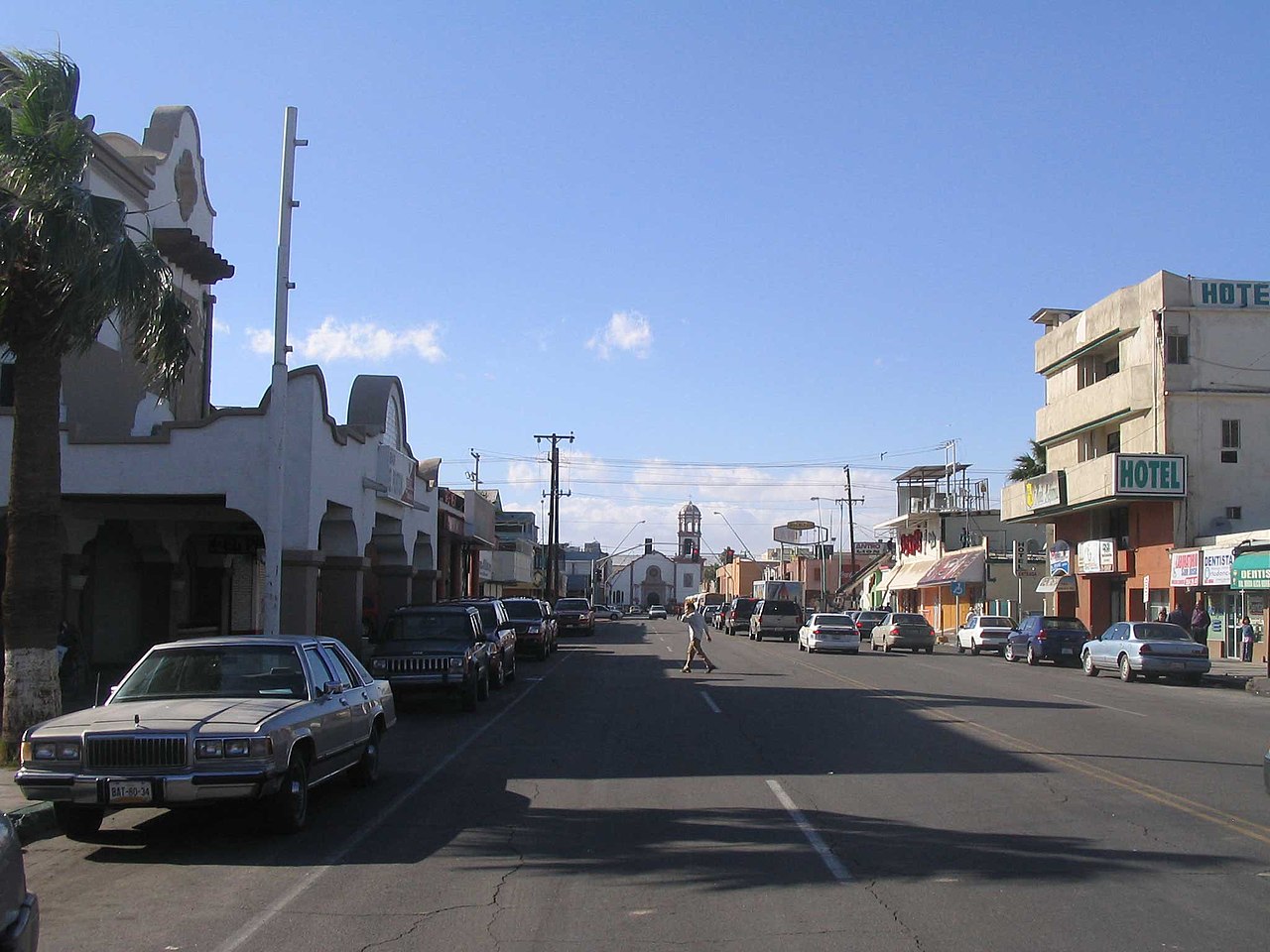
Mexicali is a major Mexican city on the international boundary between Mexico and the United States. It serves as the capital of the state of Baja California and lies directly across from the city of Calexico in California. The urban area developed where desert plains meet irrigated farmland and has become an administrative, industrial and cultural center for the region.
Image gallery
10 Images




Geography and climate
Located in a flat, low-lying valley, Mexicali experiences an arid, hot-desert climate with very hot summers and mild winters. Water for agriculture and industry historically has been supplied by irrigation projects diverting Colorado River waters and by local canals. The city's border position influences daily life, trade and transportation, and it is often cited as one of the northernmost large cities in Latin America (see note).
History and development
Mexicali grew rapidly after its founding in the early 20th century, when canals and farms attracted settlers and investment. Its name combines "Mexico" and "Calexico," reflecting the close tie to the neighboring US settlement. Over time the city expanded from an agricultural outpost into an urban center with manufacturing, services and public institutions.
Economy and infrastructure
The local economy blends several activities that depend on the border location and regional resources:
- Manufacturing and assembly plants (maquiladoras) oriented to export markets;
- Irrigated agriculture producing vegetables and other crops for domestic and international markets;
- Commercial services, cross-border trade and logistics tied to nearby ports of entry;
- Public administration and education, supporting regional governance and workforce training.
Population and culture
Mexicali's population is predominantly Hispanic/Latino in language and heritage, with a multicultural mix that includes long-established communities of migrants from other Mexican states and notable immigrant groups such as a Chinese-Mexican community. The city proper has roughly nine hundred thousand residents, while the wider metropolitan region supports additional towns and suburbs. Cultural life reflects border influences in food, music and daily cross-border interactions (demographic context).
Notable facts and distinctions
Several features distinguish Mexicali:
- It is the administrative capital of Baja California and a focal point for regional government and services.
- The city functions as part of a transborder urban zone with Calexico, with frequent movement of people and goods across the international line.
- Local environmental and water-management issues, including river and irrigation concerns, have shaped policy and planning.
- Higher-education institutions and cultural venues contribute to research, arts and a growing service sector.
For further general information about the country, state and region see resources on Mexico, Baja California, and cross-border relations with California and the United States. Additional context on northern Latin American cities is available through summaries linked at regional references.
Description
The city lives mainly from the processing of cotton grown in the surrounding area. Other job opportunities are offered by numerous US and international companies, e.g. Kenworth trucks, Sony, Pepsi Cola Company (with Frito-Lay/Sabritas; production of potato chips and other snacks), which have settled in Mexicali. Advantages for these companies are cheap Mexican labor and close proximity to the U.S. border and thus the San Diego metropolitan area. The distances to San Francisco and Los Angeles are also not great.
Similar to the Mexican city of Tijuana, Mexicali is a stepping stone for many Mexicans who want to enter the US illegally in search of the "American Dream". This is facilitated by the fact that the city is located directly on the border. Many of the immigrants fail to cross the border illegally and are stranded permanently in the city.
Mexicali has an international airport served by Aeroméxico and Volaris.
Mexicali is the sister city of Calexico on the US side, which also has a name that combines California and Mexico.
On April 4, 2010, the city was hit by a 7.2 magnitude earthquake in Baja California.
Population
Population development of the city
| Year | Population |
| 1990 | 438.377 |
| 1995 | 505.016 |
| 2000 | 549.873 |
| 2005 | 653.046 |
| 2010 | 689.775 |
| 2014 | 730.800 |
Population development of the metropolitan region
| Year | Population |
| 1950 | 66.000 |
| 1960 | 175.000 |
| 1970 | 266.000 |
| 1980 | 343.000 |
| 1990 | 606.000 |
| 2000 | 770.000 |
| 2010 | 938.000 |
| 2017 | 1.063.000 |
Related articles
Author
AlegsaOnline.com Mexicali: border capital of Baja California Leandro Alegsa
URL: https://en.alegsaonline.com/art/64313