
Metal leaf: decorative sheets of beaten metal used in gilding and ornament
Thin sheets of beaten metal used for gilding, decoration, art and culinary ornament. Covers types, properties, historical use, application techniques and distinctions like gold, silver and imitation leaf.
Metal leaf denotes extremely thin sheets of metal used primarily for surface decoration and gilding. The most familiar variety is gold leaf, but other metals — including silver, copper and alloys made to resemble gold — are also produced. Metal leaf is prized because certain metals are highly malleable and can be hammered or rolled into very fine foils that retain a continuous metallic surface while being flexible and lightweight.
Image gallery
2 Images
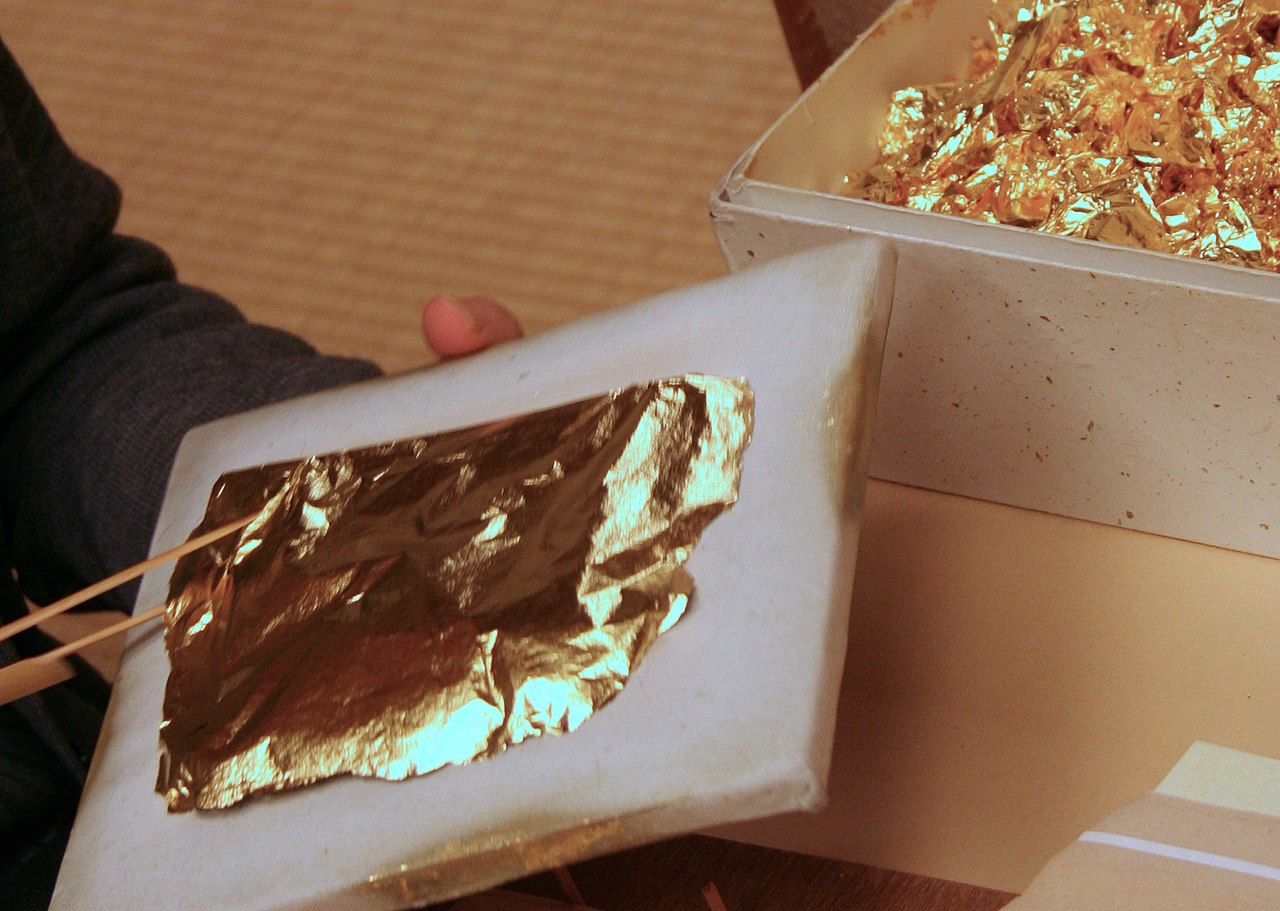
Characteristics and production
Leaf is typically made by repeatedly hammering or mechanically rolling metal into progressively thinner sheets. The finished thickness ranges from fractions of a micrometer to several micrometers, depending on the metal and intended use. Pure gold is especially suited to this process because it resists oxidation and does not tarnish, making it stable on exposed surfaces. Silver leaf is similarly thin but tarnishes over time unless protected. Imitation leaf — commonly called "gilding metal" or Dutch metal — uses copper-zinc alloys to mimic gold color at lower cost.
History and cultural use
Gilding with metal leaf has ancient roots: examples appear in Egyptian tombs, classical architecture, Byzantine icons and East Asian lacquer work. Throughout history gilding signified wealth, sanctity and artistic refinement. Techniques spread and evolved regionally, giving rise to specialized methods such as European water gilding, East Asian gold application on lacquer, and culinary silver leaf traditions in South Asia.
Techniques and applications
Applying metal leaf typically involves preparing a substrate, applying an adhesive called "size," laying the delicate leaf with a gilder's brush or tip, and then burnishing or sealing the surface. Common applications include picture frames, furniture, architectural ornament, religious icons and restoration of historic objects. In cuisine, extremely thin edible leaf is used as a decorative flourish — for example, the South Asian tradition of vark, a silver leaf applied to sweets and confections.
Distinctions and practical notes
- Gold leaf: resists tarnish, used where longevity and prestige are desired.
- Silver leaf: bright but prone to oxidation unless sealed.
- Imitation leaf: economical, suitable for many decorative purposes but differs in color and aging.
Working with metal leaf requires care: sheets are extremely light and can be disrupted by air movement, oils from the skin can mar adhesion, and specialized tools improve results. Conservators and artisans choose leaf type and application method to balance aesthetics, durability and cost.
Related articles
Author
AlegsaOnline.com Metal leaf: decorative sheets of beaten metal used in gilding and ornament Leandro Alegsa
URL: https://en.alegsaonline.com/art/64155