
Coat of arms of Mexico
National emblem of Mexico: its design, Aztec origin, symbolic elements (eagle, snake, cactus, wreath), historical evolution and modern usage on the flag and state symbols.
The coat of arms of Mexico is the principal national emblem that appears at the center of the Mexican flag. It depicts a bird, commonly represented as a golden eagle, devouring or holding a serpent while perched on a prickly pear cactus that grows from a rock rising from a lake. Surrounding the scene are branches of oak and laurel tied with a ribbon in the national colors. The image is a modern rendering of a much older pictographic motif derived from the Mexica (Aztec) tradition and continues to serve as Mexico’s most recognisable symbol.
Image gallery
4 Images

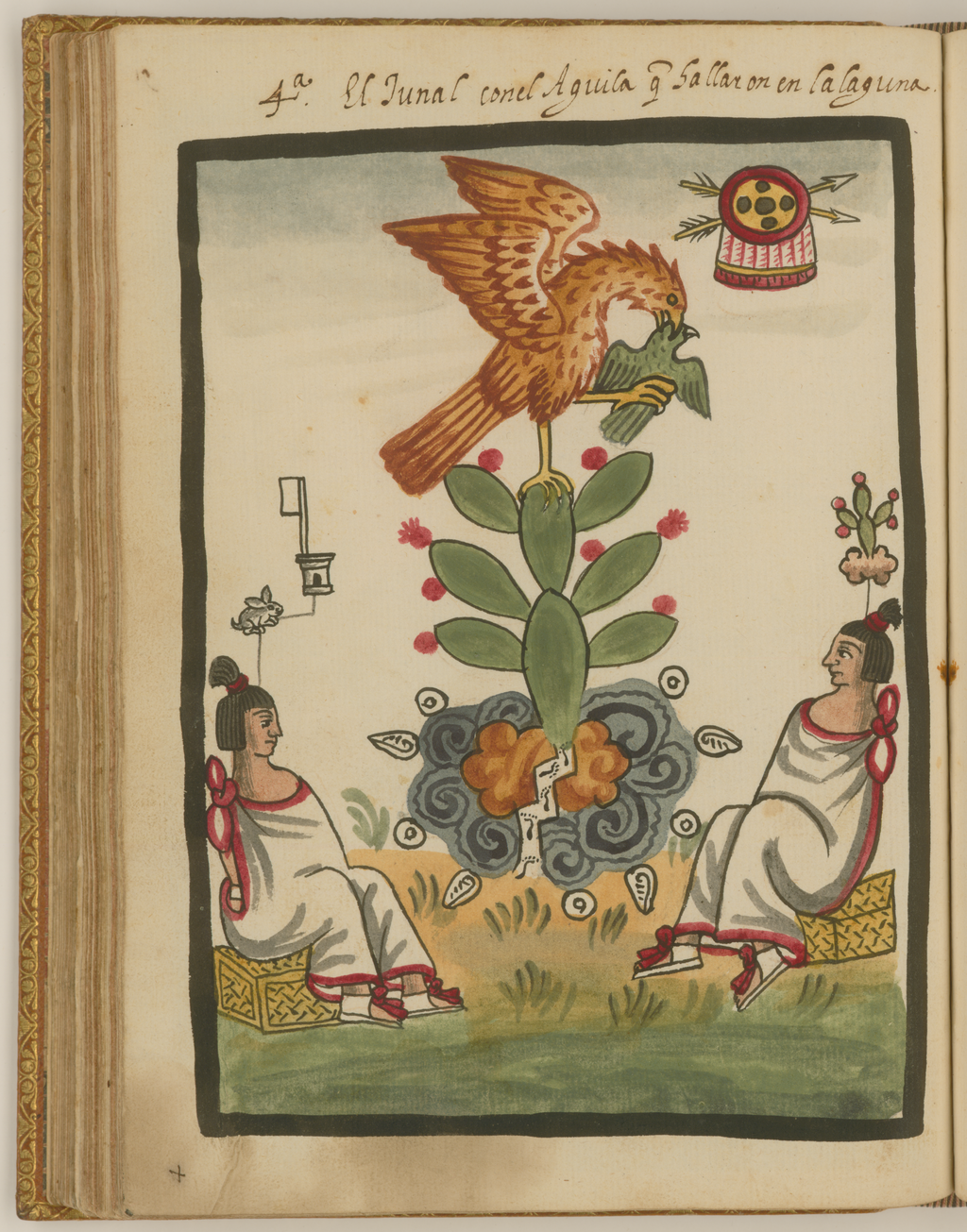

Design and main elements
- The eagle: Shown in profile, wings partially open, the bird is usually identified as the golden eagle; it represents bravery and the Mexica origin story. Eagle.
- The snake: Held in the eagle’s beak or talon, the serpent has been interpreted as an emblem of wisdom, an enemy or a complementary natural force. Snake.
- The cactus and rock: A nopal cactus grows from a stone set in water, symbolizing the site where the Mexica settled.
- Water and lake: The rock and cactus rising from a lake recall the shallow lakes of the Basin of Mexico and the foundation of a city on an island.
- Wreath: Oak and laurel branches form a semicircle beneath the scene, representing strength and victory, and are bound by a ribbon in green, white and red.
The emblem is more than a decorative motif; it is iconographic shorthand for a founding legend. According to the Mexica account, their god Huitzilopochtli instructed them to look for a sign: an eagle perched on a cactus eating a snake. They saw that sign on a small marshy island in the middle of Lake Texcoco and established their capital, Tenochtitlan. Over time the inhabitants developed chinampas—artificial islands and gardens—that transformed the lake environment and allowed the city to flourish; the city later became the political center of the Aztec Empire.
After the arrival of Spanish forces and the Spanish conquest, Tenochtitlan was destroyed and colonial institutions supplanted indigenous ones. When Mexico achieved independence from Spain, leaders adopted the eagle-and-cactus motif to assert continuity with pre-Hispanic origins and to symbolize a sovereign Mexican identity. Since then the motif has appeared on flags, seals, coins and official documents with stylistic changes that reflect political eras; for example, imperial regimes used crowned eagles while republican forms favored the open-winged bird.
The modern, standardized depiction of the coat of arms was refined during the 19th and 20th centuries to reconcile historical iconography, artistic conventions and symbolic clarity for state use. The image is prescribed for official applications and is protected by national regulations that specify proportions, colors and contexts of use. It appears on government stationery, currency, passports, military insignia and public buildings, and it is a central emblem in civic rituals and education.
Interpretation of the emblem’s elements varies among historians, artists and the public. Debates touch on whether the eagle should be strictly naturalistic or stylized, the precise meaning of the serpent, and the degree to which the modern image reproduces an Aztec pictograph or is a post‑conquest reinterpretation. Regardless of technical debates, the coat of arms remains a concise visual statement of Mexico’s layered history—indigenous foundation, colonial transformation and modern nationhood—and continues to be a pervasive emblem of national identity around the country and in Mexican communities abroad.
For further reading about the badge on flags, historic versions and legal specifications see official resources and detailed histories of Mexican symbols: Central Mexico and geography, the national flag, accounts of the founding of Tenochtitlan, and background on the Aztec Empire. Additional context appears in discussions of pre‑Hispanic religion and leaders such as Huitzilopochtli, narratives of the Spanish conquest, and materials about the nation’s path to independence. Official iconography guidelines and reproductions can be consulted through governmental publications and museum collections that document changes in style over time. Eagle and snake motifs also appear widely in Mexican art and popular culture.
Questions and answers
Q: What is the origin of the Mexican flag?
A: The Mexican flag contains a coat of arms which is derived from an Aztec symbol depicting an eagle with a snake in its mouth. This symbol was adopted to commemorate Mexico's Aztec heritage after it won independence from Spain in 1810.
Q: Who were the Mexica people?
A: The Mexica people were a wandering tribe looking for a permanent settlement in modern day central Mexico during the early 14th century. They survived by hunting and gathering and were often hired to fight as mercenaries for city-states scattered throughout the region.
Q: What did their god, Huitzilopochtli, tell them to do?
A: According to legend, their god, Huitzilopochtli, told them to establish a city of their own at a site where they would find an eagle eating a snake on top of a cactus.
Q: Where did they find this eagle?
A: The people saw the eagle on a small, swampy island in the middle of the shallow Texcoco lake.
Q: How did they survive there?
A: The Mexica invented a resourceful system of gardening called chinampas which allowed them to grow small gardens and eventually dry out the lake.
Q: When was Tenochtitlan completed?
A: In 1325, they completed construction of Tenochtitlan - which became the capital of Aztec Empire - dominating central Mexico until its destruction by Spanish Conquistadores led by Hernando Cortes.
Q: Who destroyed Tenochtitlan?
A:Tenochtitlan was destroyed by Spanish Conquistadores led by Hernando Cortes
Related articles
Author
AlegsaOnline.com Coat of arms of Mexico Leandro Alegsa
URL: https://en.alegsaonline.com/art/64319
Sources
- kwintessential.co.uk : "Mexico"
- sheppardsoftware.com : "Unique Facts about Mexico: Tenochtitlan"
- ghsd-curriculum.com : "ghsd-curriculum.com - Informationen zum Thema ghsd-curriculum"
- sonsofdewittcolony.org : "Mexican Independence"
- exampleessays.com : exampleessays.com/viewpaper/45177.html
- kwintessential.co.uk : kwintessential.co.uk