
Menarche
Menarche is a girl’s first menstrual period and a key milestone in puberty, shaped by genetics, health, nutrition, and environment.
Menarche is the first menstrual period in a girl or young woman. It marks an important stage in the development of the female reproductive system and is often treated as one of the central events of puberty. Although it signals that ovulation and pregnancy may eventually become possible, it does not mean that a person is immediately fully mature physically or emotionally.
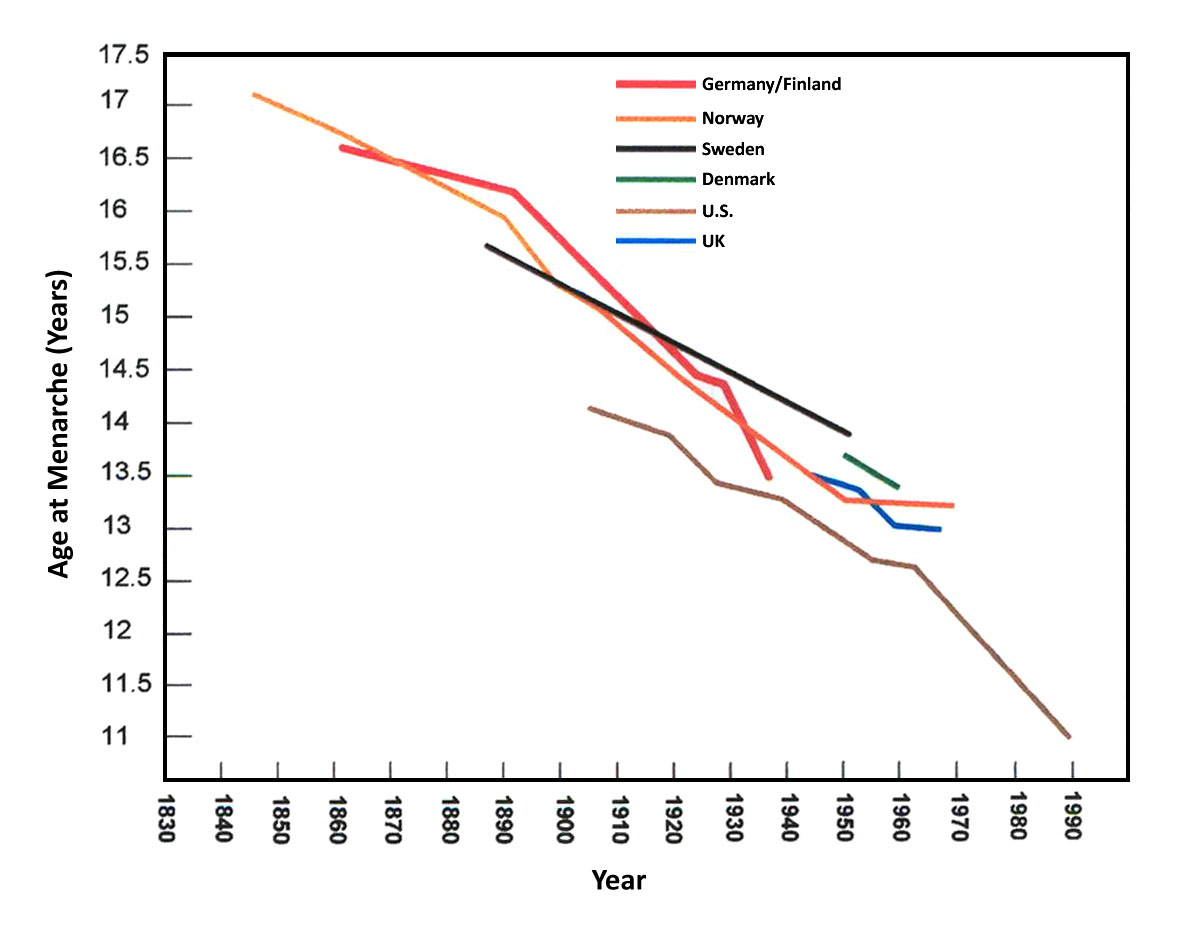
The age at which menarche begins varies widely. In many populations it occurs in the early teenage years, commonly around age 12 or 13, though individual timing differs. Reported averages in North America are near 12.5 years in the United States and about 12.75 years in Canada. Health professionals generally regard a broad range of timing as normal.
Image gallery
3 Images

What affects the timing
Menarche is influenced by several factors, including inherited traits, overall health, body fat, nutrition, and broader environmental conditions. Good access to food and general childhood health are associated with earlier average onset in many populations, while chronic illness or significant undernutrition can delay it. Hormonal changes driven by the brain and ovaries are the immediate biological mechanism, but the timing is shaped by biology as well as social and environmental conditions.
Why it matters
From a medical perspective, menarche is a normal sign that the menstrual cycle has started, but the first periods are often irregular. Cycles may be unpredictable for months or even a few years as the body establishes regular hormonal patterns. This is one reason menarche is usually discussed together with broader reproductive health and not treated as a stand-alone event.
From a social and cultural perspective, menarche has long carried special meaning. In many societies it has been linked to ideas about adulthood, fertility, and changing family expectations. At the same time, the experience is personal and can range from ordinary to confusing or stressful, especially if a girl has not been prepared for it. Understanding the process helps reduce fear and stigma.
Menarche and menstruation
Menarche is not the same as menstruation in general. Menstruation is the recurring shedding of the uterine lining, while menarche refers specifically to the first occurrence. After menarche, periods may be light, irregular, or accompanied by cramps, breast tenderness, or mood changes. These symptoms are common, but severe pain or very heavy bleeding may need medical attention.
- First period: Menarche is the beginning of menstrual bleeding.
- Puberty milestone: It usually happens after other signs of puberty have started.
- Variable timing: Age of onset differs by person and population.
- Health context: Nutrition, body composition, and illness can influence it.
Because it is a normal developmental event, menarche is best understood as part of the wider transition from childhood to reproductive maturity. In health education, clear information about what to expect can make the experience easier and support healthier attitudes toward menstruation and the body. For this reason, menarche remains an important topic in medicine, education, and public health, especially when discussing fertility and adolescent development.
Related articles
Author
AlegsaOnline.com Menarche Leandro Alegsa
URL: https://en.alegsaonline.com/art/63775