
Melk Abbey (Stift Melk) — Benedictine abbey on the Danube
Baroque Benedictine monastery in Melk, Lower Austria, overlooking the Danube. Renowned for its Baroque architecture, historic library, and central role in the Wachau UNESCO cultural landscape.
Overview
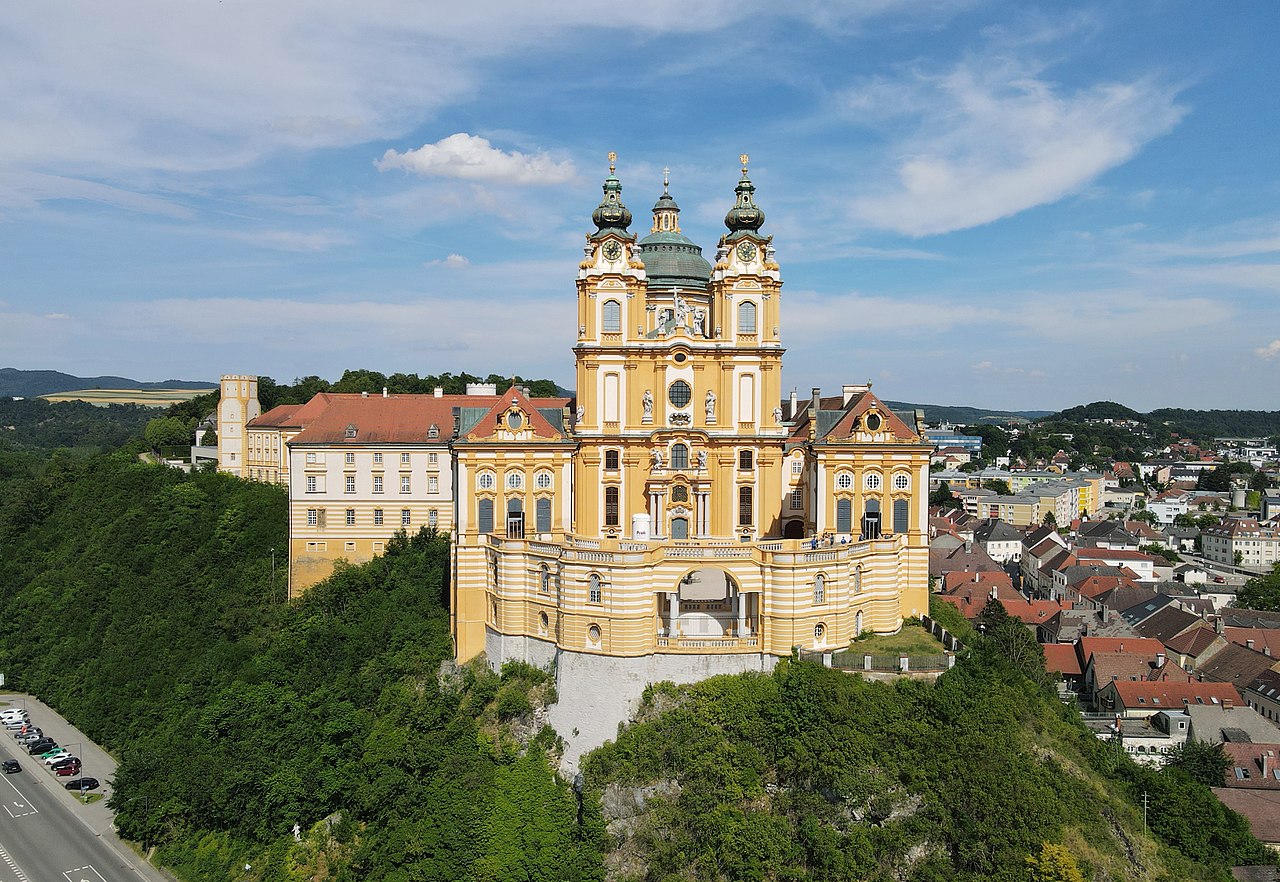
Melk Abbey, known in German as Stift Melk, is a Benedictine monastic foundation perched above the Danube river close to the city of Melk in Lower Austria. Its prominent position and striking silhouette make it a visual anchor of the Wachau valley. The complex is celebrated both as an active religious house and as a major cultural landmark included by UNESCO among the region's World Heritage assets.
Image gallery
10 Images


Architecture and principal features
The present monastic ensemble is largely the product of an early-18th-century reconstruction in a richly decorated Baroque idiom carried out under Benedictine patronage. Visitors note its monumental façade, grand staircase, and an ornate church interior where frescoes, gilding and formal spatial sequences express the period's theatrical aesthetic. Important internal features include:
- the imperial marble hall and ceremonial stair;
- the church with high altar and extensive ceiling frescoes;
- the historic abbey library, with illuminated manuscripts and early printed books.
History and development
Melk's origins reach back to the medieval period when a monastic community became established on the site. After a destructive fire in 1297 the abbey experienced several phases of rebuilding and embellishment. In the early 18th century the complex was comprehensively redesigned in the Baroque manner, producing much of the appearance seen today while keeping its continuous religious and educational functions.
Uses, collections and education
The abbey remains inhabited by Benedictine monks and operates a long-established monastic school. Its library is among the most important monastic collections in Central Europe, valued for medieval manuscripts, theological works and early prints that illuminate religious, cultural and intellectual life across centuries.
Cultural importance and visiting
Beyond its worship and scholarly roles, Melk Abbey serves as a symbol of the Wachau landscape and of Baroque monastic culture in Austria. It attracts scholars and tourists for its architecture, art and historical collections. Practical visitor information and research resources are provided on-site and through institutional channels; the complex continues to be an active center for liturgy, education and heritage preservation.
Questions and answers
Q: What is Melk Abbey?
A: Melk Abbey is a Benedictine abbey located near the city of Melk in Lower Austria.
Q: Where is Melk Abbey located?
A: Melk Abbey is located on the Danube, near the city of Melk in Lower Austria.
Q: What is Wachau?
A: Wachau is a region in Austria where Melk Abbey is located.
Q: Is Melk Abbey a UNESCO World Heritage Site?
A: Yes, Melk Abbey is a UNESCO World Heritage Site.
Q: Has Melk Abbey ever experienced a fire?
A: Yes, Melk Abbey was almost totally destroyed in a fire on 14 August 1297.
Q: When was Melk Abbey rebuilt?
A: Melk Abbey was rebuilt in Baroque style at the beginning of the 18th century.
Q: What kind of abbey is Melk Abbey?
A: Melk Abbey is a Benedictine abbey.
Related articles
Author
AlegsaOnline.com Melk Abbey (Stift Melk) — Benedictine abbey on the Danube Leandro Alegsa
URL: https://en.alegsaonline.com/art/63664