
Marriage (Same Sex Couples) Act 2013 (England and Wales)
UK Act of Parliament that legalised same-sex marriage in England and Wales, established procedural rules, and protected religious bodies and celebrants from compulsion while allowing conversion of civil partnerships.
Overview
The Marriage (Same Sex Couples) Act 2013 is primary legislation passed by the Parliament of the United Kingdom that permitted same-sex couples to marry in England and Wales. The Act changed elements of existing marriage law to allow civil marriage and certain religious marriages between partners of the same sex, while explicitly addressing the interaction between marriage, civil partnership and religious freedom. It applies only to England and Wales and does not alter the law in Scotland or Northern Ireland, each of which has its own legislative route for marriage law reform.
Image gallery
2 Images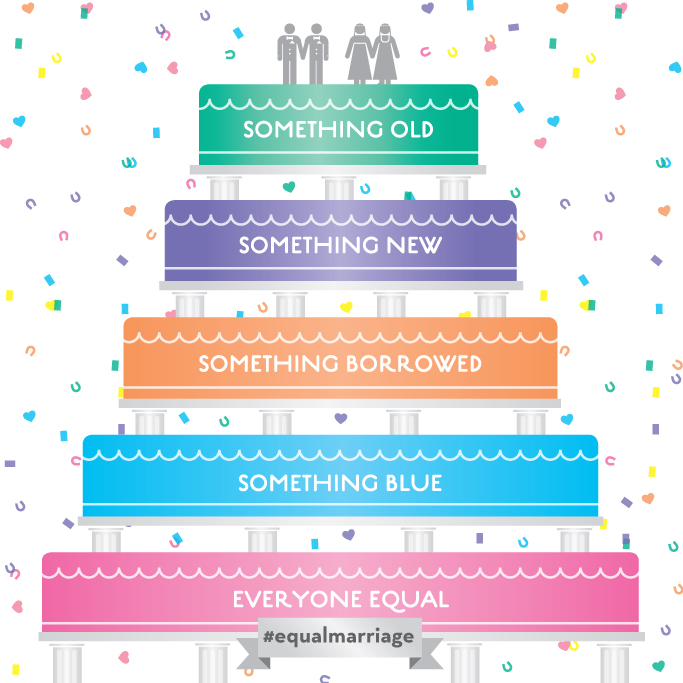

Key provisions
The Act contains a number of practical and legal provisions that implemented same-sex marriage without automatically imposing new duties on religious bodies. Important features include:
- Provision for civil marriages between persons of the same sex, conducted by registrars.
- Rules allowing religious organisations and individual celebrants to decide whether to solemnise same-sex marriages, so that no religious body or minister is compelled to take part.
- Mechanisms enabling a couple in an existing civil partnership to convert that partnership into a marriage if they chose.
- Amendments to statutory language so that references to husband and wife in some contexts were replaced by gender-neutral terms where appropriate.
Legislative history
The Bill was introduced into Parliament in early 2013 after several years of political and public debate about extending marriage to same-sex couples. The government allowed a free vote for its Members of Parliament, and the measure progressed through the usual stages in both Houses. The reforms were the culmination of policy work begun in the previous parliamentary term and reflected cross-party discussion as well as campaigning by equality groups and religious organisations. The official text of the Act and parliamentary debates are available from the legislative record and government publications; see the original Act for the authoritative wording via the Act text and parliamentary materials at Parliament.
Impact and significance
In practical terms the Act extended the legal institution of marriage to same-sex couples in England and Wales, giving them the same legal rights and responsibilities as opposite-sex married couples in areas such as inheritance, pensions and taxation. By providing a route to convert civil partnerships into marriages, it also addressed the relationship between two parallel legal forms of partnership. Supporters described the law as a major advance for equality and family law; opponents raised concerns about religious liberty and the consequences for certain institutions, which the legislation sought to address through opt-in provisions for religious celebrants.
Distinctions and notable facts
The Act is territorially limited and should be read alongside subsequent legislative developments in other parts of the United Kingdom. Scotland proceeded by means of separate Scottish Parliament legislation, while Northern Ireland followed a different path. The Act also established a model in which statutory recognition of same-sex marriage was accompanied by explicit protections for the conscience and governing rules of religious organisations, a balance that influenced debates in other jurisdictions. Further information about how the Act applies to marriages and civil partnerships can be found in official guidance and explanatory notes, for example through government or parliamentary resources such as guidance documents.
Overall, the Marriage (Same Sex Couples) Act 2013 represents a significant change to family law in England and Wales, reflecting shifting public attitudes and an effort to reconcile equal access to marriage with protections for religious practice.
Related articles
Author
AlegsaOnline.com Marriage (Same Sex Couples) Act 2013 (England and Wales) Leandro Alegsa
URL: https://en.alegsaonline.com/art/62227
Sources
- publications.parliament.uk : "Marriage (Same Sex Couples) Bill"
- lynnefeatherstone.org : "Lynne Featherstone MP announces government consultation on equal marriage"
- homeoffice.gov.uk : "Equal marriage: The Government's response"
- pinknews.co.uk : "Lib Dem MP Gordon Birtwistle: 'Gay marriage is just not on'"