
Love's Labour's Lost
A late-16th-century comedy by William Shakespeare, notable for dense wordplay, courtly satire, and an atypical postponing ending; revived more often from the 20th century onward.
Overview
Love's Labour's Lost is a comedy by William Shakespeare, generally dated to the late 1580s and 1590s. The play follows a young ruler and three companions who swear off the company of women to pursue study and ascetic practice, only to be undone when a group of ladies arrives at court. The work is best known for its dense verbal wit, elaborate rhetorical games and theatrical set pieces rather than a tightly driven plot.
Image gallery
10 Images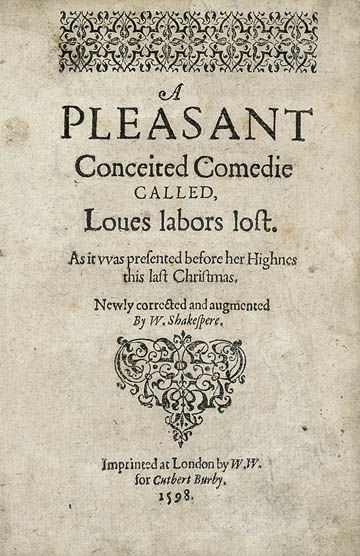

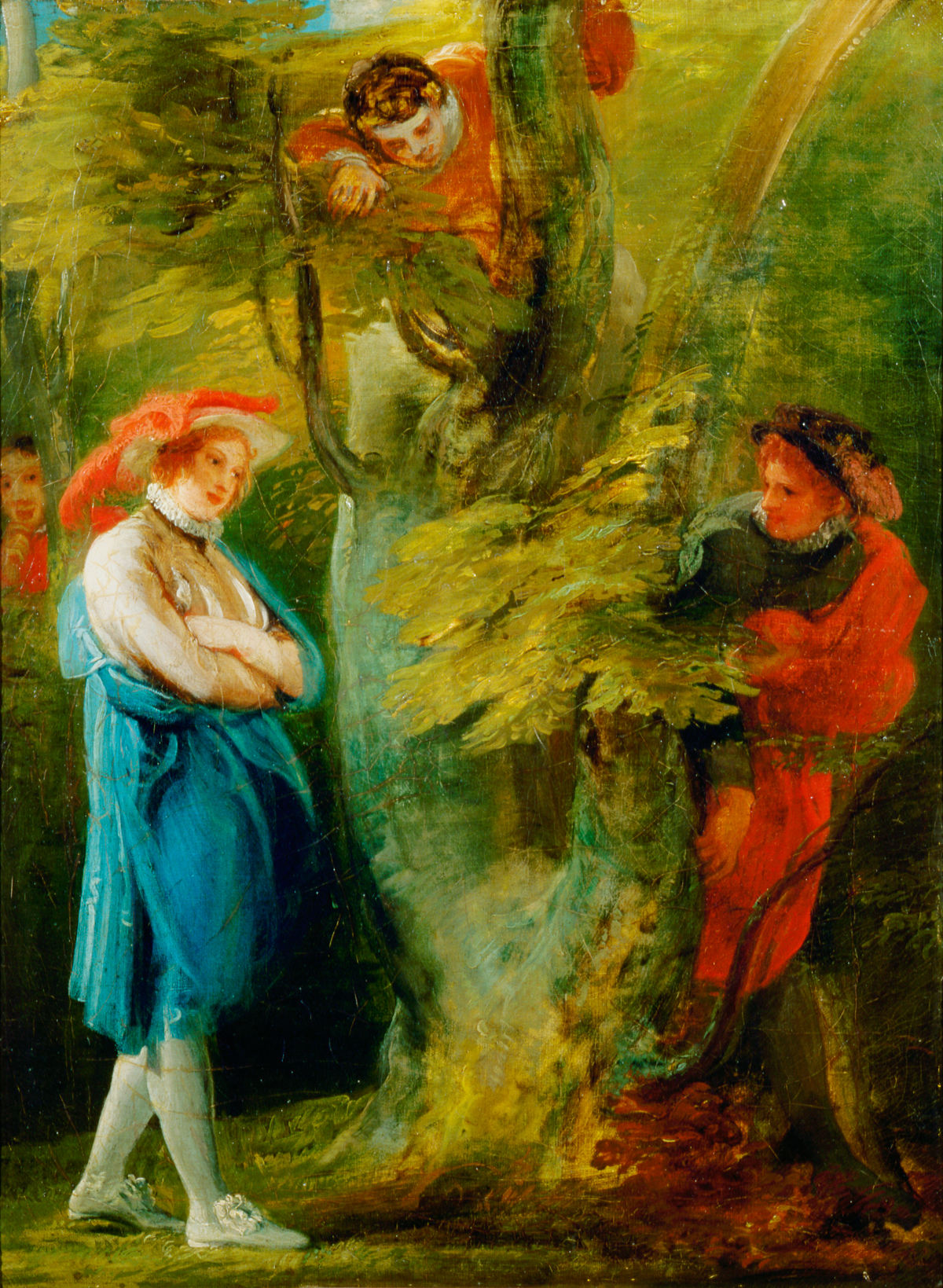


Date, texts and publication
Scholars place the play in the late sixteenth century; its language and topical allusions point to an early phase of Shakespeare's career, though exact dating remains uncertain. The play survives in early printed editions and later in collected forms, and editors warn readers that some jokes and references were topical to Elizabethan audiences and can be obscure today.
Plot summary
The central action concerns the King of Navarre and his three companions—who attempt to renounce love and frivolity—and the arrival of the Princess of France and her attendants, who spark romantic rivalries and witty contests of language. The play culminates not in immediate marriages but in a postponement: news arrives that requires mourning, and the promises of marriage are deferred for a period, an ending that lends the comedy an unexpected note of restraint and poignancy.
Characters and themes
Main figures include the ruler and his three followers, comic suitors and servants, and the Princess with her ladies. Major themes are the contrast between intellectual pride and sensual desire, the theatrical or performative nature of courtly love, the limits of language to control life, and a satirical treatment of pedantry and boastfulness. The play frequently parodies Petrarchan conceits and courtly etiquette.
Language and style
Shakespeare blends blank verse and prose, invents puns and elaborate rhetorical conceits, and includes songs and masque-like interludes. Its verbal richness has appealed to critics but can make comprehension difficult for modern readers; annotated editions and recorded performances often help convey the play's sound and wit.
Performance and reception
The play was historically less staged than some of Shakespeare's other comedies, in part because its topical jokes and intricate wordplay are challenging to modern taste. From the twentieth century it has seen renewed attention: productions have emphasized either the courtly spectacle, the play's comic set pieces, or the underlying melancholy of the postponing ending. Directors and scholars continue to experiment with musical and visual approaches to clarify its language and tone.
Further reading and resources
- Consult an annotated edition or scholarly introduction for notes on language and historical allusions; a modern edition will help unpack puns and references. Learn more.
- Watch varied stagings and adaptations to appreciate the play's rhythm and music; recordings can clarify scenes that feel obscure on the page. Performance guides.
- For broader context on Shakespeare's early comedies and rhetoric, see general surveys of his works and contemporary Elizabethan court entertainment. Context and analysis.
Related articles
Author
AlegsaOnline.com Love's Labour's Lost Leandro Alegsa
URL: https://en.alegsaonline.com/art/59564