
Marionette (string puppet): history, parts, techniques and uses
A marionette is a jointed puppet controlled from above by strings or wires. This article describes its construction, historical development, manipulation techniques, cultural roles and how it differs from other puppet types.
Overview
A marionette is a puppet whose movable parts—head, arms, legs and sometimes facial features—are operated from above by strings or thin wires attached to a control device, commonly called a controller or cross. Puppeteers manipulate the lines to create lifelike movement of limbs and posture; the term generally denotes figures worked from overhead rather than puppets moved from within, by rods, or by shadow illumination.
Image gallery
10 Images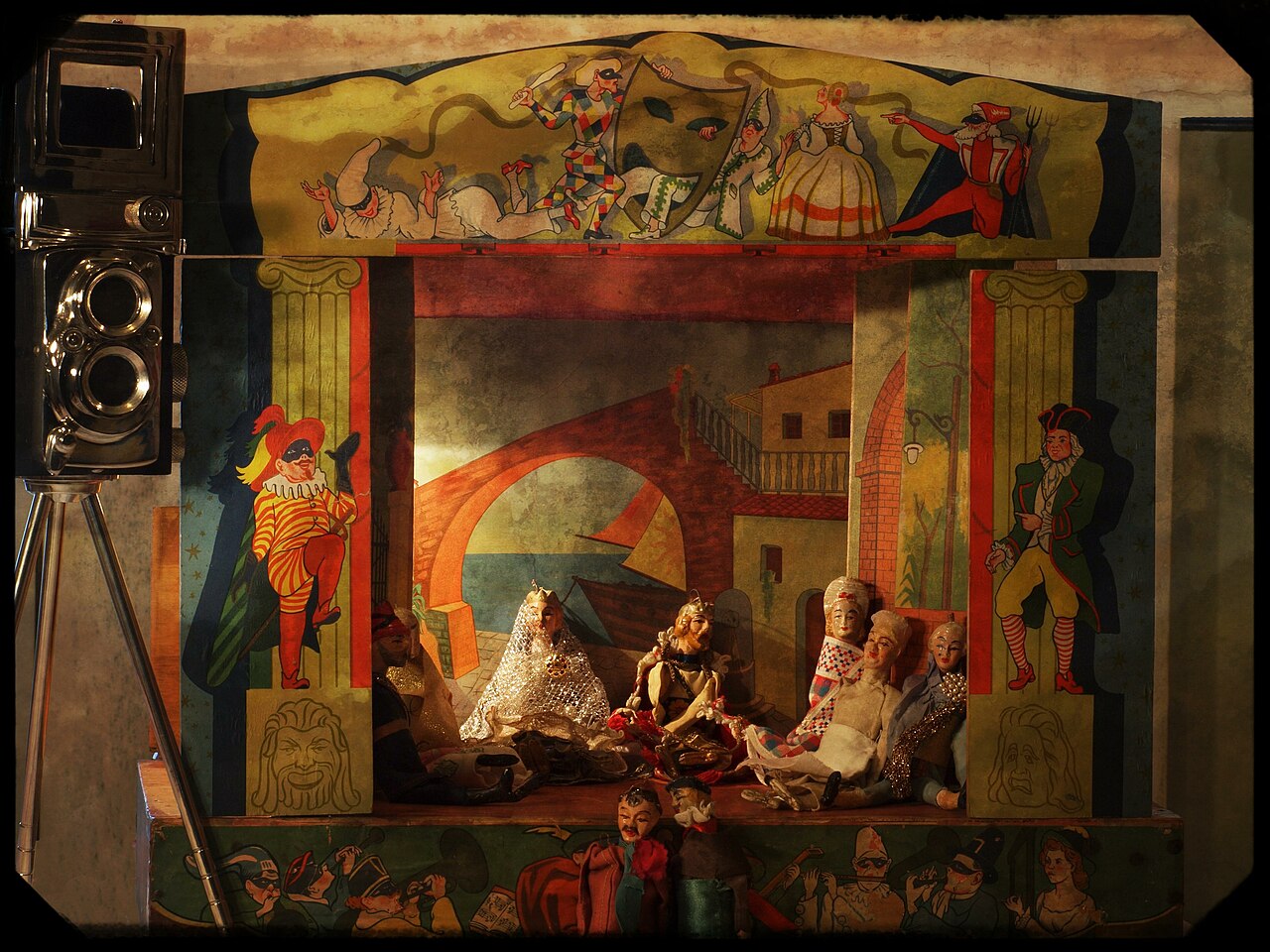


Parts and construction
Typical components include a head, torso and jointed limbs with attachment points for strings at the skull, shoulders, elbows, hands, hips, knees and feet. Materials range from carved wood and papier-mâché to cloth, foam and modern plastics. Joints may be simple swivels or more complex ball-and-socket fittings to permit natural arcs. The controller transfers subtle hand motions into coordinated limb movement; good balance and correct string length are essential for convincing gestures.
History and traditions
Puppetry is one of the oldest performing arts and string-controlled figures appear in many regions. In Europe the marionette developed into theatrical forms used for religious pageants, popular entertainment and later modern theatre. Other cultures evolved their own string or rod traditions: for example, South Asian string puppetry remains a distinct folk form. Through the 18th and 19th centuries marionette theatre was common in festivals, street fairs and courtly entertainments; collectors and museums today preserve both historic figures and techniques.
Performance techniques
Manipulation can be a solo skill or involve several operators cooperating on a single figure. Puppeteers learn to control weight, timing and line tension to simulate walking, turning, dancing and nuanced gestures. Techniques include layered motion (moving one string at a time), using momentum for natural steps, and coordinating head and eye orientation. Contemporary productions may combine strings with rods, internal linkages or electronic mechanisms to expand range and support lip-sync or complex articulation.
Uses and significance
Marionettes appear in theatrical productions for children and adults, in folk storytelling, satire and cultural ceremonies. They are used in education to explain historical events and social themes, and in professional theatre for pieces that require stylized nonhuman movement. Craftsmanship, repair and teaching sustain regional styles in festivals, schools and conservation programs.
Distinctions
- Marionette: controlled mainly from above by strings or wires.
- Hand (glove) puppet: worn over the hand and moved from inside.
- Rod puppet: manipulated with sticks attached to limbs or body.
- Shadow puppet: flat figures lit to cast silhouettes on a screen.
Related articles
Author
AlegsaOnline.com Marionette (string puppet): history, parts, techniques and uses Leandro Alegsa
URL: https://en.alegsaonline.com/art/62048