
Macbeth: Shakespeare's short tragedy
Macbeth is a tragedy by William Shakespeare, written c.1603–1607. Set in Scotland, it explores ambition, guilt, and kingship and is loosely inspired by contemporary chronicles of Scottish history.
Overview
Macbeth is a dramatic play traditionally attributed to William Shakespeare. Composed in the early 17th century, it is one of Shakespeare's tragedies and is notable for its compact structure and intense psychological drama. The plot follows a Scottish nobleman's rapid rise to power and the violent consequences that follow when ambition and moral compromise overtake judgment. The work is often performed and studied for its spare, vivid language and its exploration of conscience and fate.
Image gallery
10 Images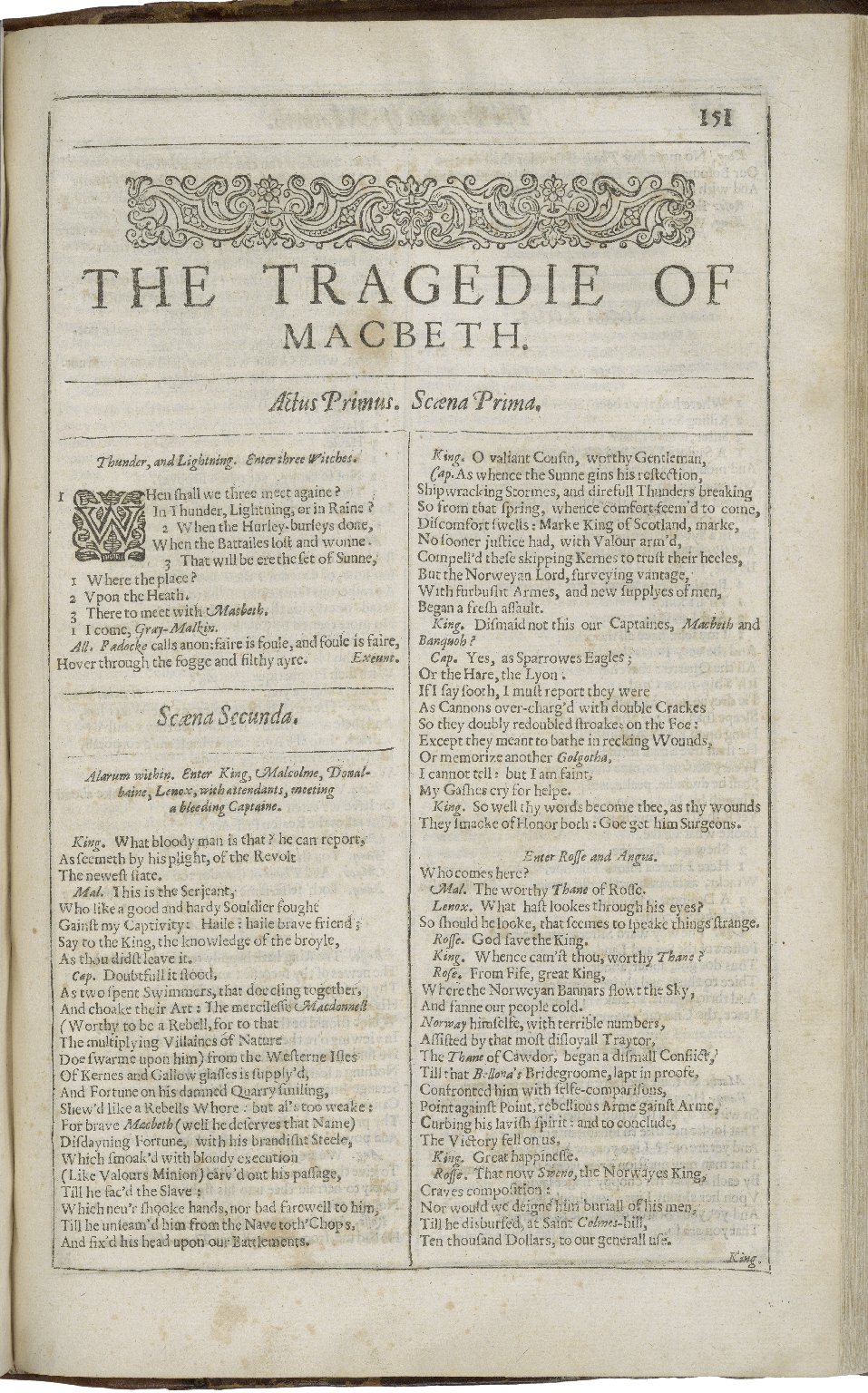


Composition, date and context
Scholars generally place the writing of Macbeth between 1603 and 1607, a period that overlaps the accession and early reign of King James I of England. The play's interest in kingship, succession and witchcraft resonated with contemporary political and religious concerns. While Shakespeare wrote comedies and histories as well as tragedies — and is widely known for his range including the great comedies — Macbeth is often described as his shortest tragedy, compact but intense in tone.
Sources and historic basis
Shakespeare drew on older accounts of Scottish history, most notably Holinshed's Chronicles, a widely read history book of the British past. The principal figures—Macbeth, King Duncan and the nobleman characters who surround them—have roots in historical records, but Shakespeare reshaped events and motives for dramatic effect. The resulting play is best understood as literary adaptation rather than strict biography.
Characters and dramatic structure
The drama centers on a small core of memorable figures and a tight sequence of scenes that move swiftly from prophecy to murder to unraveling guilt. Major characters include:
- Macbeth — a Scottish noble who becomes king.
- Lady Macbeth — his ambitious and persuasive wife.
- King Duncan — the monarch whose murder sets the tragedy in motion.
- Banquo — Macbeth's friend and a foil to his ambition.
- Macduff — the nobleman who opposes Macbeth and plays a decisive role in the play's climax.
- The Three Witches — prophetic figures whose riddling speech drives much of the plot.
Themes, language and motifs
Macbeth is often taught and analyzed for its concentrated treatment of themes such as unchecked ambition, the psychological consequences of guilt, the nature of kingship and legitimate rule, and the tension between fate and free will. Language is a vehicle for character and mood: soliloquies (most famously, Lady Macbeth's appeals and Macbeth's reflections) reveal inner turmoil, while short, sharp exchanges heighten suspense. Recurring motifs include darkness, blood, sleep and equivocation.
Performance, reputation and legacy
The play has been a mainstay of the stage and screen, adapted into numerous versions ranging from faithful period productions to modern reinterpretations. It has also accumulated folklore—actors sometimes avoid naming the play aloud in theatres, referring to it as "the Scottish play"—and continues to be a frequent subject of scholarly commentary, theatrical innovation and popular adaptation. Readers and audiences are reminded that Shakespeare's dramatic choices make the play distinct from the life of the historical Scottish king it evokes.
For further reading and contextual sources, consult critical introductions and annotated texts that discuss Shakespeare's sources, dramatic practice, and the cultural moment of early Jacobean England.
More on the play | About the author | Shakespeare's genres | Political context | James I | Dramatic characters | Macduff | Holinshed's Chronicles | Historical sources
Questions and answers
Q: What is Macbeth?
A: Macbeth is a play by William Shakespeare.
Q: How many types of plays did Shakespeare write?
A: Shakespeare wrote three types of plays: histories, comedies, and tragedies.
Q: What is the genre of Macbeth?
A: Macbeth is a tragedy.
Q: When did Shakespeare write Macbeth?
A: Shakespeare wrote Macbeth between 1603 and 1607.
Q: Who are the characters in Macbeth based on?
A: In the play, the characters of Macbeth, Macduff, and Duncan are roughly based on records of real people.
Q: What source did Shakespeare use when writing Macbeth?
A: Shakespeare read records of real people in Holinshed's Chronicles, a history book from 1587.
Q: Are the events in Macbeth identical to what happened in real life?
A: No, the things that happen in the play are very different from what happened in real life.
Related articles
Author
AlegsaOnline.com Macbeth: Shakespeare's short tragedy Leandro Alegsa
URL: https://en.alegsaonline.com/art/60284
Sources
- cliffsnotes.com : "Macbeth: Summary & Analysis Act III Scene 5"
- the-tls.co.uk : "Home Page – The TLS"
- en.wikibooks.org : Introduction to Shakespeare
- en.wikibooks.org : The Tragedy of Macbeth
- en.wikisource.org : The Tragedy of Macbeth