
Los Angeles County, California
Los Angeles County is the most populous U.S. county, a diverse metropolitan region centered on the City of Los Angeles with a large economy, major ports, cultural institutions, and extensive public services.
Overview
Los Angeles County is a large administrative county in the U.S. state of California and is the most populous county in the United States. Home to more than ten million residents, the county encompasses a wide range of urban, suburban and rural areas, including more than eighty incorporated cities and numerous unincorporated communities. The county seat and largest city is the City of Los Angeles, which functions as the region's principal cultural and administrative center seat.
Image gallery
10 Images






Geography and environment
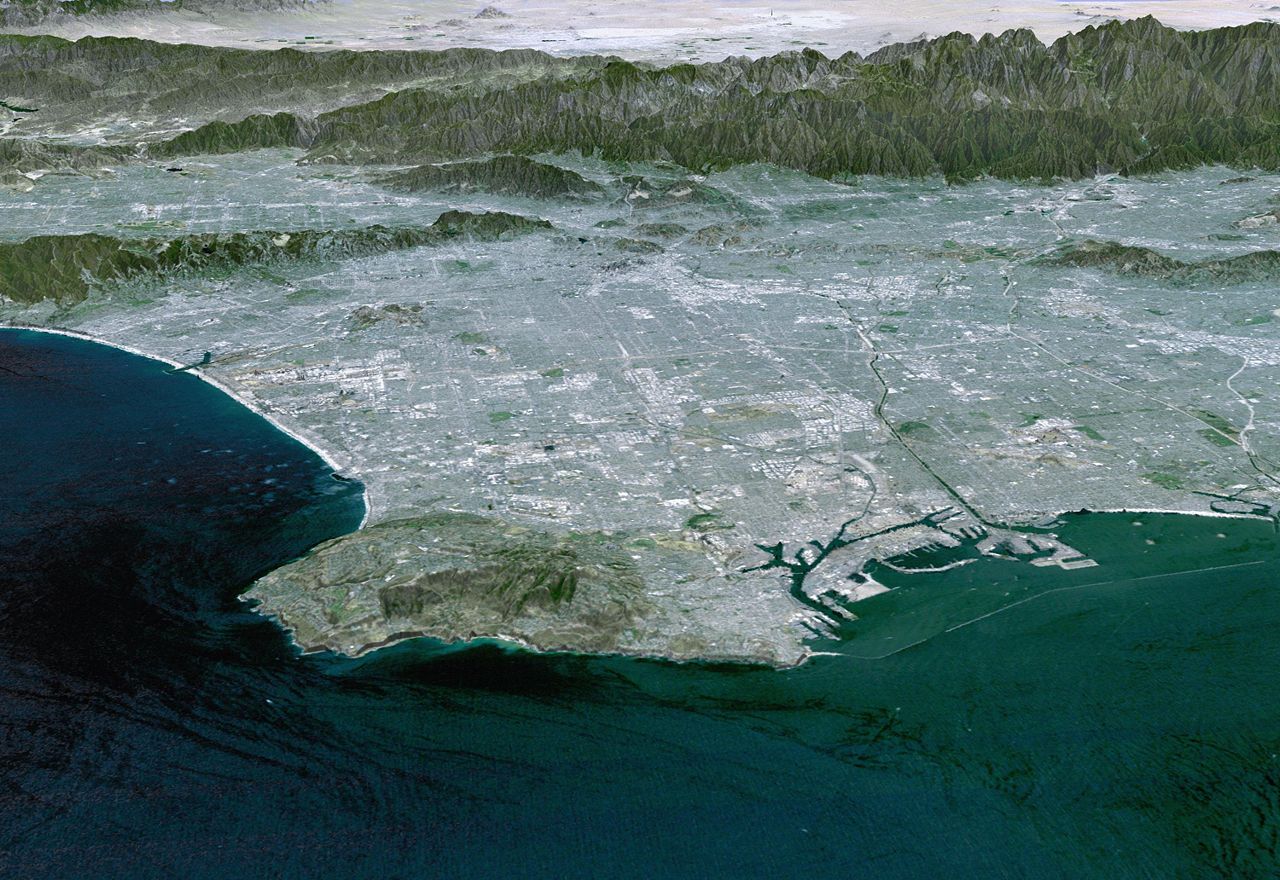
The county covers coastal plains, mountain ranges and valley lands that meet semi-arid inland areas. This variety produces multiple climate zones, with Mediterranean coastal weather, warmer inland valleys and foothills that are susceptible to seasonal wildfires and drought conditions. Public lands, regional parks and preserved open spaces coexist with dense urban neighborhoods and extensive coastline.
Demographics and communities
Los Angeles County is noted for its ethnic, linguistic and cultural diversity, shaped by successive waves of domestic migration and international immigration. The population includes many communities with roots across the Pacific, Latin America, Europe and other regions. This diversity is reflected in neighborhood life, religious institutions, cultural festivals and multilingual media.
Economy
The Greater Los Angeles area is one of the largest metropolitan economies in the world by GDP. The region's output, often expressed as a Nominal GDP, is in the hundreds of billions of dollars and can be comparable to that of medium-sized countries such as Belgium, Norway and Taiwan. Key sectors include film and television production, international trade through the ports, logistics, manufacturing, technology, tourism and a broad set of professional and creative services.
Transportation and infrastructure
Major transportation facilities include two of the busiest seaports in the nation, extensive airport facilities serving domestic and international travel, an evolving regional transit network, and a comprehensive freeway system. Freight movement through the ports and rail links is central to the regional and national economy.
Culture, education and institutions
The county hosts major museums, universities, performing arts centers and the global entertainment industry. Higher education institutions, research centers and a wide range of cultural organizations contribute to the county's international profile and workforce development.
Government and services
Los Angeles County government provides regional services including public health, social services, public safety, courts and emergency response. County governance operates alongside municipal governments and regional agencies to plan transportation, land use and environmental protection.
Challenges and planning
The county faces long-term challenges typical of large metropolitan regions: housing affordability, traffic congestion, air quality, wildfire risk, water supply management and equitable access to services. Ongoing planning and policy efforts involve multiple levels of government and community stakeholders.
Key facts
- Population: more than ten million residents spread across numerous municipalities.
- Economy: a major global metropolitan economy with significant concentrations of media, trade and technology sectors.
- Cultural influence: important center for film, music, higher education and diverse cultural institutions.
For official statistics and current reports consult county and state sources as well as regional planning agencies for updated data and detailed analyses.
Related articles
Author
AlegsaOnline.com Los Angeles County, California Leandro Alegsa
URL: https://en.alegsaonline.com/art/59295
Sources
- counties.org : "Chronology"
- lacounty.gov : "Board of Supervisors"
- factfinder.census.gov : "American FactFinder"
- laedc.org : "Why LA County"
- statista.com : "Largest counties in the U.S. 2018, by population - Statistic"
- census.gov : "QuickFacts: Los Angeles County, California; UNITED STATES"
- latimes.com : "The GOP's tax plan is terrible for Los Angeles"
- amazon.com : B000GRBCXG
- www2.census.gov : "2010 Census Gazetteer Files"
- census.gov : "U.S. Decennial Census"
- mapserver.lib.virginia.edu : "Historical Census Browser"
- census.gov : "Population of Counties by Decennial Census: 1900 to 1990"
- census.gov : "Census 2000 PHC-T-4. Ranking Tables for Counties: 1990 and 2000"
- quickfacts.census.gov : "State & County QuickFacts"