
Little House in the Big Woods
A 1932 children's novel by Laura Ingalls Wilder recounting pioneer family life near Pepin, Wisconsin; first in the Little House series and a landmark of American children's literature.
Overview
Little House in the Big Woods is a children's novel first published in 1932 by Laura Ingalls Wilder. It is the opening volume of the Little House series and presents a warm, detailed portrait of a settler family living in a woodland cabin in the American Midwest during the late 19th century. Written as a recounting of childhood memories, the book blends domestic scenes, seasonal rhythms, and frontier tasks into a narrative intended for young readers.
Image gallery
3 Images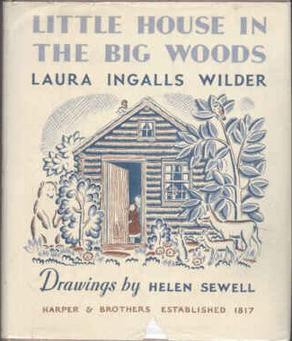


Setting and characters
The story is set in the woods near Pepin, Wisconsin and focuses on the Ingalls family: Pa, Ma, and their children. Rather than following a single overarching plot, the book is episodic, with chapters that describe everyday events—preparing food for winter, making maple sugar, hunting, sewing, and celebrating holidays. The intimate, home-centered viewpoint emphasizes family cooperation, self-reliance, and the material culture of pioneer life.
Style and themes
Wilder's prose is straightforward and observational, shaped by memory and designed to be accessible to children. Recurrent themes include survival and thrift, seasonal labor, the bond between family members, and the interplay between human life and the natural environment. The book often dwells on sensory detail—sounds, meals, clothing, smells—to convey the texture of daily life in a frontier household.
Historical context and development
Little House in the Big Woods is based on Wilder's recollections of growing up in the Midwest and was assembled with the assistance of her daughter, Rose. As the first published volume in a multi-book series, it established the autobiographical framework that later volumes expanded upon by following the family's movements across states as settlers pushed westward. Over time the series became a touchstone for popular images of American pioneer experience.
Reception, uses, and notable facts
The book has been widely read in schools and by family audiences and is often used as an entry point for discussions about 19th-century rural life and domestic skills. It has also influenced later adaptations and popular culture portrayals of frontier living. At the same time, modern readers and educators sometimes approach parts of the series critically, noting that certain attitudes and depictions reflect the period in which the memories were formed and may not align with contemporary perspectives.
Key characteristics
- Episodic, memory-based narrative focused on household life
- Detailed descriptions of seasonal work and domestic crafts
- Emphasis on family relationships and self-sufficiency
- Serves as an introduction to broader Little House saga
- Subject to contemporary reappraisal for historical attitudes
As a literary work aimed at young readers, Little House in the Big Woods remains a frequently encountered classic: valued for its vivid depiction of a particular way of life, influential in shaping American children's literature, and useful as a historical springboard when paired with critical discussion and supplemental sources.
Related articles
Author
AlegsaOnline.com Little House in the Big Woods Leandro Alegsa
URL: https://en.alegsaonline.com/art/58495