
Little Red Riding Hood (folk tale)
A concise, neutral overview of the folk tale Little Red Riding Hood: plot, characters, origins, major written versions, motifs, and cultural significance.
Little Red Riding Hood is a well-known European folk tale about a girl who meets a wolf while visiting her grandmother. The simple narrative—child, elder relative, deceptive predator—has been told in many languages and forms. It functions both as an entertaining story for children and as a cautionary tale about strangers, naivety, and the dangers of disobedience.
Image gallery
10 Images
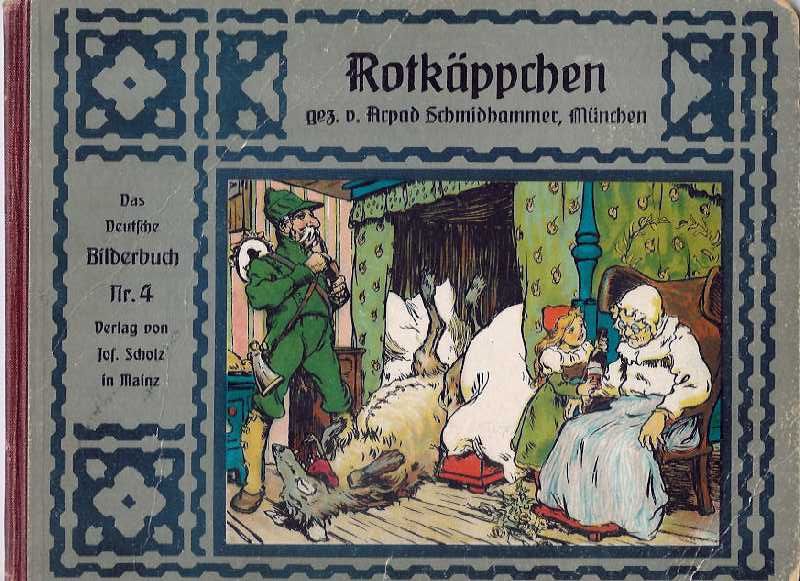

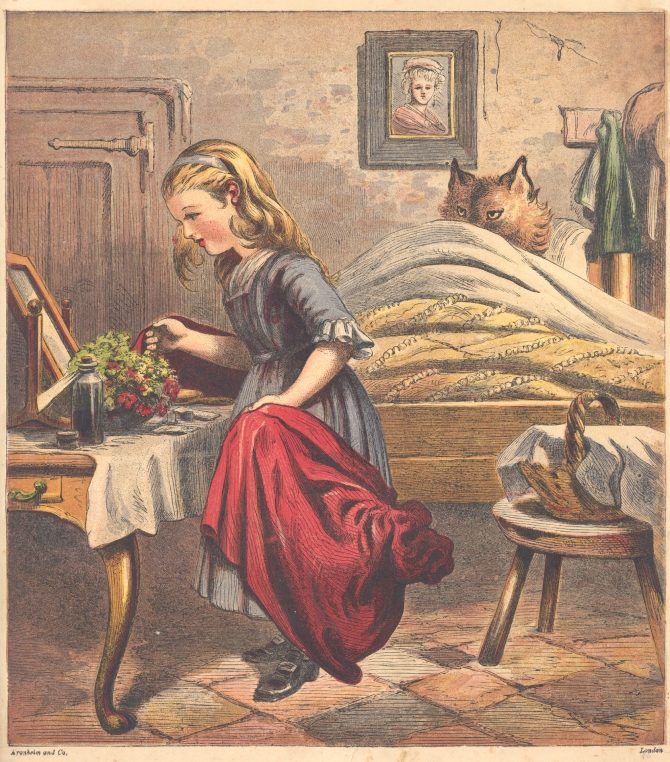


Core plot and characters
The basic plot features a young girl (often identified by a red hood or cap), her grandmother, and a wolf. In common retellings the girl sets out to bring food to the grandmother, meets the wolf, and is tricked. Depending on the version, the wolf either devours the grandmother and the girl, or is outwitted or killed and the victim(s) are rescued. The heroine's red garment is a memorable visual marker that gives the tale its familiar name.
Motifs and themes
- Deception: the wolf often adopts human speech or disguises itself to trick the girl.
- Danger of strangers: the tale reinforces caution toward unknown adults.
- Coming of age and vulnerability: many interpretations see the story as a transition from innocence to experience.
- Rescue versus punishment: versions differ on whether the heroine is punished or saved, reflecting cultural attitudes toward moral instruction.
Origins and written versions
The story derives from oral tradition and was transmitted for generations before being fixed in print. One of the earliest published forms appears in 17th-century France: Charles Perrault recorded a version that emphasized a moral warning. Later, the Brothers Grimm collected and adapted a German variant titled Rotkäppchen, which introduced or popularized the rescue ending found in many modern retellings. For background, see representative sources: French origin, oral transmission, and the role of the wolf in folktales symbolic predator.
Notable printed versions and differences
Key written versions include Perrault's cautionary tale and the Brothers Grimm collection from the 19th century. Perrault's text ends with the girl's fate serving as a moral example, while the Grimms' edit preserved a version with a hunter or woodcutter who intervenes. Scholars and readers often compare these texts to examine variations in tone, intended audience, and moral message. Useful references: oral history studies, Perrault's publication, Grimm's version.
Legacy and cultural impact
Little Red Riding Hood has inspired countless adaptations in literature, theatre, film, and visual art. It is frequently reinterpreted—subverted, modernized, or used allegorically to explore gender, power, and social norms. The tale's enduring presence in education and popular culture makes it a common subject for discussions about storytelling, moral education, and the transmission of folk motifs. Further reading and collections can be found via general resources: additional readings.
Questions and answers
Q: What is the story of "Little Red Riding Hood" about?
A: The story is about a young girl and a wolf.
Q: Where did the story of "Little Red Riding Hood" originate from?
A: The story originated from a folktale, meaning that it was a spoken story for a long time before it was written down.
Q: When was "Little Red Riding Hood" first written down?
A: The story was first written down in the late 1600s by Charles Perrault.
Q: What is the best-known version of "Little Red Riding Hood"?
A: The best-known version of "Little Red Riding Hood" is Rotkäppchen by the Brothers Grimm and dates back to the 19th century (1800s).
Q: What is "Rotkäppchen"?
A: "Rotkäppchen" is the way the story of "Little Red Riding Hood" is told by the Brothers Grimm.
Q: Was "Little Red Riding Hood" originally a written story?
A: No, the story was originally a spoken story before it was written down.
Q: Who wrote down the story of "Little Red Riding Hood" in the late 1600s?
A: The story was written down in the late 1600s by Charles Perrault.
Related articles
Author
AlegsaOnline.com Little Red Riding Hood (folk tale) Leandro Alegsa
URL: https://en.alegsaonline.com/art/58514
Sources
- pitt.edu : Little Red Cap
- northern.edu : "Little Red Riding Hood"