
Limpopo River
Major river in southern Africa flowing east to the Indian Ocean through or along the borders of South Africa, Botswana, Zimbabwe and Mozambique; important for ecology, people and cross‑border management.
Overview
The Limpopo River is a principal watercourse in southern Africa that flows from the interior toward the Indian Ocean. It traverses or defines parts of several countries: South Africa, Botswana, Zimbabwe and Mozambique. The river drains a varied landscape of highlands, plains and dry savanna and empties into the Indian Ocean along the Mozambican coast.
Image gallery
4 Images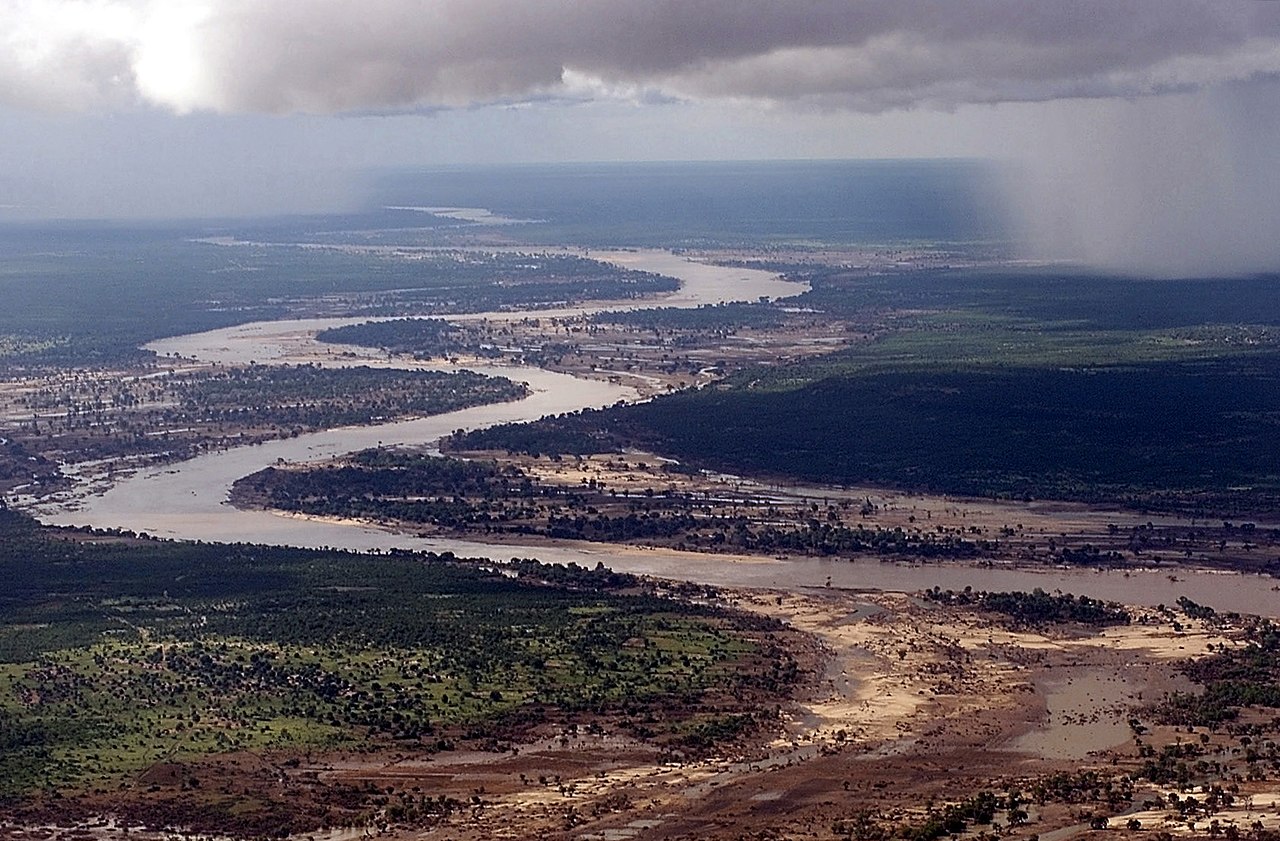


Course and basin
Rising in interior southern Africa, the Limpopo follows an eastward route cut across broad lowlands before reaching its coastal mouth. Its basin collects water from seasonal rains and supports a mosaic of floodplains, channels and wetlands. Because rainfall is strongly seasonal, flows vary greatly through the year and the river is prone to episodic high floods separated by periods of low flow.
Characteristics and tributaries
The river system includes a number of tributaries and subcatchments that contribute to its discharge and ecological diversity. Among the better known tributaries are the Olifants and Crocodile rivers, which feed into the Limpopo from South African highlands. The basin supports riparian woodlands, floodplain grasses and aquatic habitats that are important for fish and large mammals.
Ecology and human uses
The Limpopo basin sustains a range of wildlife, including species adapted to seasonal water availability such as hippo, crocodile and a variety of fish and birdlife. People depend on the river for irrigation, livestock watering, limited local navigation, and domestic water supply. Along its course are agricultural lands, protected areas and community settlements that rely on its seasonal productivity.
Management, risks and notable facts
- Flooding: Periodic floods can be destructive to communities and infrastructure downstream, particularly in low‑lying coastal plains.
- Water management: Cross‑border cooperation is needed because the river flows through multiple countries and water use upstream affects users downstream.
- Conservation concerns: Over‑abstraction, pollution, invasive species and habitat change threaten ecological functions and local livelihoods.
Efforts to manage the Limpopo emphasize integrated basin planning, protection of key wetlands and collaboration among the riparian states to balance development with conservation. The river remains a defining geographic and ecological feature of southern Africa with substantial cultural, economic and environmental importance.
Related articles
Author
AlegsaOnline.com Limpopo River Leandro Alegsa
URL: https://en.alegsaonline.com/art/58115