
Armenian Legion (World War II)
Armenian Legion — a name used for Armenian volunteer units organized by Nazi Germany during World War II; history, composition, activities, leadership, and legacy examined neutrally and cautiously.
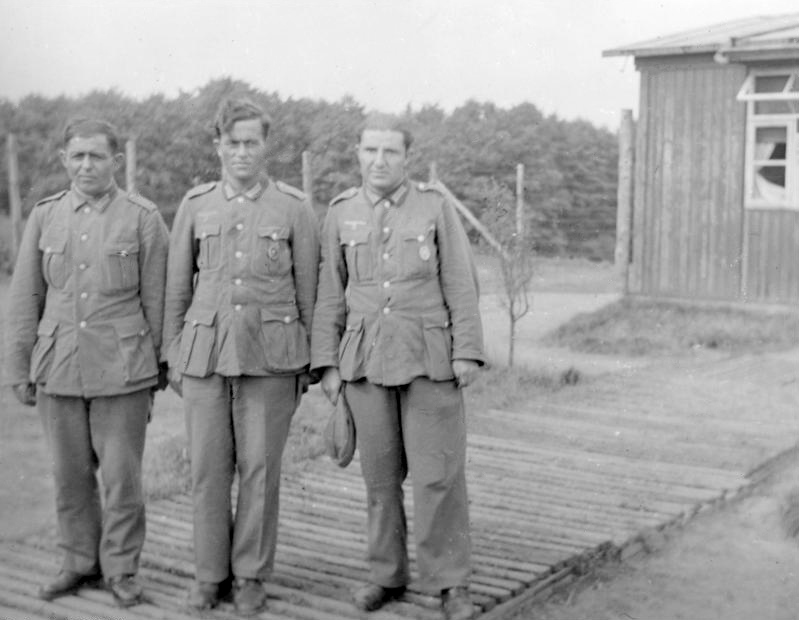
The term Armenian Legion commonly refers to Armenian volunteer formations raised by Nazi Germany during World War II, sometimes described in German as the Armenische Legion and in Armenian as Հայկական լեգիոն. These units formed part of the wider system of "Ostlegionen" (Eastern Legions) composed of Soviet prisoners, émigrés and volunteers who served under German command. The subject intersects wartime collaboration, anti-Soviet nationalism, and postwar memory, and remains the focus of study and debate.
Image gallery
4 Images


Origins and motivation
Germany organized auxiliary battalions and legions to supplement its manpower and exploit anti-Soviet sentiment among various national groups. Some Armenian nationalists and émigré leaders cooperated with German authorities for a mixture of motives: opposition to Soviet rule in the Caucasus, hopes for national recognition, and the survival of émigré networks. Sources differ on the extent and character of Armenian participation; some leaders later asserted significant popular support.
Composition and leadership
One designation applied in contemporary and postwar accounts is the 812th Armenian Battalion, though nomenclature and organization varied across time and theaters. Prominent Armenian figures associated with recruitment or political organization included Drastamat (Dro) Kanayan and Garegin Nzhdeh; some wartime claims by such leaders suggested wide backing among Armenians, with estimates cited in certain accounts of over 18,000 supporters (leaders' claims). Researchers caution that recruitment, voluntariness, and numbers are disputed and that records are fragmentary.
Service and areas of deployment
Armenian volunteers served primarily in German-controlled areas and were used for garrison, security, anti-partisan, and frontline duties according to unit assignment. Individual men of Armenian origin also appear in a variety of German military formations; some accounts note their presence in several Waffen-SS and Wehrmacht units, though the scale and circumstances varied and are subject to scholarly scrutiny. The operational record includes guarded postings on occupation lines and limited combat actions rather than a unified national force.
Controversies and postwar legacy
Participation in German-organized units remains controversial. For many, collaboration reflected desperate choices amid war, imprisonment, or political exile; for others, it is judged as collaboration with a criminal regime. After the war, veterans and political émigrés took differing paths—some faced prosecution, some emigrated, and others continued nationalist activities. Interpretations of the Armenian Legion reflect broader tensions in how societies remember wartime conduct.
Key points and distinctions
- "Armenian Legion" is a collective term rather than a single, consistently organized national army.
- Records are uneven; figures and motives are debated and should be treated cautiously. Some contemporary sources and leaders claimed large-scale support (see claims), but independent verification is limited.
- The topic overlaps with studies of the Eastern Legions, émigré politics, and wartime collaboration and resistance.
For further research, consult specialized histories of World War II, works on the Wehrmacht's Eastern formations, and studies of Armenian émigré politics and memory. Scholarly literature offers differing assessments and continues to refine understanding as archives and testimonies are examined.
Related articles
Author
AlegsaOnline.com Armenian Legion (World War II) Leandro Alegsa
URL: https://en.alegsaonline.com/art/5713