
Leiomyosarcoma (LMS): malignant tumor of smooth muscle
Leiomyosarcoma (LMS) is a rare, aggressive cancer of smooth muscle cells that most often affects the uterus, limbs, and trunk. Diagnosis relies on imaging and biopsy; surgery is primary treatment.
Overview
Leiomyosarcoma (LMS) is a malignant tumor arising from smooth muscle cells. These tumors may develop in any organ that contains smooth muscle but are most frequently encountered in the uterus, retroperitoneum, large blood vessels, and the walls of the gastrointestinal tract. LMS is one subtype of soft tissue sarcoma and accounts for a notable proportion of those diagnoses. Although superficially related to benign leiomyomas (commonly called fibroids in the uterus), LMS is biologically distinct and behaves aggressively.
Image gallery
3 Images
Clinical features and diagnosis
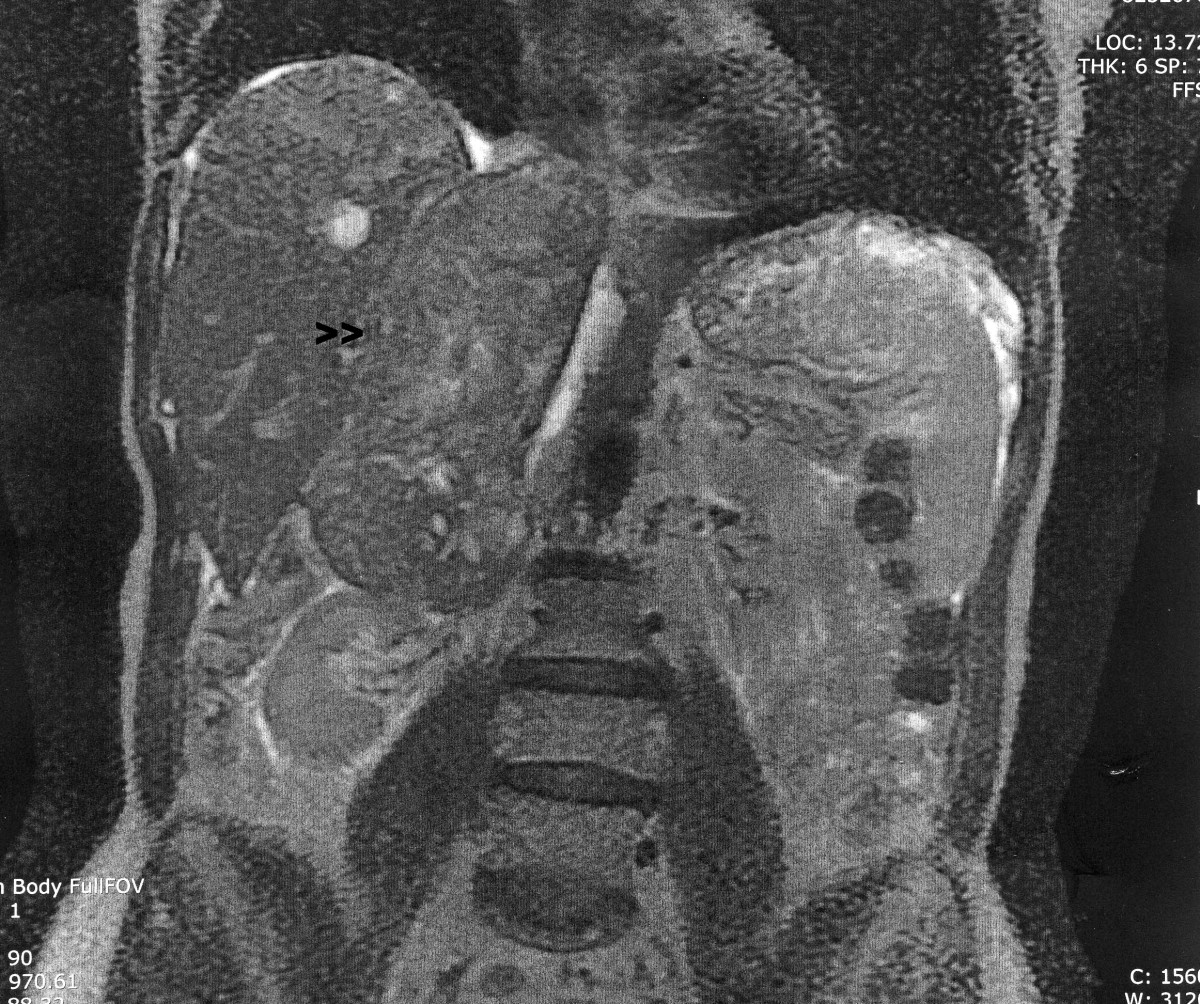
Presentation varies by site. Uterine LMS often presents with abnormal bleeding, pelvic pain, or a rapidly enlarging pelvic mass. Retroperitoneal and vascular lesions may grow large before producing symptoms; limb and superficial soft tissue LMS typically appear as a painless mass. Common metastatic sites include the lungs and liver. Diagnosis usually combines imaging (ultrasound, CT, MRI) with tissue sampling. Definitive diagnosis is made by microscopic examination and immunohistochemistry, which helps distinguish LMS from other spindle cell tumors.
Pathology and biology
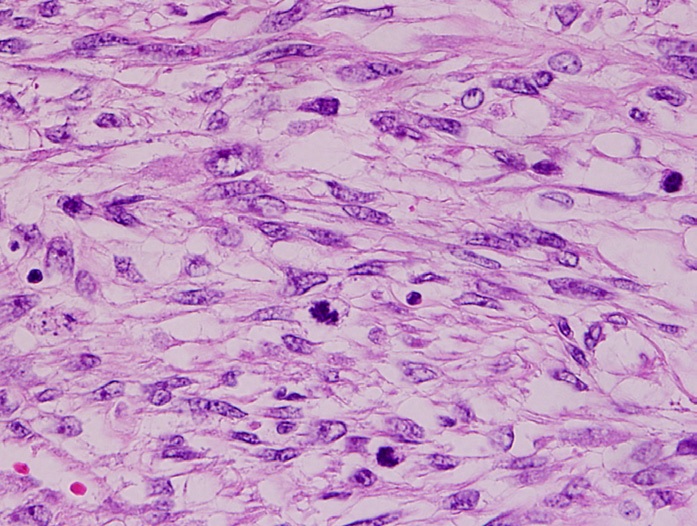
Under the microscope, LMS is composed of spindle-shaped cells with features of smooth muscle differentiation. Tumor cells commonly express markers such as smooth muscle actin, desmin, and h-caldesmon on immunostaining. Genetically, leiomyosarcomas often show complex karyotypes with losses and gains across the genome; high-grade tumors exhibit frequent alterations in cell-cycle control and tumor suppressor pathways. LMS can be unpredictable in behavior: some tumors recur locally, others metastasize early, and long disease-free intervals followed by late recurrence are reported.
Treatment and prognosis
Surgery with the goal of complete resection is the cornerstone of treatment for localized LMS. The role of radiation therapy may be to reduce local recurrence risk for select anatomical sites. Systemic therapy is used for advanced, unresectable, or metastatic disease; response rates to conventional chemotherapy are modest, and agents such as doxorubicin, ifosfamide, gemcitabine-plus-docetaxel, and newer targeted agents are used depending on clinical context. Prognosis depends on tumor size, grade, completeness of resection, and site: retroperitoneal and vascular LMS tend to have worse outcomes than small, superficial tumors.
Incidence and epidemiology
LMS is a rare malignancy. Population estimates vary but diagnoses occur roughly on the order of one per 100,000 people per year in many regions. It represents about 10–20% of soft tissue sarcoma cases overall, making it one of the more common sarcoma subtypes despite its rarity. Uterine LMS is most often seen in middle‑aged adults and is an important diagnostic consideration in rapidly growing uterine masses.
Distinctions, challenges, and notable facts
- Leiomyoma (benign) versus leiomyosarcoma (malignant): most benign smooth muscle tumors do not transform into LMS; distinction relies on histologic criteria and clinical behavior.
- Diagnosis can be difficult because LMS may mimic benign masses on imaging and may only be differentiated after biopsy or resection.
- Because LMS is uncommon and biologically heterogeneous, treatment decisions often involve multidisciplinary teams and may include referral to specialty centers or clinical trials.
- Ongoing research explores targeted therapies and immunotherapy; molecular profiling can inform experimental treatment options in advanced disease.
For further general background on the tissue of origin see smooth muscle references and for broader context among sarcomas see resources on soft tissue sarcoma. Clinical management guidelines and details about systemic treatment options can be reviewed in specialist summaries and trial reports such as those referenced in chemotherapy overviews.
Related articles
Author
AlegsaOnline.com Leiomyosarcoma (LMS): malignant tumor of smooth muscle Leandro Alegsa
URL: https://en.alegsaonline.com/art/57052
Sources
- seer.cancer.gov : "Surveillance, Epidemiology, and End Results (SEER) Program Stat Database: Incidence—SEER 18 Regs Research Data + Hurricane Katrina Impacted Louisiana Cases, Nov 2016 Sub 2000-2014 Katrina/Rita Population Adjustment—Linked To County Attributes - Total U.S., 1969–2015 Counties, DCCPS, Surveillance Research Program"
- leiomyosarcoma.info : "Basic info" · web.archive.org