
Legislative Assembly of Ontario
The unicameral provincial legislature of Ontario, Canada: its composition, powers, history, procedures and role in government and public life.
Overview
The Legislative Assembly of Ontario is the elected legislative body for the Canadian Canada province of Ontario. As the province's sole chamber it oversees lawmaking, government accountability and representation for Ontarians. The Assembly meets at the Ontario Legislative Building in Toronto, the provincial capital, and operates within the Westminster parliamentary tradition.
Image gallery
8 Images


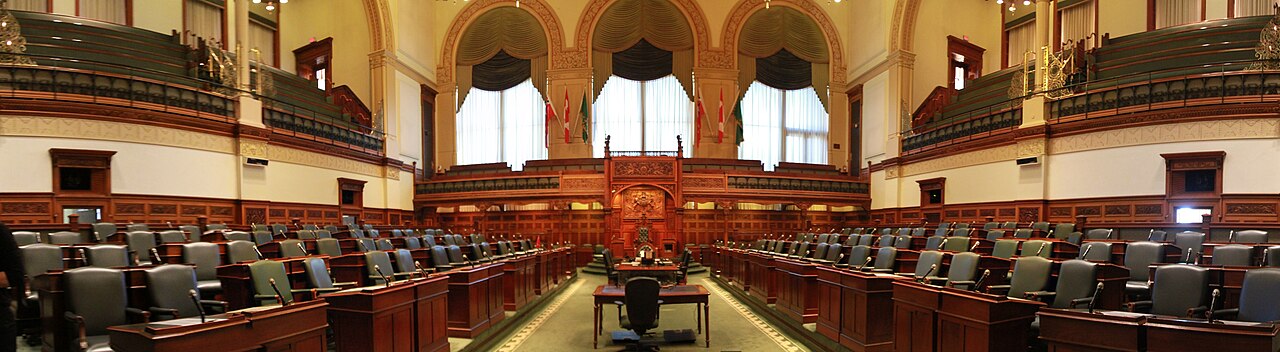

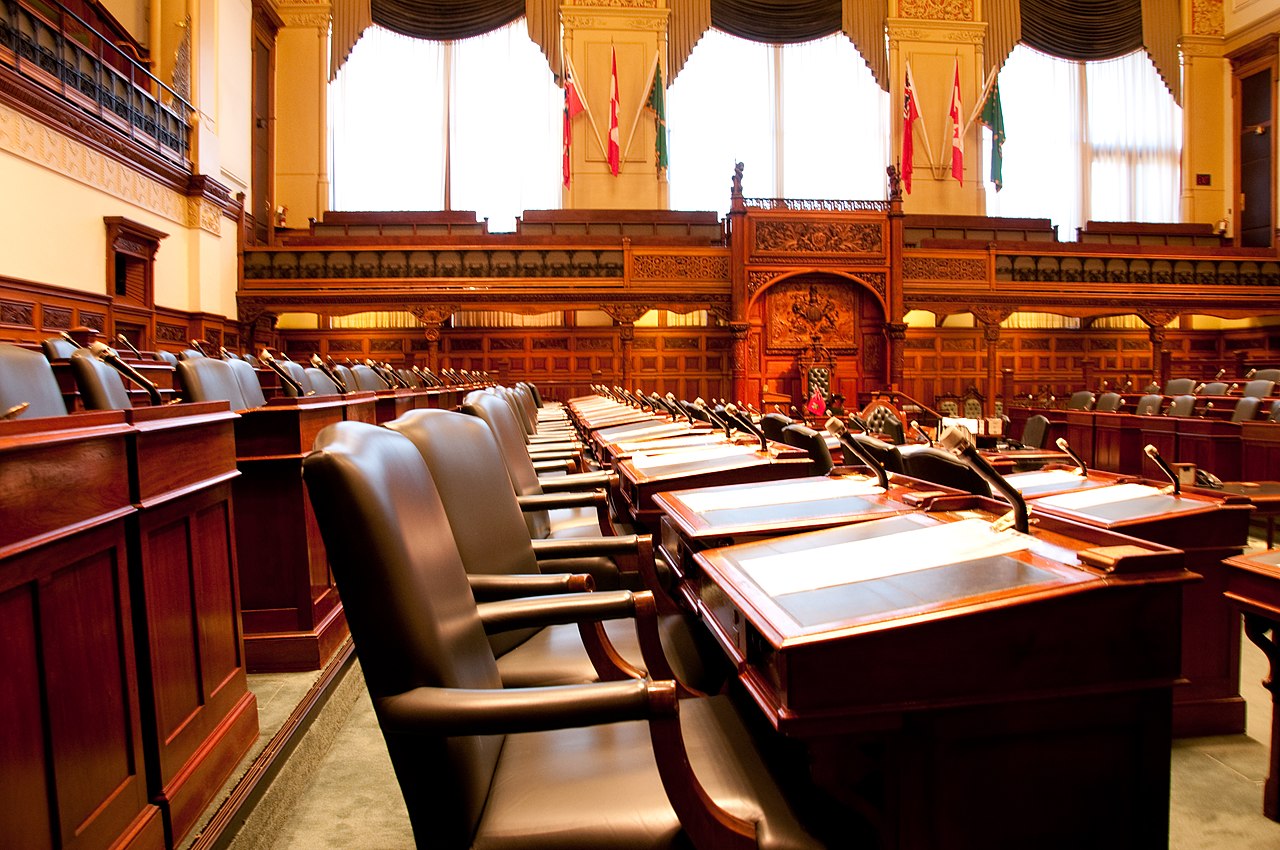


Composition and membership
The Assembly is unicameral, meaning there is no upper house. It is made up of 124 elected members known as Members of Provincial Parliament (MPPs). Each MPP represents a defined electoral district and is chosen by voters in that district at periodic general elections. Political parties contest seats; the party with the most members normally forms government and its leader becomes the Premier. The Premier selects ministers who form the cabinet—formally the Executive Council—to administer departments and implement policy. The leader of the second-largest party usually serves as the Leader of the Opposition.
How it makes laws and holds government to account
Legislation typically begins as a bill introduced by a minister or, less commonly, by a private member. Bills pass through a sequence of readings and debates in the Assembly and are frequently examined in committee where witnesses can be heard and details scrutinized. If approved by the Assembly a bill receives royal assent from the lieutenant governor and becomes law. Regular features of Assembly business include question period, oral statements, routine proceedings and committee meetings that investigate specific issues or review legislation.
History and development
The institution traces its modern form to Confederation in 1867 when the British North America Act established provincial legislatures. Since then the Assembly's membership and internal procedures have evolved—both to reflect changes in population and to adopt contemporary practices for transparency, research support, and committee work. Over time, the role of parties, the mechanics of confidence and supply, and the relationship with the provincial executive have become well established within Ontario's parliamentary conventions.
Functions, public access and examples of activity
The Assembly performs several core functions: making statutes, approving provincial budgets, scrutinizing government administration, and representing regional interests. It also provides forums where citizens and organizations may present evidence to committees, and it publishes proceedings so the public can follow debates. Examples of typical Assembly activity include debating budget legislation, passing statutes affecting health and education, and holding ministers to account on policy and spending decisions.
Distinctive features and offices
Notable aspects of the Legislative Assembly of Ontario include its place within the provincial-federal division of powers, the exclusive use of the MPP title in Ontario, and its status as one of the larger provincial legislatures by membership. Key offices and bodies associated with the Assembly include:
- Speaker of the Assembly — presides over debates and enforces rules;
- Premier — head of government chosen by the majority party (Premier);
- Executive Council — the cabinet, responsible for administering government programs (Executive Council);
- Committees — examine legislation and issues in detail;
- Lieutenant Governor — grants royal assent to bills and performs ceremonial duties.
For further structural or procedural details, or to follow current sittings and committee work, consult official Assembly resources or public records managed by the legislature's services.
Related topics and sources about parliamentary practice, provincial governance and the Assembly's work can be explored through links to general reference material and the Assembly's official pages: legislative role, provincial government, and local civic resources in Toronto.
Related articles
Author
AlegsaOnline.com Legislative Assembly of Ontario Leandro Alegsa
URL: https://en.alegsaonline.com/art/57003