
Legislative Assembly of Manitoba
Unicameral elected legislature of Manitoba, Canada. Covers composition, electoral system, powers, roles of the Premier and Speaker, committees, history, procedures and public access.
Overview
The Legislative Assembly of Manitoba is the province's unicameral assembly and the elected component of the legislature of Manitoba within Canada. It is the principal forum where provincial laws are proposed, debated and enacted, and where the executive government is held to account by elected members. The assembly meets in the Manitoba Legislative Building in Winnipeg, which also provides public galleries, tours and legislative archives.
Image gallery
5 Images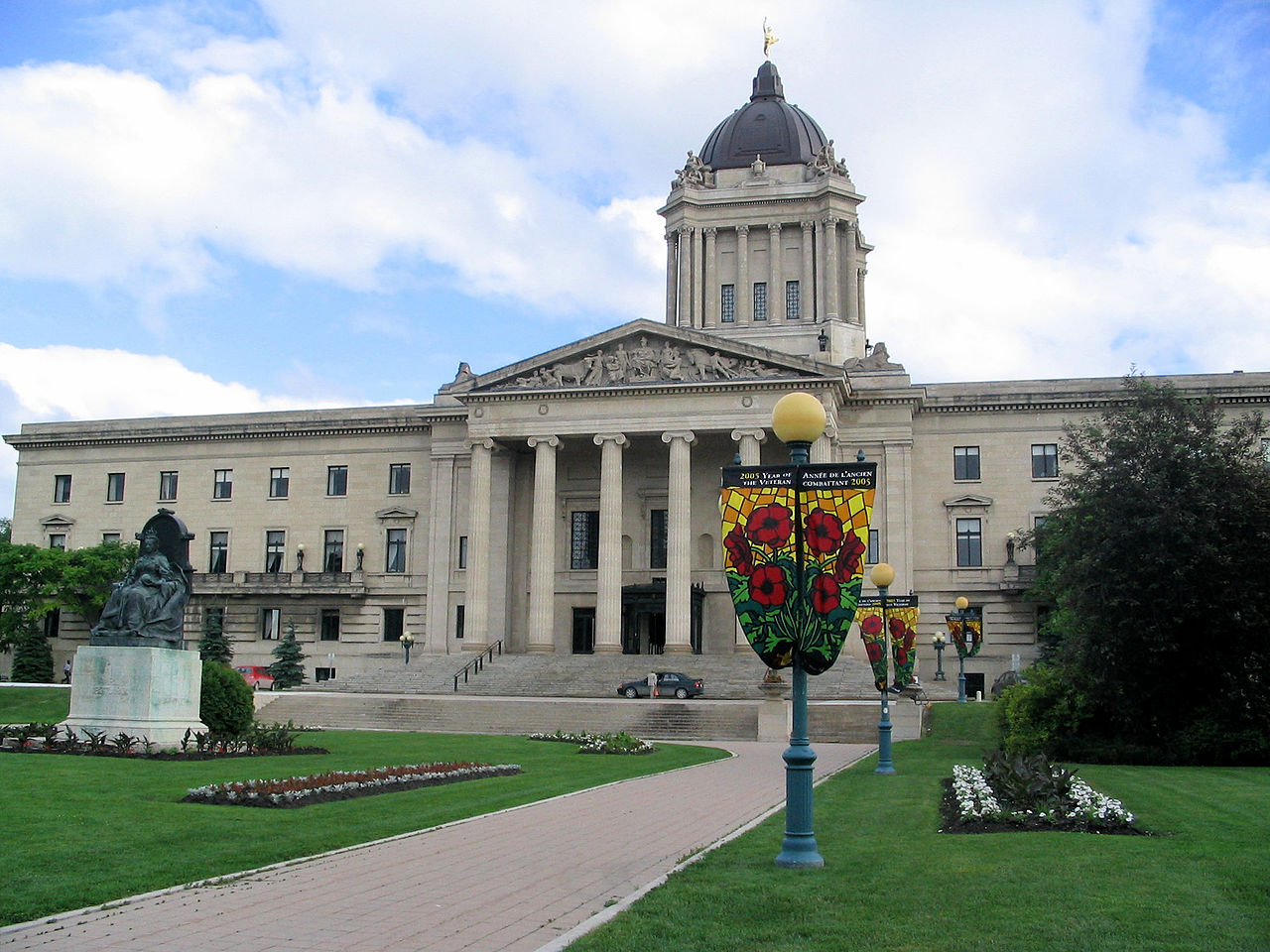


Structure and membership
The assembly is composed of 57 members, each representing a distinct electoral district or single-member constituency. Members are generally affiliated with political parties and organize into caucuses; independents may also sit if elected or expelled from parties. Vacancies are filled by by-elections according to provincial rules. The party that holds the confidence of the assembly typically forms government.
Elections and electoral system
Members are chosen in provincial general elections using a first-past-the-post voting system: the candidate with the most votes in a constituency wins the seat. Elections take place at intervals determined by provincial law and constitutional conventions; the timing can be affected by motions of confidence. Electoral boundaries are periodically reviewed to reflect population change and ensure effective representation.
Powers, procedures and committees
The assembly enacts statutes within areas of provincial jurisdiction, approves the provincial budget and expenditures, and exercises oversight through Question Period, debates and committee review. Committees—standing and special—examine bills in detail, study public policy, and review government administration and public accounts. Proceedings are governed by standing orders and parliamentary precedent; an official record of debates is maintained for public reference.
Political roles and conventions
The leader of the party that commands the assembly's confidence normally becomes the Premier of Manitoba and heads the provincial government and cabinet. The Speaker presides over sittings, enforces rules of order and is expected to act impartially. The Crown is represented provincially by the Lieutenant Governor, who gives royal assent to legislation and performs constitutional and ceremonial duties.
History and development
Manitoba entered Confederation in 1870 and the assembly has evolved from its early colonial institutions into a modern parliamentary body. Over time the number of seats, the nature of parties and the procedures of the assembly have changed to reflect democratic reforms and the province's social and economic development. Historical records and legislative archives document significant reforms and debates.
Public access, information and resources
Legislative sittings are generally open to the public and to the media; many materials such as bills, committee reports and transcripts are published by the assembly. Educational programs, visitor services at the Winnipeg building and online resources help citizens understand legislative business. For official schedules, member directories and procedural guides consult legislature publications and resource pages.
External resources
- General information on the unicameral assembly: assembly overview
- Role within the provincial legislature: legislature details
- Context within Canada: federal-provincial relations
- Electoral districts and representation: constituency information
- Election procedures and timing: elections
- Voting system used for provincial elections: first-past-the-post
- Visiting the legislature: Manitoba Legislative Building
- Office of the Premier and government leadership: Premier
For detailed research consult official legislative publications, the assembly's procedural guides and public records held by provincial archives or parliamentary libraries. These resources provide authoritative information on statutes, committee work and historical proceedings.
Related articles
Author
AlegsaOnline.com Legislative Assembly of Manitoba Leandro Alegsa
URL: https://en.alegsaonline.com/art/57002