
Winnipeg: Prairie Capital at the Forks
Overview of Winnipeg, Manitoba: geography, rivers, climate, history, culture, institutions, sports teams and flood management in Canada's prairie heart.
Overview
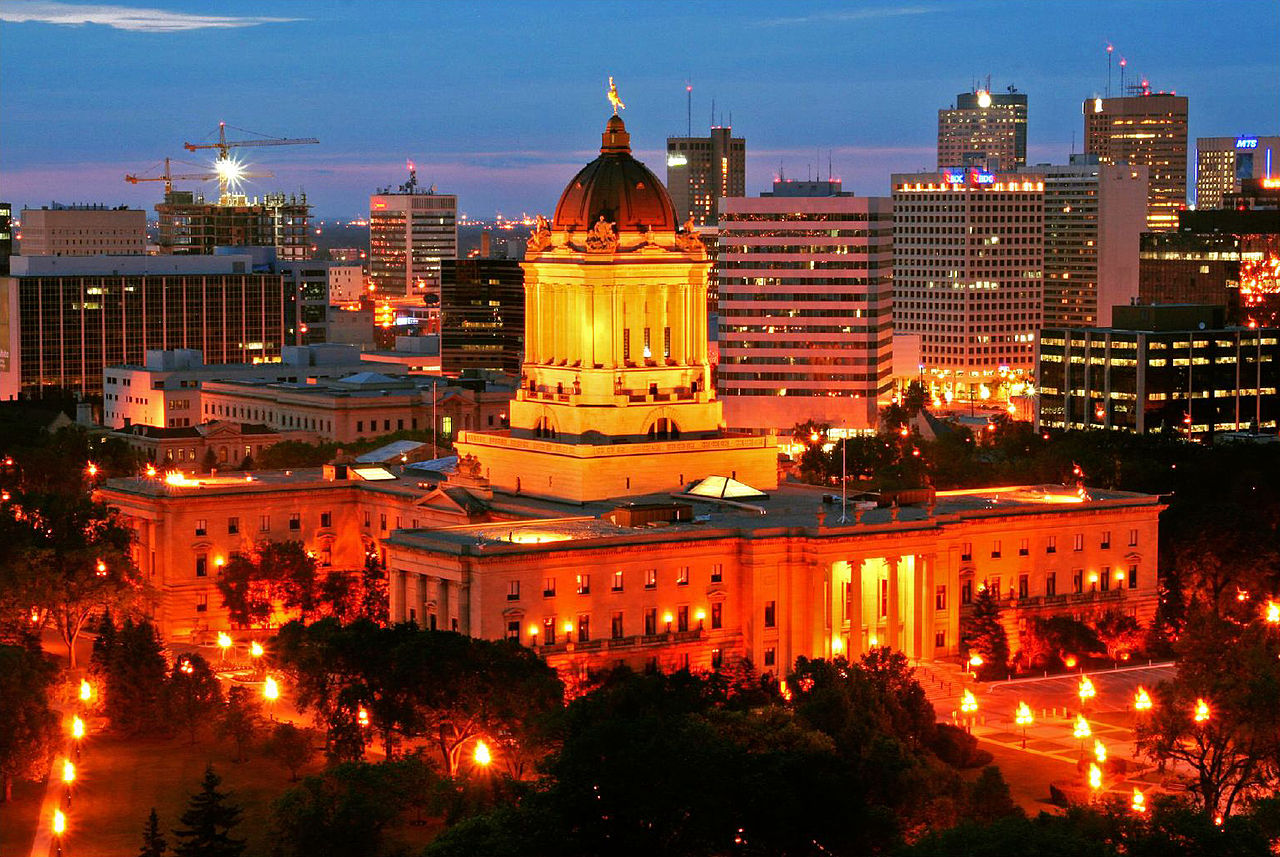
Winnipeg is the largest city in the province of Manitoba and a key urban centre in central Canada. Located in the eastern prairie region of western Canada, it is commonly nicknamed the "Gateway to the West" for its historical role as a transportation and trading hub. The city metro is home to roughly seven hundred thousand residents, making it one of the country's larger municipalities and an important cultural, educational and commercial focal point for the surrounding prairie provinces.
Image gallery
10 Images




Geography and rivers
Winnipeg sits at the confluence of two major rivers: the Red River and the Assiniboine River, a meeting place long known as The Forks. The broader urban area is very flat and traversed by several waterways; in addition to the Red and the Assiniboine, smaller channels such as the La Salle and Seine rivers flow through or near the city. This low-lying topography and the seasonal snowpack contribute to frequent spring high-water events along the Red River, which have shaped municipal planning and infrastructure.
Climate and extremes
Winnipeg has a continental climate with warm summers and long, cold winters. Snow accumulation in winter and rapid spring melt are hallmarks of the local cycle; the region is therefore prone to flood episodes when the river system rises. Historically recorded temperature extremes illustrate the range of conditions the city experiences: summer heat can exceed 40 °C on rare occasions, while winter cold has dropped well below −40 °C in severe years. Local adaptations to this climate are visible in housing, transportation planning and seasonal festivities.
History and name
The city's name is derived from a Cree term often translated as "muddy waters," reflecting Indigenous presence and the character of the river junction. The site around The Forks has served for centuries as a meeting place for trade, travel and community. European settlement and later railway and river commerce transformed Winnipeg into a regional centre during the 19th and early 20th centuries. The river crossing and its strategic location contributed to the city's growth as goods and people moved between east and west.
Culture, institutions and recreation
Winnipeg is home to a variety of cultural institutions, festivals and universities. Prominent post-secondary institutions include the University of Manitoba, the University of Winnipeg, Canadian Mennonite University and the University of St. Boniface. The city supports museums, performing arts companies and annual events ranging from music festivals to multicultural celebrations. Professional sports are an important part of civic life: teams include the Canadian football club Winnipeg Blue Bombers (Canadian football), the NHL's Winnipeg Jets (hockey), the baseball club Winnipeg Goldeyes, and a local soccer side, among others. Recreational opportunities also centre on riverfront parks and trails around The Forks.
Infrastructure, flood protection and economy
Because of repeated spring floods, major engineering works have been constructed to protect the city and surrounding communities. A prominent example is the Red River floodway, an engineered channel built to divert floodwaters around Winnipeg and reduce damage in high-water years. The city's economy is diverse, reflecting government services, manufacturing, transportation, education and a growing creative sector. Winnipeg's central position in North America continues to make it a logistical and distribution hub for goods moving across the prairie provinces.
Notable facts and distinctions
- Winnipeg's name and location at The Forks highlight its long Indigenous and trading history; the area's heritage sites and museums document that legacy.
- The city's flat terrain and river system shape seasonal rhythms and infrastructure priorities, particularly flood preparedness and snow management (floods, snow).
- Sporting clubs and higher-education institutions contribute to a strong local identity; spectator sports include both Canadian football (football) and ice hockey (hockey).
- Climate records show wide variability, with extreme warm days reaching above 40 °C and winters that can fall to very low temperatures, underscoring the continental climate.
For more information on urban planning, cultural events and visitor highlights, local government and tourism resources provide current details and services tailored to residents and visitors alike. Additional historical and technical material can be found via provincial and national archives and local heritage organizations (Red River, Assiniboine, The Forks).
Relevant links and resources: Manitoba, Canada, Prairie region, Cree language, Blue Bombers, football, Winnipeg Jets, hockey, Goldeyes, rivers, floods, snow, temperature records.
Questions and answers
Q: What is the population of Winnipeg?
A: The population of Winnipeg is 705,244 people.
Q: Where does the name "Winnipeg" come from?
A: The name "Winnipeg" comes from the Cree word for "muddy waters."
Q: What are some professional sports teams in Winnipeg?
A: The professional sports teams in Winnipeg are the Winnipeg Blue Bombers (football), the Winnipeg Jets (hockey), the Winnipeg Goldeyes (baseball) and the Winnipeg Alliance FC (soccer).
Q: How many universities are there in Winnipeg?
A: There are four universities in Winnipeg - University of Manitoba, University of Winnipeg, Canadian Mennonite University and University of St. Boniface.
Q: What rivers run through or near to Winnipeg?
A: Four rivers run through or near to Winnpeg - Red River, Assiniboine River, La Salle River and Seine River.
Q: Why does it flood often in spring in Winnpeg?
A: It floods often in spring because Winnpeg is located in a very flat area that gets a lot of snow and rain.
Q: What was the hottest day ever recorded in Winnpeg?
A: The hottest day ever recorded in Winnpeg was 42 degrees Celsius on 1936.
Related articles
Author
AlegsaOnline.com Winnipeg: Prairie Capital at the Forks Leandro Alegsa
URL: https://en.alegsaonline.com/art/108610
Sources
- winnipegfreepress.com : "Winnipeg Now was 100 years in the making"
- winnipegfreepress.com : "Live ... in the Peg!"
- winnipegfreepress.com : "Proud to be Winterpeg"
- www12.statcan.gc.ca : "Census subdivision of Winnipeg"
- www12.statcan.gc.ca : "Census metropolitan area of Winnipeg"
- www12.statcan.gc.ca : "Census Profile, 2016 Census Winnipeg Census metropolitan area"
- www12.statcan.gc.ca : "Population and dwelling counts, for Manitoba and census subdivisions"
- www12.statcan.gc.ca : "Metropolitan areas of Manitoba"
- www12.statcan.gc.ca : "Population counts, for census metropolitan areas, census agglomerations, population centres and rural areas, 2011 Census"
- timeanddate.com : "Winnipeg"
- imperialoil.ca : "Winnipeg History"
- winnipeg.ca : "Winnipeg History"
- www12.statcan.gc.ca : "Population and dwelling counts, for census metropolitan areas, 2011 and 2006 censuses"
- winnipeg.ca : "Winnipeg's History"