
Layyah District, Punjab — geography, administration and economy
An overview of Layyah District in Punjab, Pakistan: geography, administrative divisions, climate, land use, economy and notable features including the Indus River and Chaubara sand plains.
Overview
Layyah District is an administrative district in the Pakistani province of Punjab and is one of the country's districts within Pakistan. Its administrative centre is the city of Layyah. The district is commonly characterized by a mix of cultivated plains and areas of sandy, semi-arid land.
Image gallery
7 Images


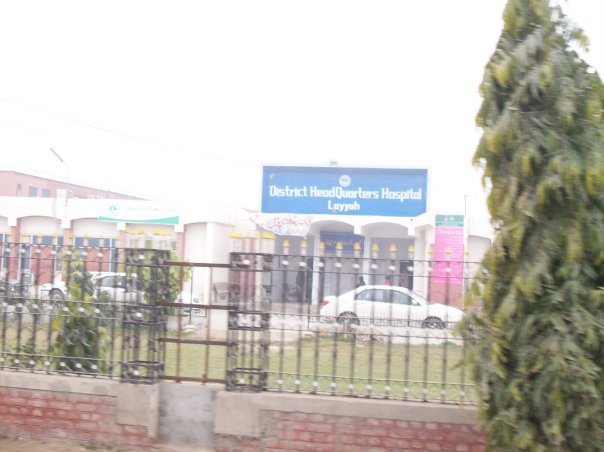


Geography and boundaries
Layyah occupies a roughly semi-rectangular shape and covers an area of about 6291 km2. It measures roughly 88 km east to west and about 75 km north to south. To the north it borders Bhakkar, to the south Muzaffargarh, to the east Jhang, and to the west the district approaches the area of Dera Ghazi Khan. The district is traversed along its western edge by the Indus River, which influences irrigation and local landscapes.
Administrative divisions
Administratively, Layyah District is subdivided into three tehsils: Layyah Tehsil, Chaubara Tehsil and Karor Lal Esan Tehsil. These tehsils encompass a mix of urban centres, agricultural villages and larger tracts of uncultivated land. Local government structures manage agriculture, water distribution and basic services across these units.
Climate and environment
The district experiences an extremely hot climate in summer with much hotter temperatures than many northern parts of the province; winter months are noticeably cooler due in part to proximity to the Koh-Suleman range. Seasonal temperature variation is a defining feature of the area and can affect cropping cycles and water needs. Much of the land has sandy soils and shifting dunes (sand), and in places vegetation consists of sparse scrub and pockets of forest in less-cultivated tracts.
Land use, agriculture and economy
Economic activity in Layyah is driven largely by agriculture where irrigation is available; the tehsils of Layyah and Karor Lal Esan contain the district's most productive farmland. By contrast, Chaubara remains largely barren and sandy, with extensive dunes and smaller forested patches. The Indus River along the western side supports irrigation canals and seasonal floodplain cultivation, while uncultivated sandy areas are used for grazing or remain as natural desert-like terrain.
History and notable facts
The area that is now Layyah District sits within the broader historical and cultural region of Punjab and shares many of the province's traditions of rural life, crop cultivation and riverine commerce. Its landscape—an intermix of alluvial plains near the Indus and sand-dune tracts inland—has shaped settlement patterns and livelihoods. Visitors and researchers often note the contrasts between irrigated fields and the sandy, sparsely vegetated sectors, as well as the district's role as a transitional zone between riverine and upland environments.
For further reading on provincial context and neighbouring districts see materials linked for Punjab, provincial administration pages (district), and local tehsil descriptions (tehsils).
Related articles
Author
AlegsaOnline.com Layyah District, Punjab — geography, administration and economy Leandro Alegsa
URL: https://en.alegsaonline.com/art/56489