
Latvian lats (Ls) — former currency of Latvia
The Latvian lats (Ls), subdivided into 100 santīmi, was Latvia's national currency in 1922–1940 and 1993–2013 before being replaced by the euro on 1 January 2014.
Overview
The Latvian lats (plural: lati; symbol: Ls) was the official currency of the Republic of Latvia in two distinct periods: following independence in the early 20th century and again after the restoration of independence at the end of the Cold War. It served as the country's primary medium of exchange, unit of account, and store of value until Latvia adopted the euro on 1 January 2014. For background on currency systems and definitions see currency and for context about the country itself see Latvia.
Image gallery
10 Images





Characteristics and denominations
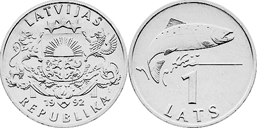
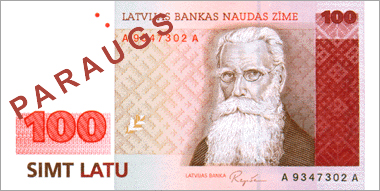
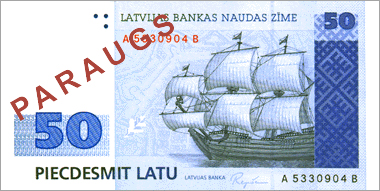
The lats was decimal: one lats was equal to 100 santīmi. It circulated in the form of both coins and banknotes that carried national symbols, cultural motifs and portraits of notable Latvians. The abbreviation "Ls" was commonly used in commerce and accounting. Physically, lats currency ranged from small-denomination coins for everyday purchases to larger-denomination banknotes for higher-value transactions.
History and development
The first lats was introduced in the early 1920s after Latvia established itself as an independent nation following World War I. That currency period ended in 1940 when Soviet authorities replaced the lats with the Soviet ruble after occupation. The lats was reintroduced in 1993 after Latvia regained independence, replacing temporary transitional money and helping to stabilise the national economy during the post-Soviet transition. Over the following two decades Latvia progressed through economic reforms and convergence criteria that ultimately enabled euro adoption.
Transition to the euro
On 1 January 2014 the lats ceased to be Latvia's legal tender and was replaced by the euro. The changeover included a period during which both the euro and the lats could be used in transactions for a short, defined dual-circulation interval; banknotes and coins in lats could be exchanged at banks after that period. For more on the currency that replaced it see euro.
Uses, design and cultural importance
Beyond its monetary function, lats banknotes and coins were a medium for expressing national identity. Designs often incorporated folkloric patterns, architectural motifs, coats of arms and figures tied to Latvian history and culture. Collectors and museums have retained interest in the lats for both its aesthetic qualities and its role in Latvia's 20th- and early-21st-century statehood.
Notable facts and distinctions
- The term "lats" is unique to Latvia and its plural form "lati" is used in Latvian and many English-language references.
- The currency existed in two interrupted eras: an interwar period and a post-Soviet period separated by decades of Soviet monetary integration.
- The abbreviation Ls was widely used on price tags, official documents and accounting records while the currency was in use.
Today the lats remains a subject of historical and numismatic interest. Its coins and banknotes appear in collections, exhibitions and discussions about Latvia's economic history and national symbolism. Those researching monetary transitions or the Baltic states' integration into European structures commonly cite the lats as an example of a national currency that was successfully phased out in favour of a shared, supranational currency.
Related articles
Author
AlegsaOnline.com Latvian lats (Ls) — former currency of Latvia Leandro Alegsa
URL: https://en.alegsaonline.com/art/56239