
Lanthanum: properties, history, occurrence and uses
Lanthanum (La, Z=57) is a soft silvery rare-earth metal and the first element of the lanthanide series. It has uses in optics, catalysts, battery alloys and medicine and an important mining and industrial role.
Overview
Lanthanum is a metallic chemical element with the symbol La and atomic number 57. It is conventionally grouped with the lanthanides, a set of elements often called the rare earth elements. Despite the phrase "rare earth," lanthanum is relatively widespread in the Earth's crust compared with many other elements used in high-technology applications.
Image gallery
6 Images


Physical and chemical characteristics
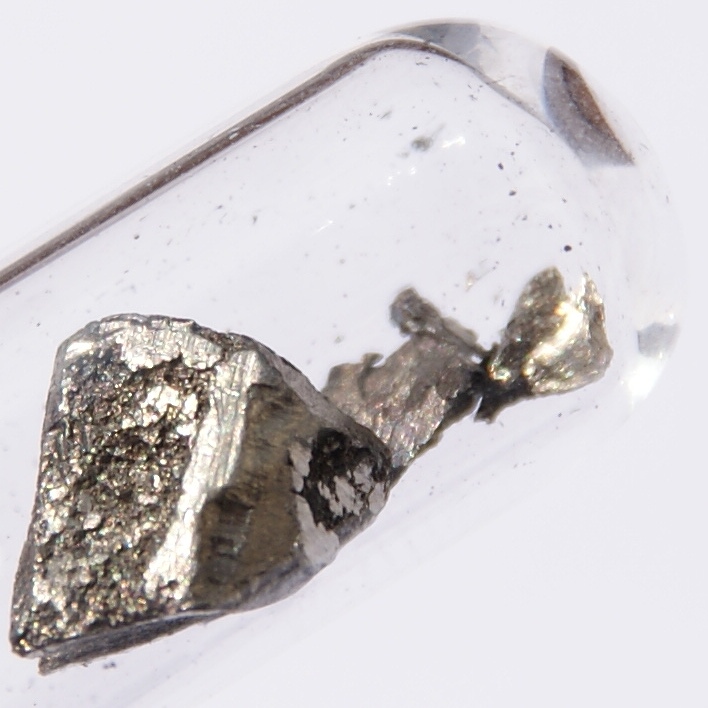
In its pure metallic form lanthanum is silvery-white, soft, malleable and ductile. It is sufficiently soft that it can be cut with a knife. Exposed metal tarnishes in air as it reacts with oxygen to form surface oxides; in moist conditions it reacts slowly with water to give hydroxides. Chemically it behaves like a typical rare-earth metal, readily forming +3 oxidation states in compounds.
Position in the periodic table and electronic notes
Lanthanum is generally regarded as the first of the lanthanide series, though it differs from some later lanthanides in its electronic structure. It marks the beginning of the f-block region in many periodic table arrangements and is closely related to the other lanthanides by similarity in size and chemistry. These similarities are the reason lanthanides commonly occur together in minerals and are difficult to separate.
Occurrence, extraction and historical background
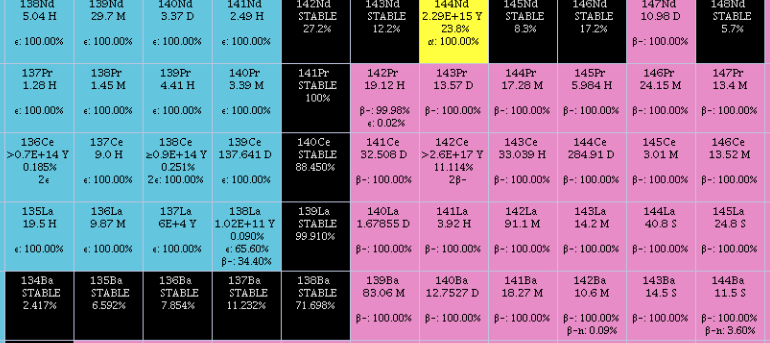
Lanthanum occurs naturally in several minerals, notably monazite and bastnäsite, which also contain other rare-earth elements. It was identified in the early 19th century when chemists studying rare minerals separated a new oxide; the metal was later isolated and characterized. Commercial lanthanum is produced from mined ores by a sequence of physical and chemical separations that concentrate and then separate the individual rare-earth elements.
Uses and applications
- Optics: lanthanum oxide improves refractive index and transparency of specialty glass used in camera and scientific lenses.
- Alloys and batteries: lanthanum-containing alloys are used for hydrogen storage and in nickel–metal hydride battery electrodes.
- Catalysis and petrochemicals: compounds of lanthanum are employed in certain catalysts and in materials that require thermal stability.
- Medicine and other specialized uses: lanthanum compounds are used as phosphate binders in renal medicine and in various laboratory applications.
Notable facts and considerations
The term "rare earth" reflects the historical difficulty of extracting individual elements rather than their absolute abundance. Lanthanum and its relatives are economically and strategically important because of their roles in modern electronics, optics and clean-energy technologies. Mining and chemical processing raise environmental and supply-chain concerns, and recycling and substitution are active areas of research. Chemically, lanthanum compounds should be handled with standard laboratory precautions; oxides and salts have relatively low acute toxicity but dusts and prolonged exposure are best avoided.
For further introductory reading on lanthanum as an element and its context within the periodic table, follow general references indicated by the links above: element overview, atomic data, lanthanide series and rare-earth materials.
Related articles
Author
AlegsaOnline.com Lanthanum: properties, history, occurrence and uses Leandro Alegsa
URL: https://en.alegsaonline.com/art/55956