
Lead nitrate
Lead nitrate (Pb(NO3)2) is a water-soluble lead(II) salt used in laboratories and industry; it is crystalline, an oxidiser, and a toxic environmental pollutant requiring careful handling.
Lead nitrate is an inorganic compound commonly written as Pb(NO3)2. It consists of lead in the +2 oxidation state coordinated to two nitrate anions. In its pure form it appears as colorless to white crystals that dissolve in water more readily than many other lead salts. For basic chemical and safety data see the chemical profile.
Image gallery
5 Images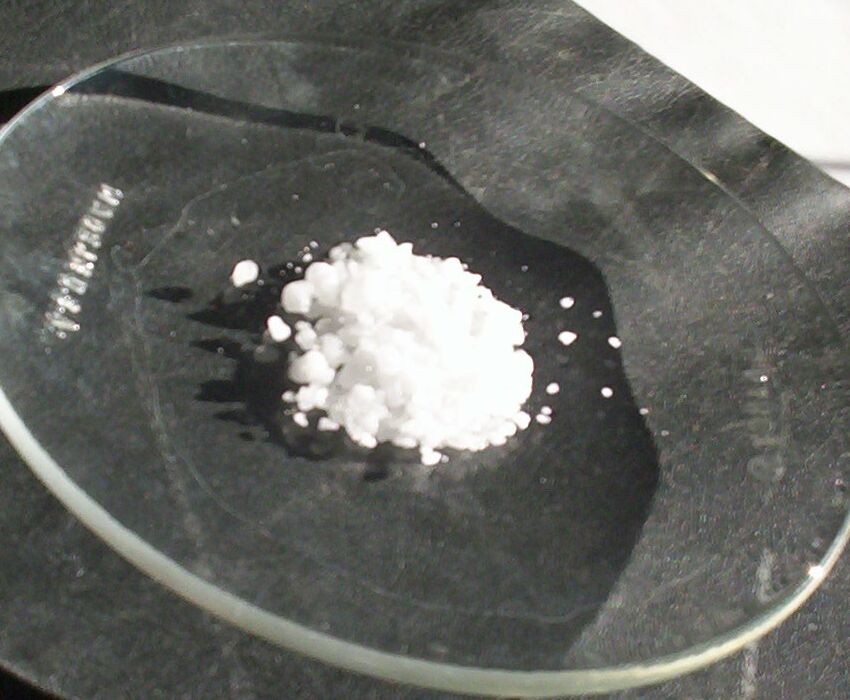


Properties and structure
Lead nitrate is characterized by the combination of a heavy metal cation and oxidizing nitrate groups. The lead(II) center gives rise to chemistry typical of Pb2+ compounds, while the nitrate ions can participate in redox and nitration reactions under appropriate conditions. Structural and spectroscopic details are summarized in many reference works; for structural diagrams and spectra consult structural references.
History and nomenclature
The substance has long been recognized in alchemical and early chemical literature under older Latin names such as "plumb dulcis." Modern nomenclature reflects its composition and oxidation state. Historical uses and the evolution of its applications are discussed in older chemical texts and reviews: see historical note.
Uses and practical applications
In laboratories lead nitrate serves as a convenient soluble source of Pb2+ for preparing other lead compounds, performing qualitative tests, and in certain synthesis routes. It has also seen use in limited industrial processes. Typical practical roles include:
- Precursor for producing insoluble lead salts by metathesis.
- Reagent in inorganic synthesis and educational demonstrations (with strict safety controls).
- Occasional niche industrial applications where a soluble lead source is required.
For examples of laboratory procedures and reagent handling consult technical datasheets: laboratory guidance.
Reactivity, hazards and disposal
Lead nitrate is an oxidizing salt and a source of toxic lead ions. It can react with organic material and reducing agents, sometimes with release of heat. Chief concerns are acute and chronic lead poisoning and environmental contamination. Handling requires personal protective equipment, containment to prevent spills, and adherence to hazardous-waste disposal regulations. Safety summaries and recommended precautions are available at safety resources.
Because of its toxicity and environmental persistence, the use of lead nitrate is restricted and declining in many applications. Alternatives are sought where possible to reduce human and ecological exposure.
Related articles
Author
AlegsaOnline.com Lead nitrate Leandro Alegsa
URL: https://en.alegsaonline.com/art/56729