
Lake Titicaca — High Andean lake on the Peru–Bolivia border
Lake Titicaca is a large, high-altitude freshwater lake in the Andes on the Peru–Bolivia border, known for its elevation, cultural islands, endemic wildlife, and archaeological importance.
Lake Titicaca sits in the central Andes and straddles the border between Peru and Bolivia. At about 3,812 metres (12,507 feet) above sea level it is often described as the world’s highest navigable lake because large boats routinely cross its waters. The lake is widely regarded as the largest in South America and is noted for its depth, vast surface, and clear division between western and eastern basins. For geographic context see Andean maps and studies.
Image gallery
10 Images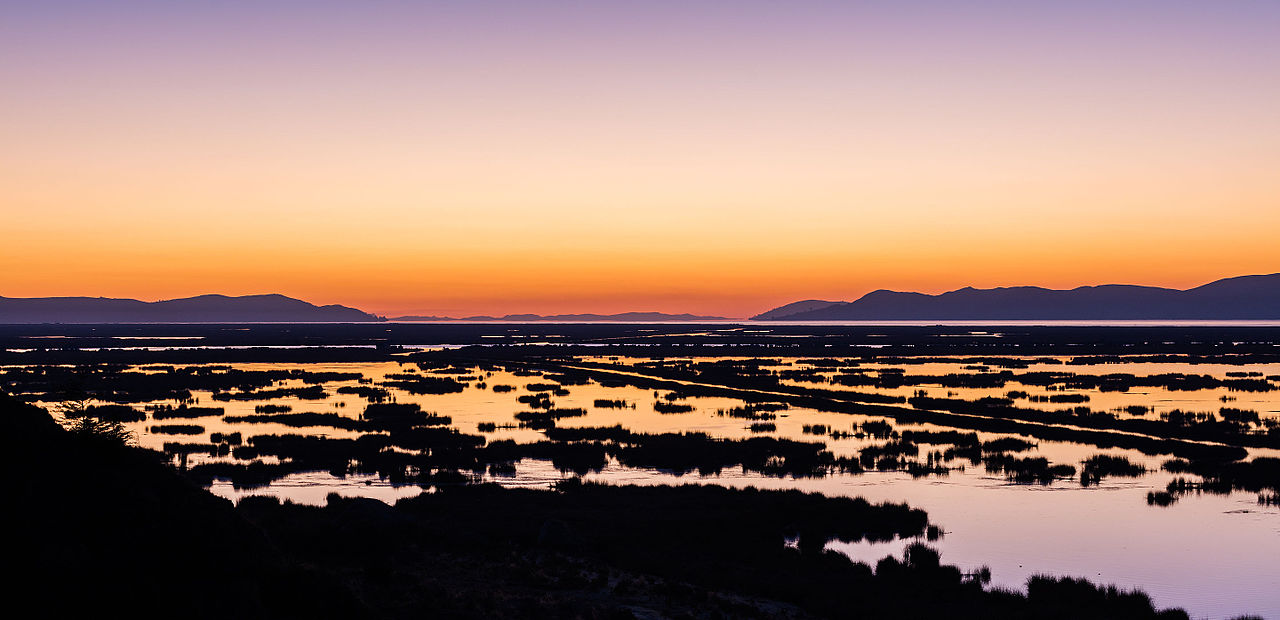


Key characteristics
Lake Titicaca is a high-altitude freshwater lake fed by mountain streams and seasonal runoff. Its shoreline includes rocky cliffs, broad bays and reed-lined marshes. The lake contains dozens of islands—commonly cited as 41 in number—ranging from small islets to larger inhabited islands such as Isla del Sol and Isla de la Luna. Several communities live on the islands and along the shore, maintaining traditional crafts and lake-dependent livelihoods. For regional information consult sources in regional geography.
History and cultural importance
The lake basin has been occupied for thousands of years. Archaeological sites on the shores and islands attest to pre-Columbian civilizations, including major centers associated with the Tiwanaku culture and later the Inca, who incorporated the lake into their origin stories and pilgrimage routes. Some islands contain ruins, ceremonial platforms and stone structures that remain important to local indigenous communities and to visitors. Historical studies and travel resources may be found via historical overviews.
Traditional ways of life around Titicaca include fishing, reed harvesting and the construction of totora reed boats. The Uros people are known for building floating islands of bundled totora reeds and living on them as a distinct cultural practice. Tourism is significant: visitors come for archaeological sites, island communities, scenic views and boat trips operated by local families. Practical travel and conservation notes are available at local guides.
Ecology, species and threats
The lake supports a mix of Andean and endemic species adapted to high-altitude conditions. Notable inhabitants include several endemic fish and amphibian species, and birds that depend on the reeds and open water. Environmental concerns affecting the lake include pollution from urban and agricultural runoff, introduced species, and pressures from population growth and tourism. Conservation initiatives and scientific research aim to monitor water quality and protect endangered species; further reading and research links are listed at conservation resources.
Lake Titicaca remains important as a freshwater resource, a living cultural landscape and an ecological hotspot in the high Andes. Its combination of natural features, archaeological richness and ongoing cultural traditions makes it a focal point for studies in geography, anthropology and environmental science, and an enduring destination for visitors and scholars alike.
Related articles
Author
AlegsaOnline.com Lake Titicaca — High Andean lake on the Peru–Bolivia border Leandro Alegsa
URL: https://en.alegsaonline.com/art/55570
Sources
- wikidata.org : wikidata.org/wiki/Q35342
- id.loc.gov : sh85135652
- id.ndl.go.jp : 00628770
- aleph.nkp.cz : ge593462
- viaf.org : 316430432
- worldcat.org : viaf-316430432