
Lake Thun (Thunersee) — Alpine lake of the Bernese Oberland
Lake Thun (German: Thunersee) is a large alpine lake in Switzerland’s Bernese Oberland, fed from Lake Brienz and drained by the Aare; it supports transport, tourism and local ecology and faces seasonal flood risks.
Overview
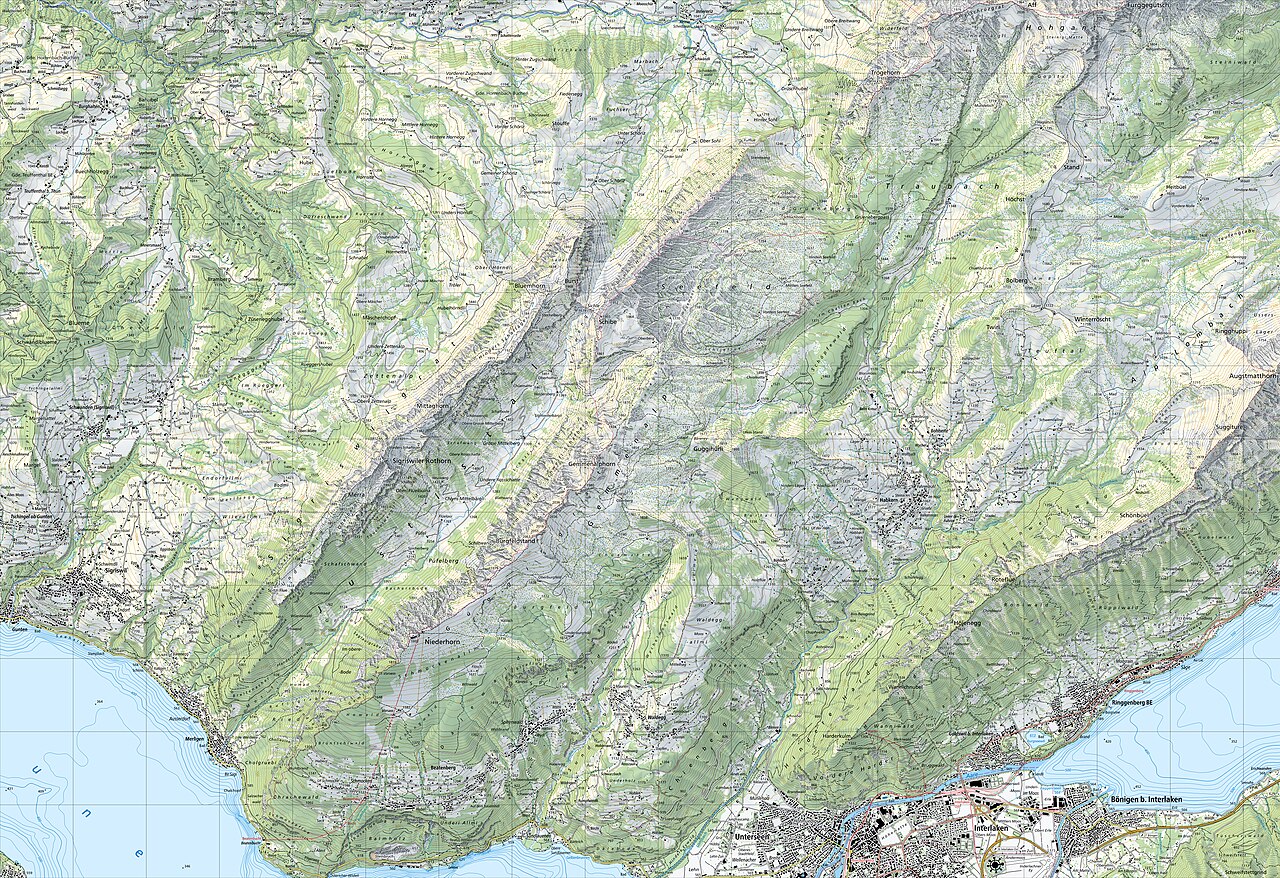
Lake Thun (German: Thunersee) is an alpine lake in the heart of the Bernese Oberland region of Switzerland. The town of Thun sits on its northern shore and gives the lake its common name. Set beneath the foothills of the Alps, the lake forms an important landscape and economic feature for nearby communities.
Image gallery
10 Images





Physical characteristics
Lake Thun is a deep, elongated body of water occupying a valley carved by glacial action. It receives water from a number of mountain streams and rivers as well as from a higher neighbouring lake. The lake’s shoreline combines steep alpine banks with low-lying settled areas, and its waters are used for recreation, local transport and as a scenic backdrop for surrounding villages and mountains.
Hydrology and flood behaviour
The lake is part of a larger river-lake system: it is fed in part by flows from Lake Brienz, which lies to the southeast and sits several metres higher, and by tributaries such as the Kander and others draining the Oberland. Water leaves Lake Thun via the river Aare. The lake’s catchment area is extensive—commonly cited as around 2,500 km²—and intense rainfall or rapid snowmelt can produce large inflows. Because the downstream channel can become constrained during extreme events, the lake and its surroundings are susceptible to local flooding; river engineering, retention basins and other measures have reduced but not eliminated this risk.
History and human influence
Human settlements have clustered around Lake Thun for centuries, using the lake for fishing, transport and as a defensive and trade resource. Over the last two centuries the shoreline and inflows have been managed more intensively: navigation has been established, landing places built, and river courses adjusted to protect towns and to harness hydraulic energy. These interventions have shaped the lake’s modern appearance and use while also requiring ongoing maintenance and planning.
Uses, tourism and transport
The lake supports a mix of activities. Passenger boats and excursion cruises operate between lakeshore towns, and the water is popular for sailing, swimming and angling. Tourism is significant: the combination of clear alpine water, mountain views and nearby attractions draws visitors year-round. Local infrastructure around the lake includes harbours, promenades and access points to hiking and mountain recreation.
Ecology and conservation
Lake Thun hosts typical central European freshwater flora and fauna, including several fish species and aquatic plants adapted to alpine lake conditions. Water quality is generally good, but it is influenced by land use across the catchment—urban runoff, agriculture and hydrological changes all affect ecological balance. Conservation efforts focus on maintaining water quality, protecting habitat along the shoreline and balancing visitor use with biodiversity protection.
Notable facts and relationships
- The lake’s close hydrological connection to Lake Brienz and its outflow via the Aare make it an integral part of the regional river system.
- Its name and identity are tied to the town of Thun, which occupies the northern shore and serves as a local administrative and transport centre.
- Management of the catchment and flood risk is an ongoing planning priority for cantonal and municipal authorities.
For visitors and residents alike, Lake Thun remains a striking natural feature: a blend of alpine scenery, cultural history and practical importance for transport, recreation and regional water management. Further background on the region and its water systems is available through regional guides and local authorities (German name, Bernese Oberland, Switzerland).
Related articles
Author
AlegsaOnline.com Lake Thun (Thunersee) — Alpine lake of the Bernese Oberland Leandro Alegsa
URL: https://en.alegsaonline.com/art/55569