
Lagerstätten: sites of exceptional fossil preservation
Lagerstätten are fossil sites with unusually detailed preservation. They include Konservat- and Konzentrat-Lagerstätten and provide rare windows into soft tissues, behavior, and whole ancient ecosystems.
Overview
The German term Lagerstätte (plural: Lagerstätten) literally means a place of storage and is used by paleontologists to describe fossil deposits with unusually high quality or quantity of fossils. Such sites are important because they preserve details rarely kept in ordinary fossil beds: soft tissues, delicate anatomical structures, or dense concentrations of remains. These exceptional deposits give researchers snapshots of ancient life that help reconstruct anatomy, ecology and evolutionary history.
Image gallery
10 Images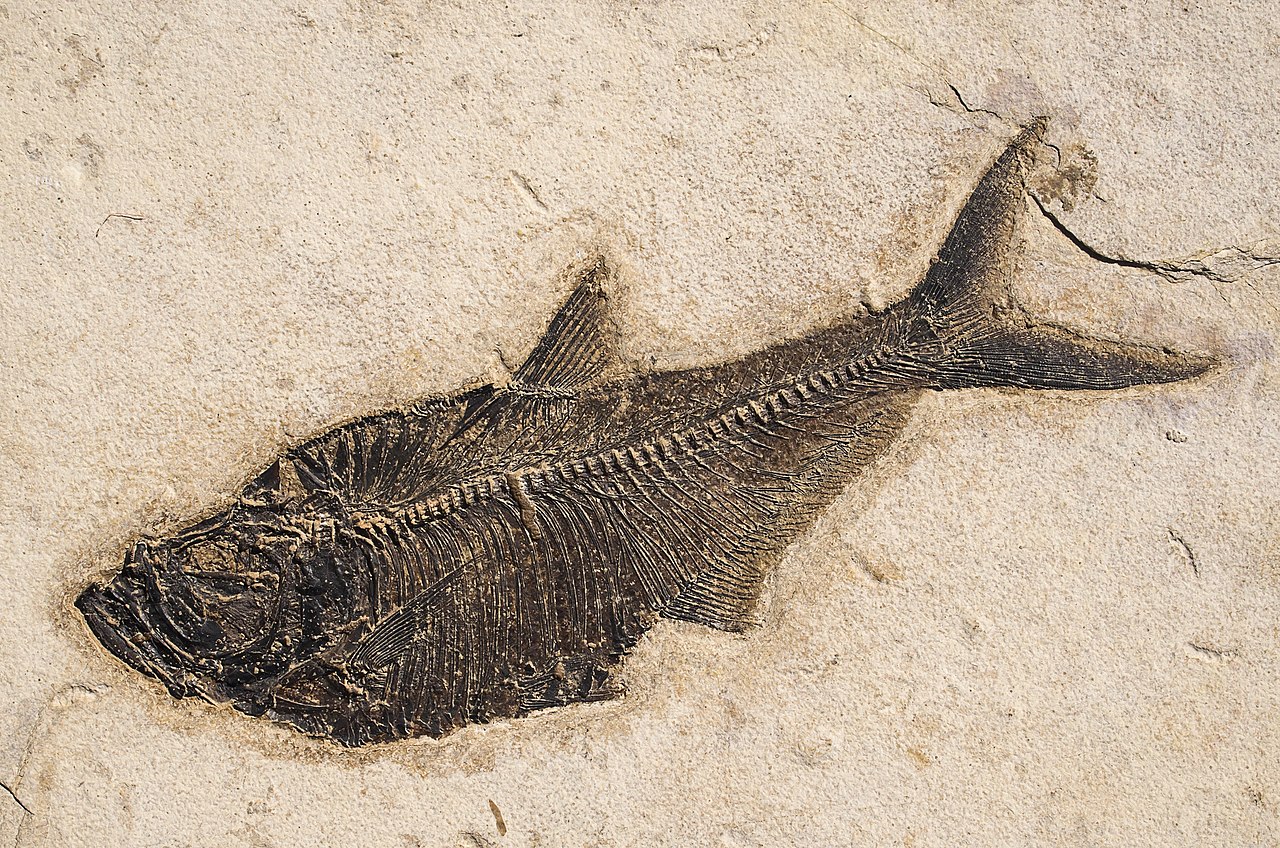


Types and defining characteristics
Scientists commonly divide Lagerstätten into two broad categories. Konservat-Lagerstätten are conservation deposits noted for the preservation of soft parts, integuments, stomach contents and articulated skeletons, often as fine carbonaceous films, pyritized tissues, or mineralized impressions. Konzentrat-Lagerstätten are concentration deposits where large numbers of bones, teeth, or shells accumulate, producing dense fossil assemblages though not necessarily preserving soft tissue.
Typical features that produce exceptional preservation include rapid burial, low oxygen conditions that slow decay, fine-grained sediments that capture fine detail, early mineral replacement or cementation, and chemical environments that favor fossilization (e.g., phosphatic or sulphidic settings). The taphonomy of Lagerstätten—the pathways from living organism to fossil—remains a key research area.
History and notable examples
The term was popularized in the 20th century to classify sites such as Solnhofen in Germany, famous for the feathered Archaeopteryx, and later applied to deposits worldwide. Well-known Konservat-Lagerstätten include the Cambrian Burgess Shale (Canada) and Chengjiang (China), which preserve soft-bodied early animals; the Eocene Messel Pit (Germany), with detailed mammals and stomach contents; and the Santana Formation (Brazil), noted for fishes and pterosaurs. The Green River Formation and the La Brea tar pits are other important localities that illustrate different preservational pathways and research value.
Scientific importance and uses
Lagerstätten are central to studies of major evolutionary events—such as the Cambrian explosion—because they record body plans and soft anatomy that ordinary fossil records miss. They inform anatomical descriptions, phylogenetic hypotheses, paleoecology, and behavior (for example, trace fossils, gut contents, or life position). Museums and education programs also rely on spectacular Lagerstätten specimens to communicate deep time and biodiversity.
Distinctions and notable facts
- Konservat-Lagerstätten preserve soft tissues and fine detail; Konzentrat-Lagerstätten concentrate abundant hard parts.
- Preservation modes include carbonaceous compressions, permineralization, phosphatization and pyritization, as well as impressions or casts.
- Articulated skeletons are common in conservation deposits, while concentration sites may have disarticulated but numerous remains.
For further context on terminology and classification see introductory resources on fossil deposits and taphonomy: a concise guide to the language and examples can be found via fossil preservation overviews and specialist reviews at repositories and textbooks. Researchers continue to discover new Lagerstätten that reshape our view of ancient life and the processes that preserve it.
Questions and answers
Q: What is a Lagerstätte?
A: A Lagerstätte is a German word for places (sites) of exceptional fossil preservation.
Q: Who coined the term Lagerstätte?
A: Adolf Seilacher coined the term in 1970.
Q: What are Konservat-Lagerstätten?
A: Konservat-Lagerstätten are extra-special sites known for the exceptional preservation of fine details.
Q: What did the Solnhofen site yield?
A: The Solnhofen site yielded the most exceptional fossils.
Q: What is the state of preservation of skeletons found in Konservat-Lagerstätten?
A: In Konservat-Lagerstätten, skeletons are mostly articulated, which means bones are together in their life form.
Q: What is the state of preservation of soft parts found in Konservat-Lagerstätten?
A: In Konservat-Lagerstätten, soft parts are preserved as impressions or casts.
Q: What are conservation Lagerstätten?
A: Conservation Lagerstätten are deposits known for the exceptional preservation of fine details.
Tags
Related articles
Author
AlegsaOnline.com Lagerstätten: sites of exceptional fossil preservation Leandro Alegsa
URL: https://en.alegsaonline.com/art/55373
Sources
- palaeo.gly.bris.ac.uk : "Fossil Lagerstätten"