
Chess piece — types, movement, history, and significance
Overview of the standard chess pieces, how they move, historical development, rules and special moves, common tactics, and their role in play and composition.
Chess pieces are the movable units used by the two players in the board game chess. Each side begins with sixteen pieces arranged on the first two ranks of an 8×8 board; the basic roles and legal moves of those pieces are defined by long tradition and by the international governing body FIDE. The pieces work together to control territory, attack the opponent's king, and create tactical and strategic threats within the rules of the game.
Image gallery
10 Images


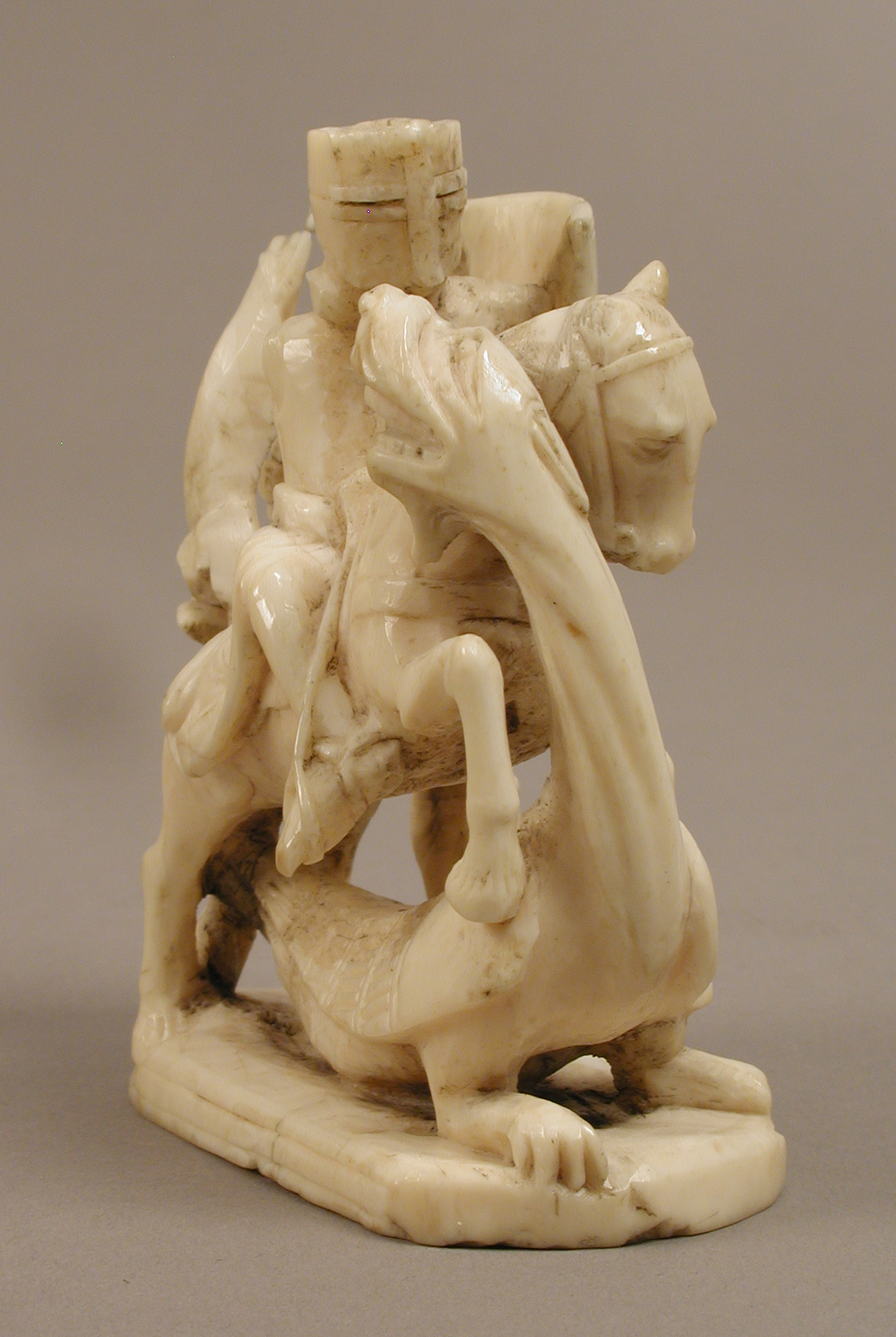


Standard set and starting position
A standard starting complement for one player is:
The board is set so that each player’s rightmost square on their back rank is a light-colored square. The king and queen have fixed starting squares (queen on her own color) and pawns occupy the rank in front of the major pieces.
Movement, value, and special rules
Each piece has distinctive movement patterns and practical value in play. In simple terms: kings move one square in any direction; queens combine rook and bishop moves and are the most mobile; rooks move any number of squares orthogonally; bishops move any number of squares diagonally; knights move in an L-shape and can jump over intervening pieces; pawns move forward but capture diagonally. Common approximate relative values used in strategy are pawn=1, knight≈3, bishop≈3, rook≈5, queen≈9.
Several special rules affect pieces: castling (a joint king-and-rook move to improve safety and develop a rook), en passant (a special pawn capture), and pawn promotion (a pawn reaching the far rank may be exchanged for a queen, rook, bishop or knight). These rules influence opening preparation, endgame technique, and tactical possibilities.
History and development
The modern set evolved over many centuries from early Indian and Persian predecessors (such as chaturanga and shatranj). Piece names, relative powers and appearance changed gradually in Europe; most notably the queen increased its mobility during the late medieval to early modern period, becoming the dominant attacking piece in contemporary play.
Uses, tactics and study
Pieces serve tactical motifs (forks, pins, skewers, discovered attacks) and long-term strategic aims (pawn structure, piece activity, control of key squares). Study of individual pieces’ endgames — for example king and pawn endings, rook endgames, or knight vs. bishop imbalances — is central to improving practical play. Composers and problemists also exploit piece interactions to create artistic or instructive positions.
Notable distinctions and variations
Different cultures and historical periods produced variant pieces and rules; modern chess also has many established variants that alter pieces or introduce new ones. In organized competition, piece design is standardized for clarity and fairness, while in casual sets the appearance and craftsmanship of pieces remain a significant aspect of the game’s material culture.
For further reading about rules, piece movement diagrams, and official regulations, consult introductory manuals or the governing body's rulebook; many resources and teaching guides are available online and in print.
Questions and answers
Q: How many chess pieces do players start with in the game of chess?
A: Players start with 16 chess pieces.
Q: Who defines how the chess pieces move in the game of chess?
A: The way that the chess pieces move are defined by both tradition and by FIDE, the international chess federation.
Q: What are the names of the different chess pieces?
A: The names of the different chess pieces are king, queen, rooks, bishops, knights, and pawns.
Q: How many kings do players start with in a game of chess?
A: Players start with only 1 king.
Q: How many knights do players start with in a game of chess?
A: Players start with 2 knights.
Q: How many pawns do players start with in a game of chess?
A: Players start with 8 pawns.
Q: What must be the color of the bottom-right square of the board for each player in a game of chess?
A: The bottom-right square of the board for each player must be a light-square.
Tags
Related articles
Author
AlegsaOnline.com Chess piece — types, movement, history, and significance Leandro Alegsa
URL: https://en.alegsaonline.com/art/19341