
Kintai Bridge (Kintai-kyō) — Historic Wooden Arch Bridge in Iwakuni
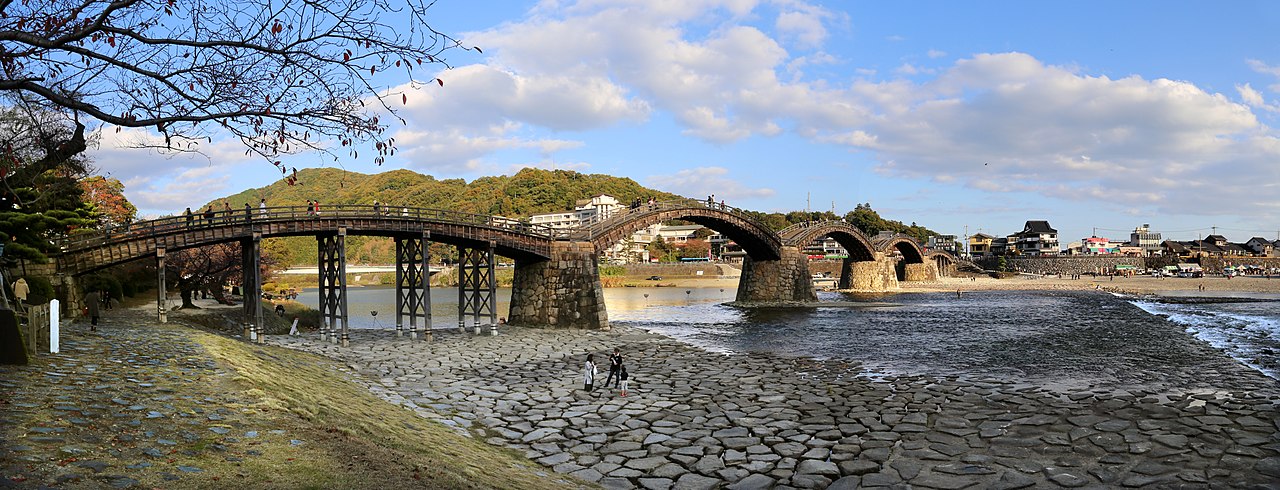
Kintai Bridge is a landmark multi-arched wooden bridge across the Nishiki River in Iwakuni, Yamaguchi Prefecture, Japan, famed for its five wooden arches, stone piers, restorations, and scenic seasonal views.
The Kintai Bridge (Kintai-kyō) is a distinctive wooden arch bridge that spans the Nishiki River in Iwakuni, Yamaguchi Prefecture, Japan. Admired for its elegant sequence of timber arches and heavy stone piers, the bridge functions primarily as a pedestrian crossing and a regional symbol. It is closely associated with the nearby Iwakuni Castle and the riverside parkland, attracting visitors for river views, cherry blossoms and traditional festivals.
Image gallery
8 Images




Design and construction
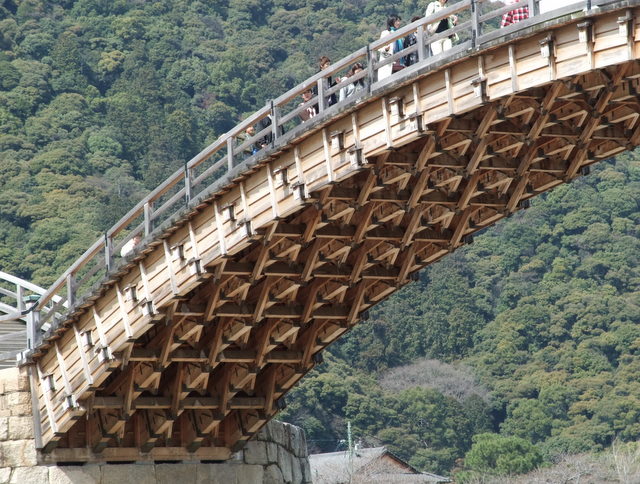
The bridge is notable for a repeated series of wide wooden arches set on massive stone supports. Its basic characteristics include:
- Multiple timber arch spans arranged in a continuous rhythm across the river.
- Stone piers and abutments that rise from the riverbed to support the superstructure and resist floods.
- Traditional carpentry techniques used in joinery and assembly, emphasizing interlocking members and replaceable elements rather than modern welding.
History and development
The Kintai Bridge has a long history of construction, damage and repair. The original timber bridge was completed in the 17th century and was maintained and altered over the centuries in response to seasonal flooding and changing needs. Major reconstructions have sought to preserve the traditional appearance while improving durability; the modern structure is the result of careful restoration work that relies on historical records and traditional building methods.
Uses, tourism and cultural importance
Today the bridge is primarily a cultural and tourist asset rather than a major transport route. Visitors come to walk its length, photograph the five-arch silhouette and enjoy festivals and seasonal displays such as cherry blossom viewing in spring and autumn foliage. The bridge and its surroundings are part of Iwakuni's identity and are often included in regional travel guides.
Visiting and practical notes
The site is accessible from Iwakuni city and can be combined with a visit to Iwakuni Castle and nearby parks. For up-to-date access details, events and conservation information consult local visitor services or the town's official pages: official visitor information and local tourism resources. When visiting, note that many parts of the structure are carefully maintained and conservation work is ongoing to preserve the bridge's historic fabric.
Notable facts: the bridge's layered arches and riverside setting make it one of Japan's most photographed traditional bridges. Its combination of timber craftsmanship and stone engineering illustrates historical approaches to flood-prone river crossings and remains an instructive example of heritage preservation.
Related articles
Author
AlegsaOnline.com Kintai Bridge (Kintai-kyō) — Historic Wooden Arch Bridge in Iwakuni Leandro Alegsa
URL: https://en.alegsaonline.com/art/53708
Sources
- sky.icn-tv.ne.jp : Kintai Bridge (in Japanese)
- yomiuri.co.jp : "100 Landscapes of Heisei announced,"