
Kibi Province (ancient Japanese province)
Kibi Province was an early Japanese province on Honshū whose territory corresponds largely to modern Okayama and eastern Hiroshima. It is noted for Kofun-era tombs, the Kibi polity, and later provincial divisions.
Overview
Kibi Province (吉備国, Kibi no kuni) was an early regional polity and imperial province on the island of Honshū. Its lands now lie mainly within present-day Okayama Prefecture and parts of eastern Hiroshima Prefecture. The name Kibi continued in local use even after administrative reorganization, and the area was sometimes collectively called Bishū (the “Bi” provinces).
Image gallery
3 Images
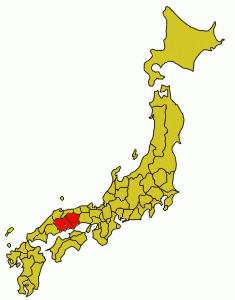

Geography and divisions
The Kibi region included coastal plains along the Seto Inland Sea and the surrounding uplands. Under the classical provincial system the wider Kibi area was eventually divided into three provinces that carried the character 備 (Bi):
- Bizen (備前)
- Bitchū (備中)
- Bingo (備後)
These divisions reflected both administrative reforms and the distribution of local power centers.
History and archaeology
Kibi is notable in archaeology for a large number of kofun (burial mounds) and other remains that indicate a powerful local polity in the Kofun period. In early historical records Kibi appears as a distinct regional power that interacted with the Yamato court. During the classical era the territory was integrated into the ritsuryō provincial system and later reorganized into the three Bi provinces.
Culture, figures and legacy
The region has left a lasting cultural legacy. Several Shinto shrines and sites, including Kibitsu Shrine, preserve local traditions. Historical figures associated with the area include prominent scholars and envoys of the eighth century. Folk traditions such as tales linked to Momotarō and local foods like Kibi dango remain part of popular memory in the modern prefectures that succeeded Kibi.
Notable facts
- The term Bishū is still used in historical and cultural contexts to refer to the Bi provinces.
- Archaeological surveys in the Kibi plain have revealed clustered kofun groups, showing early regional complexity.
- The former province’s territory was absorbed into modern prefectures during the Meiji-era reorganization of Japan’s administrative map.
Kibi’s evolution from a regional power into several classical provinces illustrates how ancient territorial units were adapted into the centralized state and later into Japan’s modern prefectural system.
Related articles
Author
AlegsaOnline.com Kibi Province (ancient Japanese province) Leandro Alegsa
URL: https://en.alegsaonline.com/art/53304
Sources
- books.google.com : "Kibi"