
King River (Victoria)
Perennial river in north‑east Victoria, Australia. Tributary of the Ovens River, noted for whitewater recreation, riparian habitat and the cool‑climate King Valley wine region.
Overview
The King River is a perennial stream in north‑east Victoria, Australia. It is a tributary of the Ovens River and part of the larger Murray–Darling catchment, which eventually joins the Murray River at Echuca. The river and the valley through which it flows form the local King Valley landscape, valued for native vegetation, farmland and tourism. Its riparian corridors support regional biodiversity and connect upland forest areas to lower agricultural plains.
Image gallery
2 Images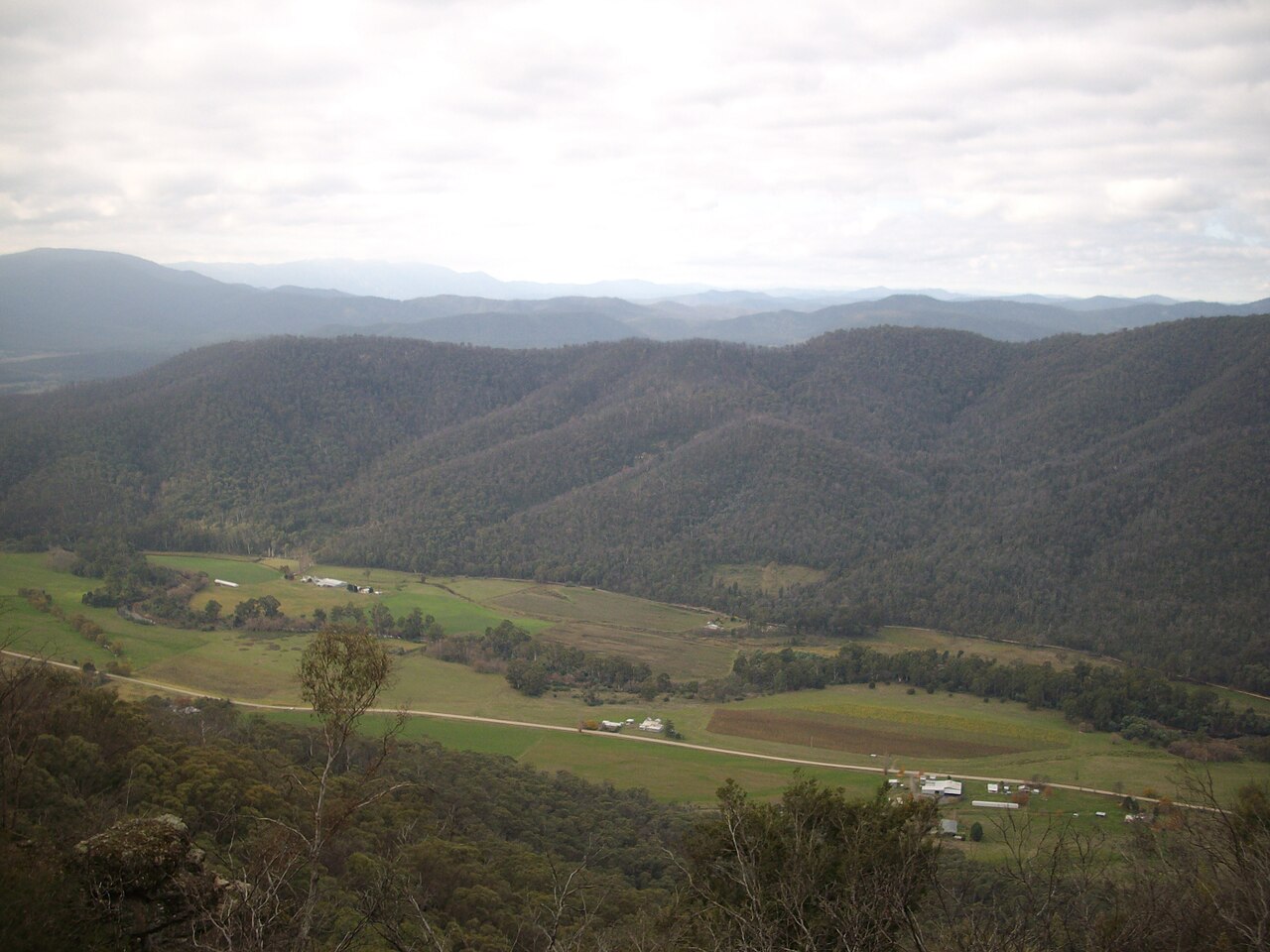

Course
The King River rises in the higher country of north‑east Victoria and flows generally northwards to meet the Ovens River. Along its course the river passes through a mix of forested and cleared land, with alternating reaches of steeper gradient and gentler, meandering sections. The varying channel and gradient produce a mix of pools, riffles and rock‑strewn rapids that shape local habitat and recreational use.
Environment and wildlife
Riparian vegetation along the King River includes river red gums and other native trees that provide shade, bank stabilisation and habitat for birds and mammals. Aquatic communities are typical of upland Victorian waterways, with macroinvertebrates, native fish and plants adapted to seasonal flows. Land use changes and water extraction have influenced river health in places; conservation efforts focus on revegetation, erosion control and maintaining environmental flows.
Recreation and uses
The King River is popular for kayaking and canoeing, with several reaches offering grade two and three rapids suited to intermediate paddlers. It has hosted organised events, including the Victorian and Australian Downriver Championships in 2008. Other common activities include angling, walking along riverside tracks, birdwatching and small‑scale recreation linked to nearby wineries and towns. Paddlers and visitors are advised to check local conditions, access points and safety information before venturing onto the water.
King Valley and viticulture
The valley carved by the King River is a recognised cool‑climate wine area. Vineyards and cellar doors in the King Valley benefit from altitude and cooler temperatures that suit a range of grape varieties, including several Italian styles established by local growers. Wine production and agritourism are important to the local economy, and visitors commonly combine river activities with tastings, local produce and accommodation in the valley.
History and management
The King River flows through Country long occupied by Indigenous peoples; the river and adjacent lands hold cultural significance. European settlement and land clearance altered the landscape and hydrology, and contemporary management aims to balance agricultural water use, flood risk, ecological health and recreation. Regional authorities and community groups participate in catchment planning and on‑ground works to protect river values.
Practical information
- Local access and safety: several public launch points and trailheads provide river access, but conditions vary with season — consult local agencies and clubs for guidance and current information at paddling resources.
- Visitor services: cellar doors, tasting trails and accommodation in the King Valley support wine tourism; see regional visitor pages at King Valley wine.
- Viticulture background: growers and tourism guides provide information on grape varieties and local production practices at grape resources.
- Catchment context: the King River is part of the broader Murray–Darling system described in regional planning material at Murray–Darling catchment.
For anyone planning to visit the King River, local visitor centres and paddling clubs are good starting points for up‑to‑date information on river conditions, seasonal events and conservation activities.
Related articles
Author
AlegsaOnline.com King River (Victoria) Leandro Alegsa
URL: https://en.alegsaonline.com/art/53573