
Kharan (princely state)
Former autonomous princely state in southwestern British India (est. c.1697). Acceded to Pakistan in 1948; now Kharan District in Balochistan. Arid, tribal territory with a long local dynasty and administrative legacy.
Overview
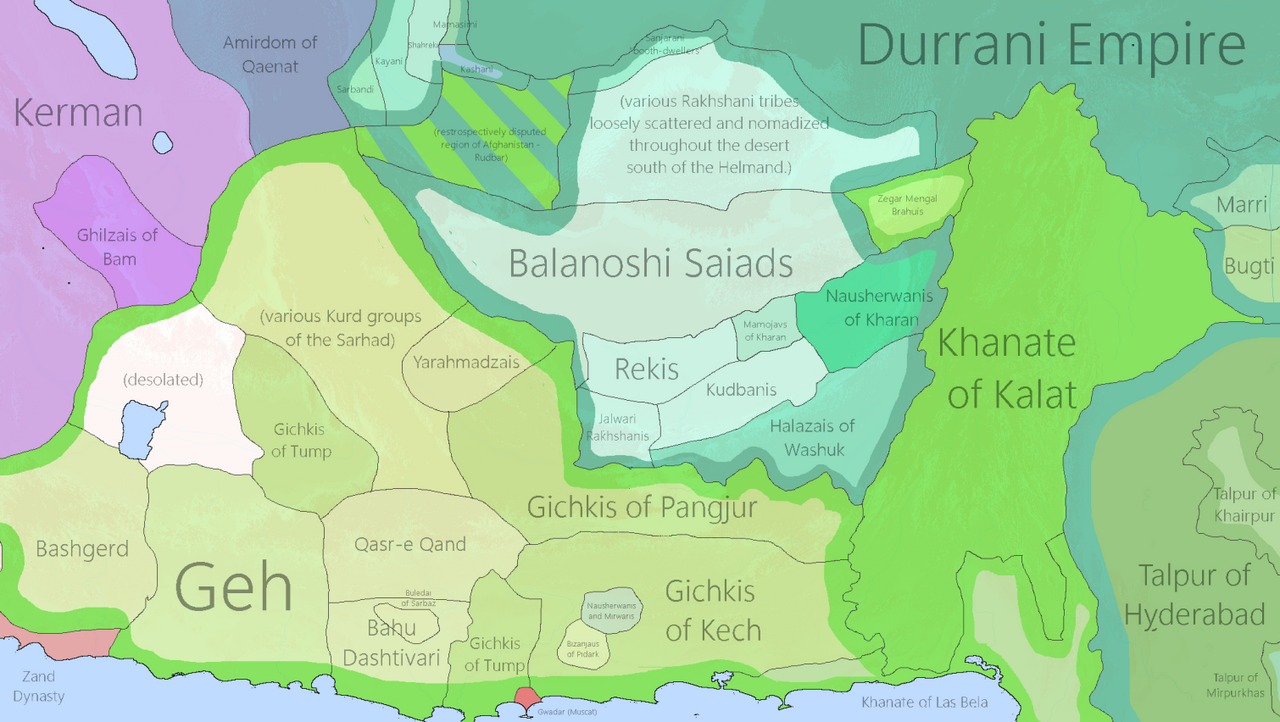
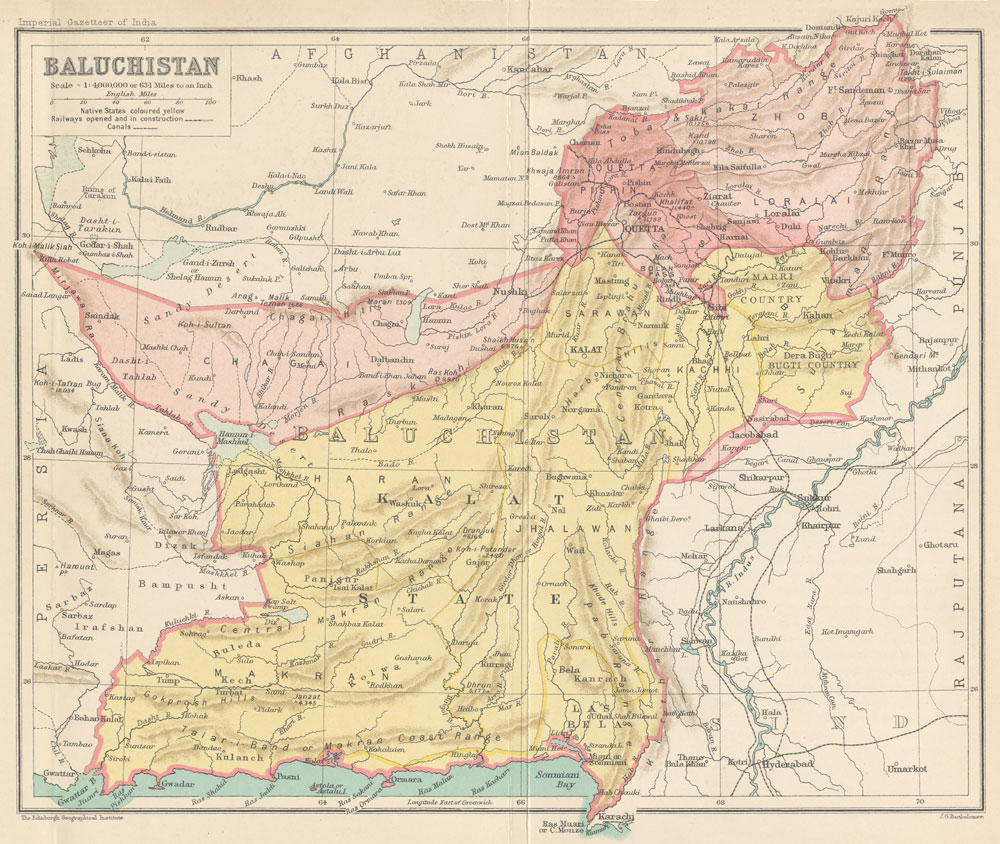
The State of Kharan was an autonomous princely state in the southwest of what was then British India. Established about 1697 CE, it occupied an arid, sparsely populated region that today lies within the province of Balochistan in modern Pakistan. The state retained internal self-government under its hereditary rulers while accepting the suzerainty of regional powers and, later, British paramountcy.

Image gallery
5 Images


Geography and society
Kharan's landscape consists mainly of desert plateaus, rocky hills and seasonal wadis. The climate is harsh and rainfall limited, shaping a pastoral and small-scale agricultural economy. The population is predominantly Baloch and organized along tribal lines; local elites and customary law played central roles in social and political life. Languages commonly spoken include varieties of Balochi and other regional tongues.
History and political development
The polity that became known as the State of Kharan emerged in the late 17th century and was governed by a local dynasty whose leaders generally held titles such as Mir or Khan. During the 19th and early 20th centuries the state negotiated its position with neighbouring principalities and, ultimately, with the British administration in the Indian subcontinent. Following the end of British rule, the territory's accession and administrative absorption into Pakistan took place in 1948, after which it was incorporated into the country's western wing. (In 1971, the former eastern wing became Bangladesh, while the western wing continued as the state now called Pakistan.)
Integration and legacy
In the years after accession Kharan underwent administrative reorganisation and was eventually reconstituted as the Kharan District within Pakistan's provincial system. The district retains much of the region's tribal structure and rural economy, with governance now conducted through national and provincial institutions alongside traditional local authorities.
Characteristics and notable facts
- Founded circa 1697 CE and ruled by a hereditary local dynasty.
- Location: southwestern Pakistan in the wider region of Balochistan, characterized by arid terrain and low population density.
- Economy historically based on pastoralism, limited agriculture and local trade.
- Its accession in 1948 is part of the wider political integration of princely states into Pakistan after British departure.

Today Kharan's historical identity as a princely state is reflected in local institutions, oral history and place names, while its administrative role is that of a district within the modern Pakistani state. For further context on princely states and regional administration see related country and provincial articles.
Related articles
Author
AlegsaOnline.com Kharan (princely state) Leandro Alegsa
URL: https://en.alegsaonline.com/art/53199