
Keian (Japanese era, 1648–1652)
Keian (慶安) was a Japanese era name (nengō) spanning 1648–1652 during the early Edo period under Emperor Go-Kōmyō; noted for political transitions and the suppressed Keian Uprising.
Keian (慶安) is the Japanese era name (a nengō) that covered the years from February 1648 through September 1652. The characters 慶安 are commonly rendered as "celebratory peace" or "joyous tranquility." The era sits in the early Edo period, with Emperor Go-Kōmyō on the throne and political power concentrated in the Tokugawa shogunate.
Image gallery
4 Images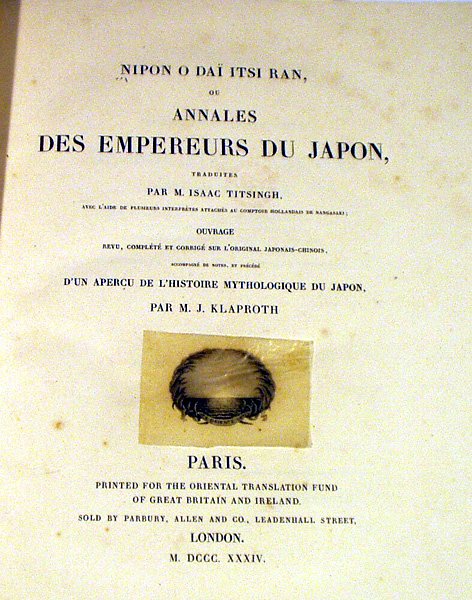


Context and purpose of the era name
In Japan's historical practice, era names were adopted to mark notable events, to seek auspicious renewal, or to signal a change in government sentiment. Keian followed the Shōhō era and preceded the Jōō era. The term "nengō" itself is often translated as era name (nengō), a chronological label used alongside regnal and imperial dating systems.
Political and social backdrop
The Keian years belong to a period of relative institutional consolidation under the Tokugawa bakufu. Tokugawa Iemitsu, the third shōgun, died in 1651 and was succeeded by Tokugawa Ietsuna, a transition that had implications for daimyo governance and court–shogunate relations. The shogunate's policies of controlled foreign contact and domestic regulation continued to shape society and economy.
Notable events
- Keian Uprising (1651): A planned revolt in Edo led by conspirators including Marubashi Chūya and Yui Shōsetsu was discovered and suppressed. The plot's failure reinforced the shogunate's vigilance against internal threats.
- Succession of the shogun: The death of Tokugawa Iemitsu in 1651 and the installment of Tokugawa Ietsuna marked an important political change during Keian.
Although short, the Keian era reflects the dynamics of mid-17th-century Japan: centralizing military government, growing urban culture, and a calendar system that linked political symbolism to everyday life. The era name itself conveys the aspiration for stability after conflicts and upheavals of earlier decades.
For chronological placement, Keian is bounded by Shōhō before it and Jōō after it, and it sits within the larger framework of Edo-period chronology studied by historians of early modern Japan.
Related articles
Author
AlegsaOnline.com Keian (Japanese era, 1648–1652) Leandro Alegsa
URL: https://en.alegsaonline.com/art/52711
Sources
- books.google.com : "Kei'an"
- books.google.com : "Go-Kōmyō Tennō,"
- books.google.com : Annales des empereurs du japon, p. 412.
- books.google.com : Contemporary Japan: a Review of Japanese Affairs, Vol. 11, Part 2, p. 749.
- books.google.com : pp. 406, 412.