
Karkonosze (Giant Mountains)
Karkonosze, the Giant Mountains, are the highest part of the Sudetes on the Czech–Polish border. Noted for Sněžka, peat bogs, glacial landforms, the Elbe source, protected parks and the folklore spirit Rübezahl.
The Karkonosze range, called Krkonoše in Czech and the Riesengebirge in German, is the highest section of the Sudetes along the Czech–Polish border. Internationally known as the Giant Mountains in English, the compact chain rises to its summit at Sněžka (Schneekoppe), about 1,602 metres above sea level. The range forms a clear natural divide between the historical regions of Silesia and Bohemia and contains important headwaters, including the source area of the Elbe (Labe) River.
Image gallery
10 Images




Landscape and geology
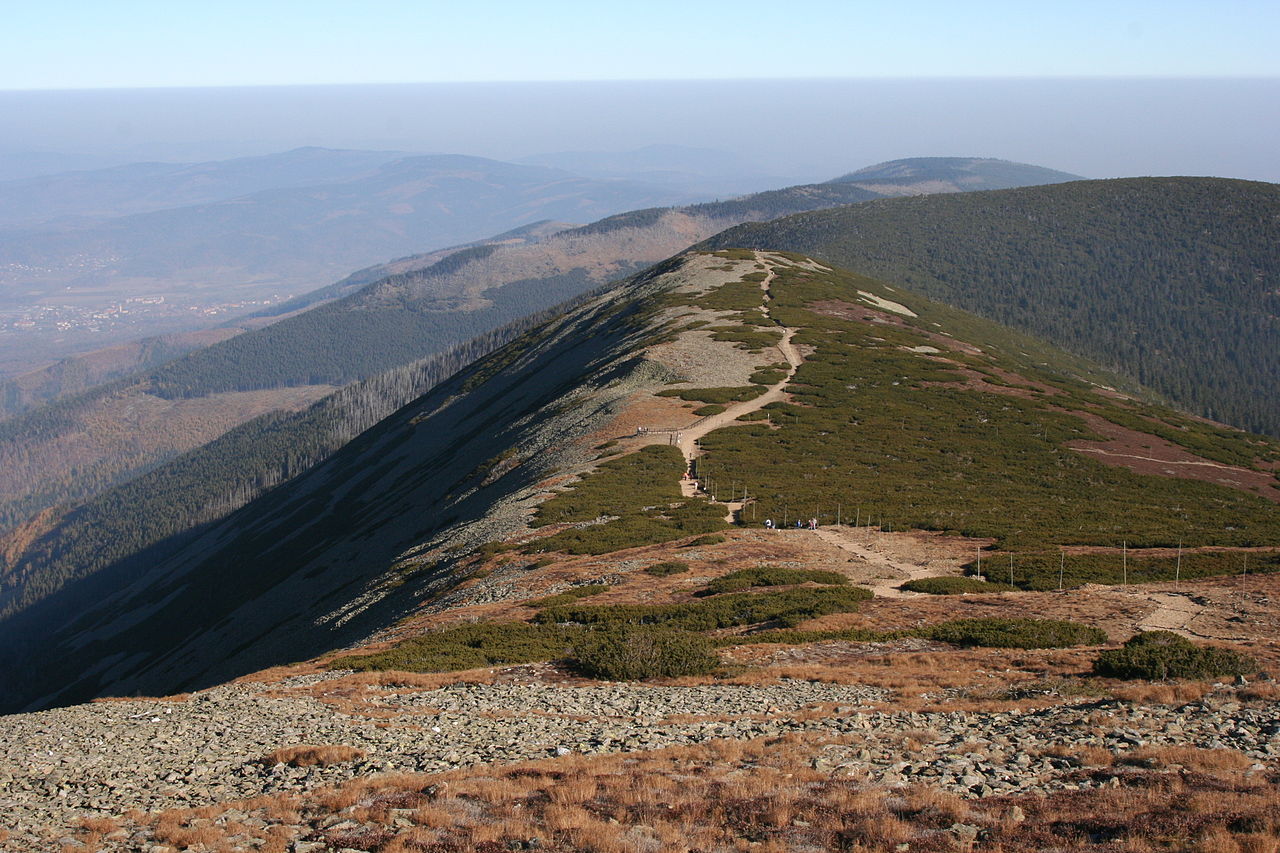
The Karkonosze are composed mainly of hard crystalline rocks with a surface shaped by long-term erosion and Pleistocene glaciation. The high zone shows characteristic cirques, steep ridgelines and isolated rock outcrops. Above the treeline there are subalpine plateaus, peat bogs and small tundra-like habitats. Exposed summits are subject to strong winds and frost, producing wind-pruned krummholz and a mosaic of dwarf vegetation adapted to the mountain climate.
Climate, hydrology and soils
The climate is markedly alpine for the region, with cool summers, cold winters and frequent precipitation. Snow cover persists at higher elevations into spring. Soils are generally shallow and acidic in the higher belts, favouring heath and peatland development. Numerous springs and mountain streams drain the slopes; several contribute to the upper Elbe basin, making the area hydrologically significant for downstream regions.
Flora, fauna and conservation
Vegetation zones range from mixed montane forests lower down to spruce-dominated stands and subalpine meadows near the summits. The Karkonosze host species adapted to harsh conditions and several locally restricted plants. Wildlife includes montane birds, small mammals and invertebrate communities tied to peatlands and rocky habitats. Both Poland and the Czech Republic protect the core area through national parks and cooperative management; the range has also been recognised in transboundary conservation initiatives and a biosphere reserve.
Human use, tourism and research
The mountains have a long tradition of mountain tourism, scientific study and seasonal recreation. Towns and resorts at the range margins serve as gateways for hiking, winter sports, mountain huts and educational trails. Trails are well marked, and facilities range from historic mountain shelters to modern visitor centres. Scientists study peatland ecology, mountain climatology and biodiversity patterns here, and cross-border collaboration supports conservation science.
Culture and folklore
Karkonosze are rich in cultural history and folklore. The legendary mountain spirit Rübezahl appears in local tales and literature as a complex figure — at times trickster, guardian or giant — reflecting the long human relationship with this distinctive landscape. For practical visitor information, park rules and regional guides see municipal and park resources such as regional guides and official pages like national park resources.
Related articles
Author
AlegsaOnline.com Karkonosze (Giant Mountains) Leandro Alegsa
URL: https://en.alegsaonline.com/art/52314