
Kai Province (Kōshū) — historical province in present-day Yamanashi
Kai Province (Kōshū) was an inland province on Honshū centered on the Kōfu Basin. Noted for its mountainous terrain and the Takeda clan, it later became Yamanashi Prefecture during Meiji-era reforms.
Overview
Kai Province, traditionally called Kōshū (甲州), was an inland province of Japan located on the island of Honshū. Its territory corresponds closely to the modern Yamanashi Prefecture. Landlocked and largely mountainous, Kai served as a distinct regional unit in Japan’s classical and feudal administrative systems.
Image gallery
3 Images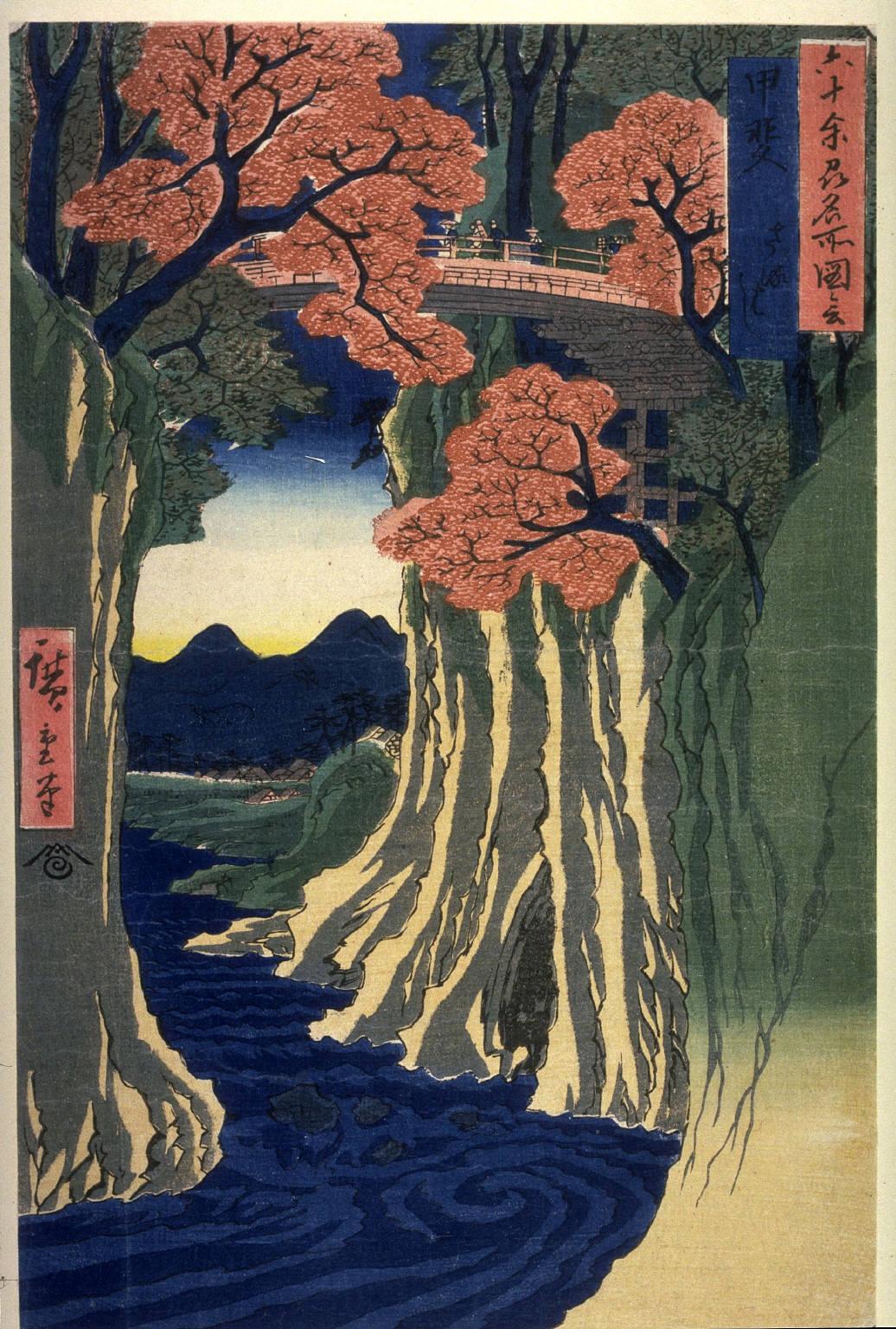


Geography and characteristics
The province included the Kōfu Basin, surrounded by ranges such as parts of the Akaishi (Southern Alps) and the northern approaches to Mount Fuji. Rivers draining the basin provided routes for travel and irrigation, while steep valleys and passes shaped settlement patterns and defense. The terrain made the province relatively small in population but strategically important.
History and political significance
Kai acquired prominence in the medieval and Sengoku (warring states) eras. It is closely associated with the Takeda clan, whose most famous leader, Takeda Shingen, consolidated power in the region and engaged in campaigns with neighboring provinces. Kai’s strongholds and mountain passes made it a defensive strongpoint during periods of conflict. Under the Tokugawa shogunate the province was reorganized administratively, with the castle town of Kōfu serving as a regional center.
Economic and cultural legacy
Historically, the province’s economy relied on mountain agriculture, sericulture, and later fruit cultivation and viticulture in the lowlands. From the late Edo into the Meiji era, silk production and related industries became economically important for the region. Cultural memory preserves martial traditions, local festivals, and shrines that honor regional leaders.
Transition to modern prefecture and notable sites
During the Meiji period reforms that replaced the traditional provinces with modern prefectures, Kai’s territory was reorganized as Yamanashi Prefecture. Today visitors can explore sites associated with the province’s past, including the castle remains in Kōfu, memorials to the Takeda clan, and mountain temples and passes that reflect the province’s rugged landscape.
- Center: Kōfu Basin and surrounding highlands
- Notable family: Takeda clan (Takeda Shingen)
- Modern successor: Yamanashi Prefecture
- Transport legacy: routes connecting the basin to Edo and neighboring provinces
For further reading about the province’s place in Japanese history and its modern geography, consult regional histories and guides to Yamanashi and broader works on provincial administration in Honshū.
Related articles
Author
AlegsaOnline.com Kai Province (Kōshū) — historical province in present-day Yamanashi Leandro Alegsa
URL: https://en.alegsaonline.com/art/51896
Sources
- books.google.com : "Kai"
- books.google.com : "Provinces and prefectures"
- eos.kokugakuin.ac.jp : "Nationwide List of Ichinomiya," p. 1