
Kake, Alaska — Tlingit community on Kupreanof Island
Kake is a small Tlingit community on Kupreanof Island in Southeast Alaska, noted for its maritime setting, cultural heritage, totem art and subsistence-fishing traditions.
Overview
Kake is a coastal community in Southeast Alaska located on the northwest shore of Kupreanof Island within the Alexander Archipelago. It is a predominantly Indigenous settlement with strong Tlingit cultural roots. The town sits amid a landscape of temperate rainforest, fjords and sheltered marine waters that shape daily life and local traditions.
Image gallery
1 Image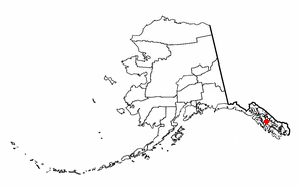
Characteristics
The settlement is compact and oriented toward the waterfront. Public and cultural spaces, village housing, and small commercial services cluster near the harbor where boats and floatplanes arrive. Marine resources, forests and nearby streams provide the basis for subsistence activities and small-scale commercial fisheries.
History and culture
Kake’s name derives from a Tlingit expression often translated as something like “mouth of dawn” or “opening of daylight.” The area has been inhabited by Tlingit people for many generations, who developed rich traditions of carving, storytelling and potlatch ceremonies. Contact with outsiders during the era of Russian and later American sovereignty brought major changes, but many cultural practices have persisted and experienced revival efforts in recent decades.
Economy and access
Local livelihoods combine subsistence harvests, commercial and sport fishing, small-scale logging and craft production such as totem and regalia carving. The community is connected to the region primarily by water and air: seasonal ferry services, private boats and floatplanes provide links to larger towns, supplies and medical services. Tourism is modest, often focused on cultural interpretation, wildlife viewing and recreational fishing.
Notable facts and importance
Kake is recognized for its cultural arts, especially carved totem poles and clan regalia, which serve as both living tradition and public heritage. The village plays a role in maintaining Tlingit language and ceremonies, and its position within a biologically rich maritime environment highlights the interdependence of culture and ecosystem. Visitors and researchers often come to learn about coastal Indigenous lifeways, resource stewardship and Southeast Alaska’s distinctive landscape.
Practical information
- Setting: northwest coast of Kupreanof Island in the Alexander Archipelago.
- Transport: reachable by ferry, floatplane and private vessel.
- Cultural highlights: totem carving, traditional ceremonies and subsistence practices.
Related articles
Author
AlegsaOnline.com Kake, Alaska — Tlingit community on Kupreanof Island Leandro Alegsa
URL: https://en.alegsaonline.com/art/51924