
Kakul — hamlet and military academy site in Khyber Pakhtunkhwa
Kakul is a hamlet and union council near Abbottabad, Pakistan, best known as the location of the Pakistan Military Academy. It lies in the Kakul Valley by the Thandiani Hills at about 1,300 m elevation.
Overview
Kakul is a small settlement and administrative union council in the Kakul Valley of the Hazara region. It lies roughly 5 km north of the city of Abbottabad and sits at an elevation of about 1,300 metres. The village and surrounding valley are best known for hosting the Pakistan Military Academy (PMA), the principal officer training institution of the country, which shapes much of the locality's identity and daily rhythms.
Image gallery
1 Image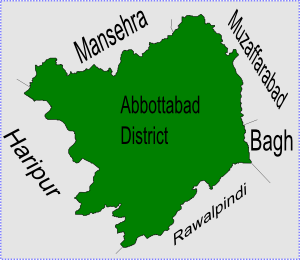
Geography and climate
The hamlet is set among lower Himalayan foothills and is close to the recreational slopes of the Thandiani Hills. The terrain consists of terraced slopes, narrow valleys and pine-lined ridges. Summers are generally milder than in the plains, with cooler nights, while winters bring lower temperatures and occasional snowfall at higher nearby elevations.
History and military significance
Kakul's profile increased in the 20th century with the establishment and expansion of the Pakistan Military Academy. The PMA's campus has hosted training courses, formal parades and military ceremonies, transforming the valley into an important centre for officer education and institutional events. While the academy occupies substantial land, Kakul continues to be a civilian community with local families and services nearby.
Administration, economy and local life
Administratively Kakul functions as a union council within Khyber Pakhtunkhwa province in the national territory of Pakistan. Local livelihoods combine small-scale agriculture, orchards and livestock with services that support the academy and visitors. Shops, transport services and hospitality businesses cater to trainees, staff and occasional tourists, while many residents commute to nearby Abbottabad for wider employment and education opportunities.
Visiting and context
- Proximity to Abbottabad makes Kakul accessible by road from regional centres.
- The nearby Thandiani area is a local destination for hiking and cooler summer retreats.
- Kakul illustrates how a rural valley community coexists alongside a major national institution, reflecting both traditional livelihoods and roles tied to national defence and training.
For researchers or visitors, Kakul offers an example of a small foothill settlement whose geography, climate and economy have been influenced by the presence of a major military academy while remaining part of the broader social and administrative fabric of Khyber Pakhtunkhwa and Pakistan.
Questions and answers
Q: Where is Kakul located?
A: Kakul is located in the Kakul Valley of the Khyber Pakhtunkhwa province of Pakistan.
Q: How far is Kakul from Abbottabad city?
A: Kakul is 5 km north of Abbottabad city.
Q: What is the height of Kakul?
A: Kakul is at a height of 1300 metres.
Q: What is the Pakistan Military Academy?
A: The Pakistan Military Academy is a training institution for the Pakistani Armed Forces and it is located in Kakul.
Q: Which hills are near Kakul?
A: The Thandiani Hills are near Kakul.
Q: What type of place is Kakul?
A: Kakul is a hamlet and union council.
Q: In which province of Pakistan is Kakul located?
A: Kakul is located in the Khyber Pakhtunkhwa province of Pakistan.
Related articles
Author
AlegsaOnline.com Kakul — hamlet and military academy site in Khyber Pakhtunkhwa Leandro Alegsa
URL: https://en.alegsaonline.com/art/51932
Sources
- abbottabad.gov.pk : Kakul Union Council