
Junk (ship): traditional Chinese sailing vessel
A junk is a traditional Chinese sailing ship type notable for its battened sails, compartmentalized hull, and long use in East and Southeast Asian trade, fishing, warfare and exploration.
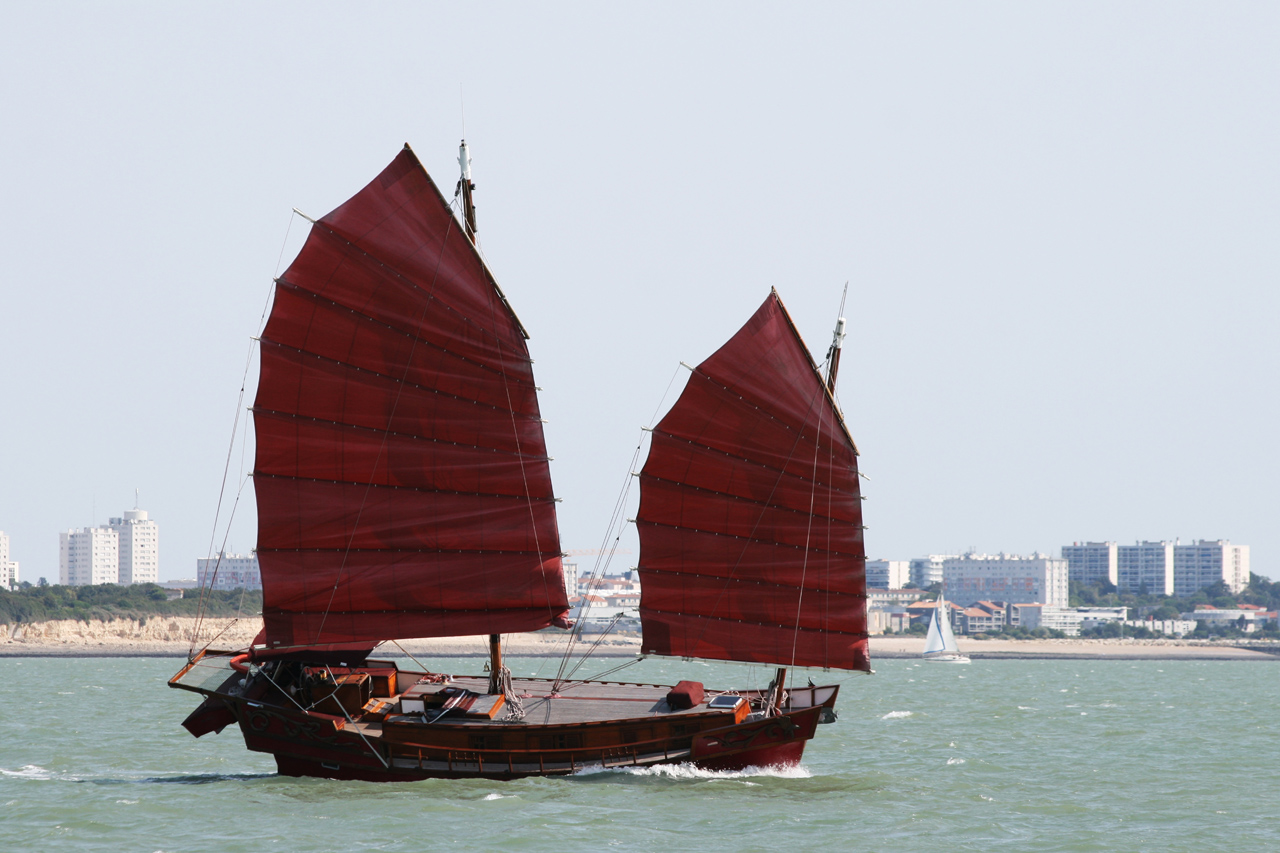
A junk is a type of traditional sailing vessel that originated in China and has been a defining form of Asian nautical design for many centuries. Junks are best known for their distinctive full-length battens on the sails, high sterns, and often a flat or shallow hull suitable for coastal and riverine waters. Although the craft evolved over time, variants of the junk remain in regular use today for fishing, transport and tourism.
Image gallery
10 Images



Design and construction
Several features commonly identify a junk. These elements made the vessels versatile for a wide range of conditions from river travel to long coastal voyages.
- Battened sails: Sails reinforced with horizontal battens that shape the sail, improve control and reduce strain on rigging.
- Multiple masts: Many junks carry two or more masts; sails can be handled independently, easing short-handed operation.
- Watertight compartments: Hulls are often subdivided into multiple compartments; this early safety feature limited flooding after damage.
- Steering and hull form: A large, balanced sternpost rudder and a comparatively flat bottom or shallow draft suit inland and coastal waters.
History and development
Precursors to the junk appear in early Chinese sources and artistic depictions dating back many centuries. References to large wooden vessels appear as early as the first few centuries CE, and shipbuilding techniques matured markedly during the Song dynasty (10th–13th centuries). Over subsequent eras Chinese shipwrights continued to refine hull construction, rigging and cargo handling. During the Ming dynasty, state-sponsored fleets undertook large ocean voyages that included large junk-type ships; later regional forms spread across the South China Sea and beyond.
Junks were widely used throughout East and Southeast Asia and reached the waters around India and the Malay Archipelago. They played major roles in coastal trade, fisheries and naval actions, and their forms adapted to local needs. Modern replicas and preserved examples, as well as working fishing and pleasure junks, still appear in ports and tourist harbours.
Uses, influence and notable facts
Historically junks served as cargo carriers, warships, fishing boats and ferries. Their compartmented hulls are an early example of a safety innovation later found in other shipbuilding traditions. The English word "junk" may trace to regional names for large native ships; etymology is debated. Distinctive design features made junks easier to tack and handle in confined waters than many Western-style sailing vessels, and the craft influenced shipbuilding across Asia.
For more introductory resources see China and shipbuilding, general ship design summaries, early textual references to Asian ships, regional use across South and Southeast Asia, and the continued presence of historic-style junks in places such as Hong Kong.
Related articles
Author
AlegsaOnline.com Junk (ship): traditional Chinese sailing vessel Leandro Alegsa
URL: https://en.alegsaonline.com/art/51676
Sources
- wikidata.org : wikidata.org/wiki/Q205011
- d-nb.info : 4197757-9
- kulturnav.org : 720bbe66-ef42-4895-b2e4-5ea0d5c3909a
- id.loc.gov : sh85071056
- id.ndl.go.jp : 00574982