
2nd century (101–200 AD)
A survey of the 2nd century (101–200 AD): major empires, cultural and technological advances, key events and figures, and the century's lasting historical significance.
The 2nd century was the period that runs from 101 to 200 in the Common Era. It is often seen as a time when long-distance trade, imperial administration and cultural exchange intensified across Eurasia and beyond. Multiple large states reached peaks of power while regional societies continued complex urban, artistic and religious developments.
Image gallery
10 Images




Major powers and political landscape
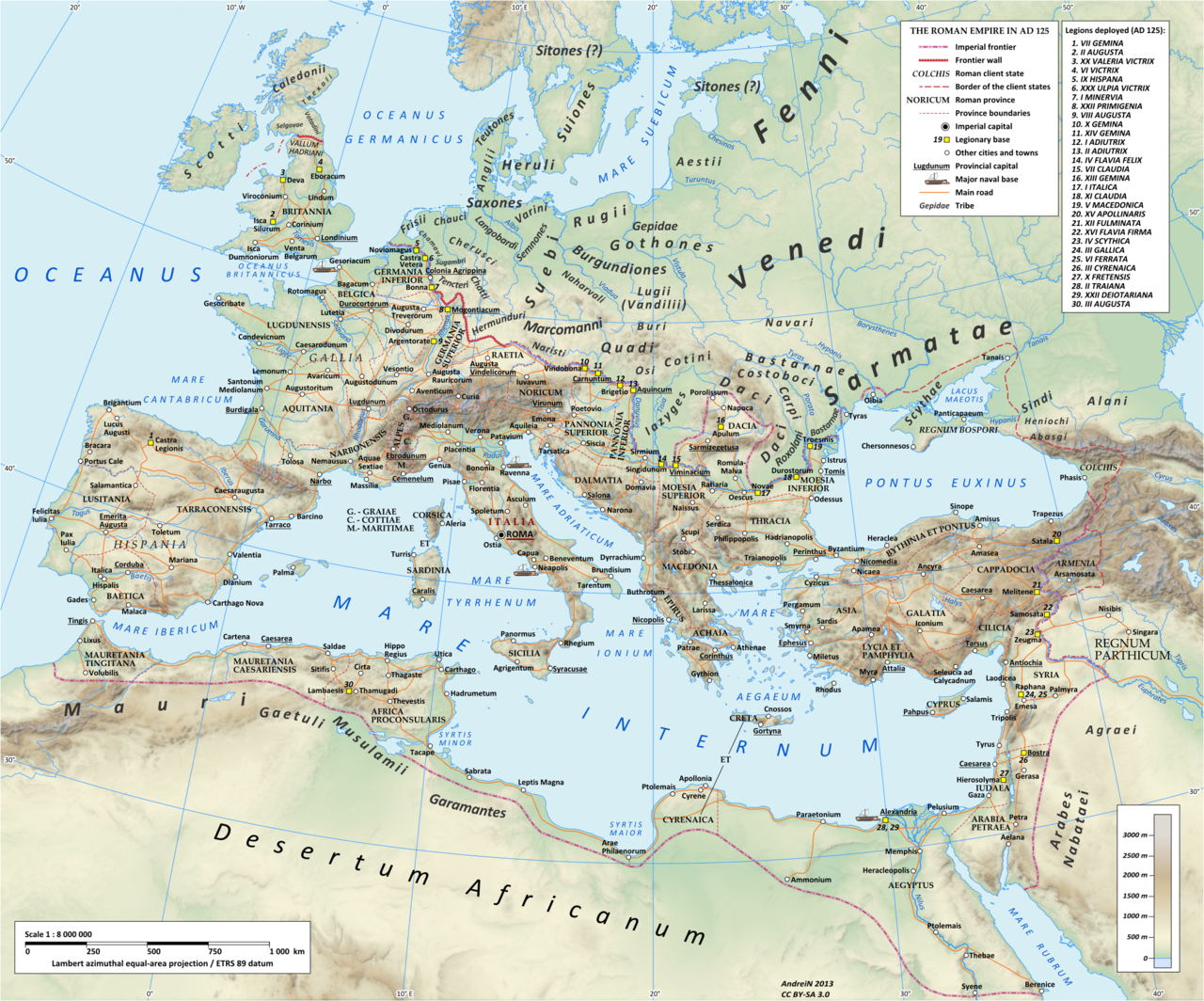
The Roman Empire dominated the Mediterranean and western Europe, governed by emperors such as Trajan, Hadrian and Marcus Aurelius. Trajan expanded Rome’s borders into Dacia; Hadrian consolidated them with works like Hadrian’s Wall. In East Asia, the Eastern Han dynasty ruled China; administrative reforms and internal troubles coexisted with technological progress. Other important polities included the Parthian and Kushan empires in Central Asia and the Indian subcontinent, which facilitated commerce along the Silk Road and maritime routes.
Culture, science and technology
The century saw notable scientific and cultural figures and innovations. In China, Cai Lun is traditionally credited with improving papermaking around 105, a development with long-term impact on recordkeeping and literacy. In the Greco-Roman world and the Mediterranean, scholars such as Galen and Ptolemy produced medical and astronomical works that would influence later generations. Architectural achievements — including the rebuilding of Rome’s Pantheon and extensive road and aqueduct projects — reflected advanced engineering skills.
Religion, trade and exchange
Buddhism continued to spread along Central Asian routes into China under Kushan sponsorship, while Indo-Mediterranean and Indian Ocean trade linked goods, ideas and people from the Roman provinces to South and Southeast Asia. Local religious practices and emerging Christian communities in the Roman Empire also shaped social life and law. Urban centers in other regions, including parts of Africa and the Americas, continued to evolve independently.
Notable events and figures
- Military and administrative leaders: Trajan, Hadrian, Antoninus Pius, Marcus Aurelius.
- Scholars and physicians: Claudius Ptolemy, Galen.
- Technological advance: refinement of papermaking (c.105).
- Wars, uprisings and epidemics: Dacian Wars, Marcomannic conflicts, the Antonine Plague (mid-2nd century), and the Yellow Turban unrest near the century’s end.
As a historical interval the 2nd century is notable for the relative stability and administrative maturity of large empires, active long-distance networks of exchange, and cultural production whose influence extended into late antiquity and beyond. For concise reference, the span of this century is often expressed simply as 101 to 200.
Related articles
Author
AlegsaOnline.com 2nd century (101–200 AD) Leandro Alegsa
URL: https://en.alegsaonline.com/art/112777