
Arachnocampa — glowworm fungus gnats
Arachnocampa are a genus of bioluminescent fungus gnats whose larvae, known as glowworms, produce light and hang silk threads to capture prey in caves and forest litter.
Overview
Arachnocampa is a genus of small flies commonly referred to as fungus gnats. Their best-known stage is the larva, which glows in the dark and is popularly called a glowworm. These insects are notable for combining bioluminescence with a predatory silk-trap strategy rather than the fungal-feeding habits associated with some related species. For general information about the group, see genus overview.
Image gallery
1 Image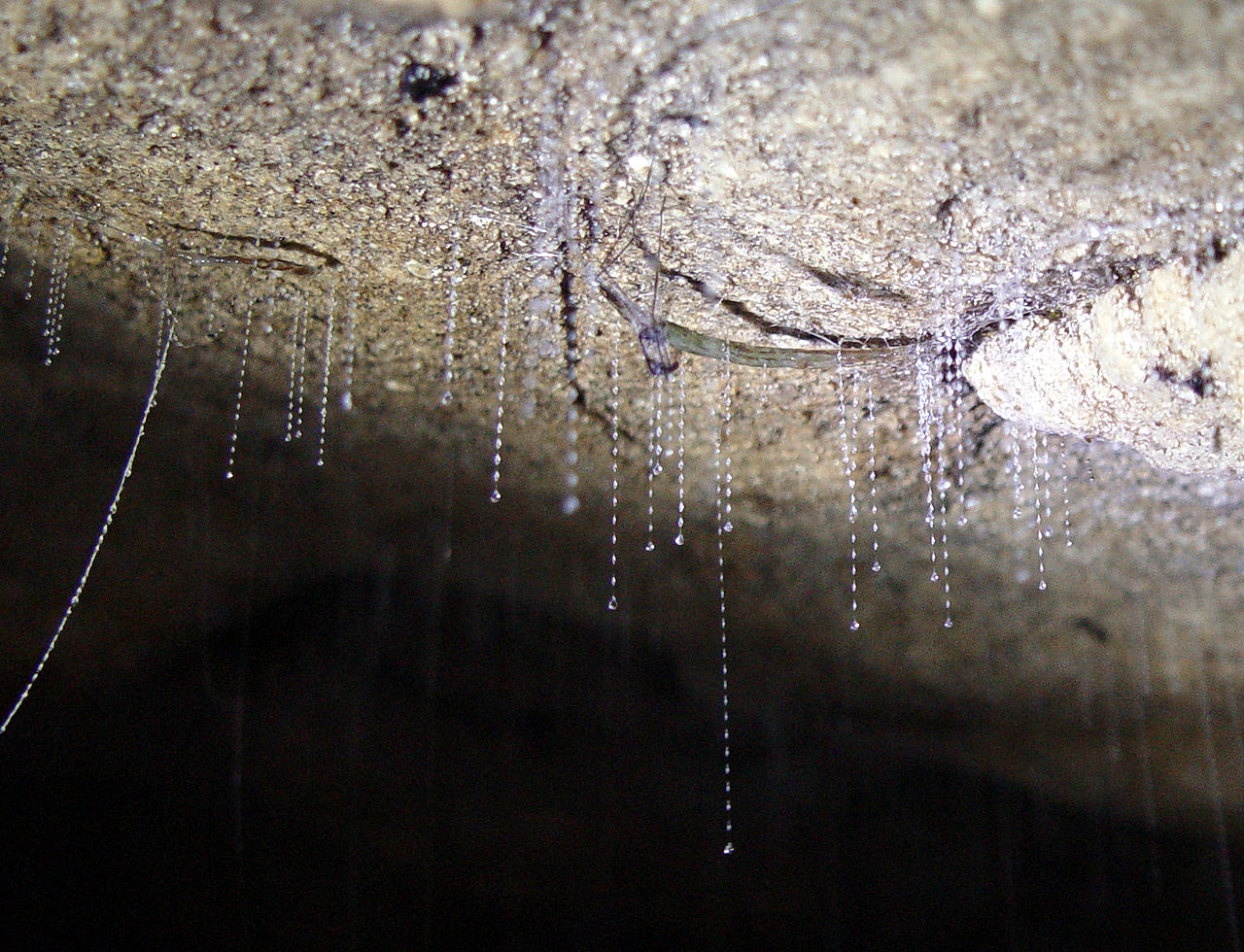
Description and life cycle
Adults resemble typical gnats: delicate, long-legged flies that are short-lived and primarily devoted to reproduction. The larval stage is the most distinctive: larvae produce a soft filamentous silk, suspend themselves in protected, humid locations and hang numerous sticky threads to ensnare small invertebrates. Detailed life-history summaries are available at life cycle resources. The larval glow is visible in darkness and used to attract prey toward the sticky lines.
Bioluminescence and hunting
The glow emitted by Arachnocampa larvae is a chemical light produced within specialized cells. It serves both to lure insects and likely has other ecological roles such as signaling condition or deterring predators. Larvae use silk threads anchored to cave ceilings or sheltered vegetation; when prey becomes tangled, the larva hauls the thread upward and consumes the captive. Read more about these behaviors at bioluminescence studies.
Taxonomy and history
Historically, some species were grouped under names that reflected an association with fungi. An older name, Bolitophila (literally "mushroom-lover"), was used until taxonomic revisions clarified their distinctive predatory habits and silk use. The current name Arachnocampa alludes to the spider-like trapping method of its larvae; further taxonomic notes can be found at classification notes. Museum and archival material discussing the renaming is cataloged in specialist collections: archives.
Distribution and habitats
Species of Arachnocampa are native to Australasia, with well-known populations in Australia and New Zealand where they inhabit caves, grottos, damp forest litter and sheltered overhangs. These microhabitats provide the humidity and darkness larvae need to spin threads and maintain their glow. Regional overviews describing occurrence and habitat are available at regional guides and conservation pages.
Importance and conservation
Arachnocampa glowworms attract scientific interest for bioluminescence research and are a cultural and tourist attraction in places where cave displays can be viewed. Their specialized habitats can be sensitive to disturbance: changes in humidity, light pollution and human traffic can reduce local populations. Conservation recommendations and visitor guidance appear in management literature linked at visitor and conservation information.
- Key traits: larval bioluminescence, silk snares, cave and forest habitats.
- Notable fact: their common name glowworm refers to the luminous larva rather than the adult fly.
Related articles
Author
AlegsaOnline.com Arachnocampa — glowworm fungus gnats Leandro Alegsa
URL: https://en.alegsaonline.com/art/5146