
Joss stick
A joss stick is a slender incense stick used widely across Asia for religious offerings, meditation, and scenting spaces. This article explains its composition, cultural roles, burning practices and safety considerations.
Overview
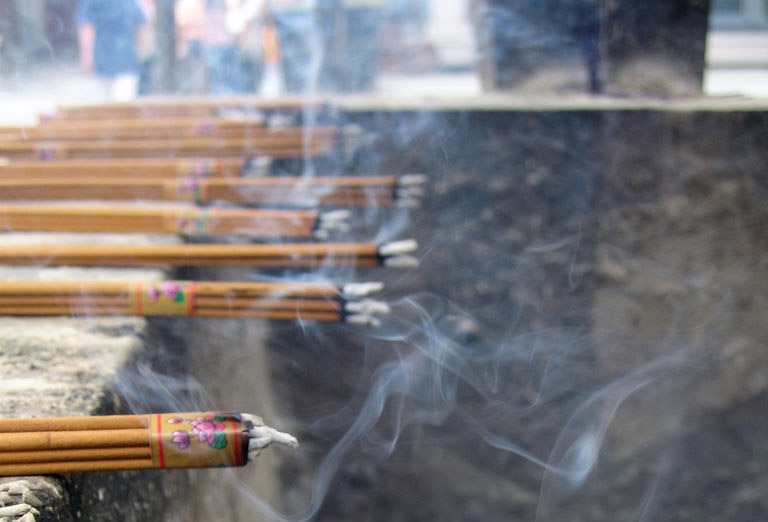
Joss sticks are a form of incense: thin sticks of combustible aromatic material that are burned to produce fragrant smoke. They are commonly used in domestic and temple contexts throughout East and Southeast Asia for devotional acts, purification, and atmosphere. Traditionally joss sticks are presented before religious images, but they are also burned in public ceremonies, at home altars, and as part of everyday routines.
Image gallery
10 Images



Composition and common types
Most joss sticks consist of a thin core—often wood or bamboo—coated with a paste of powdered aromatic ingredients and a binder. Materials used in the paste include:
- Plant resins and gums (e.g., frankincense-like substances)
- Wood powders (sandalwood, agarwood)
- Herbs and spices (cinnamon, clove, camphor)
- Natural or synthetic fragrant oils
Cultural and religious uses
Burning joss sticks is a widespread ritual practice. They are commonly offered before an idol or Buddha image and placed at a shrine or home altar. The act of lighting a joss stick can symbolize respect, prayer, remembrance of ancestors, or a request for protection. Some practices do not require a statue or icon and instead treat the incense as a general offering — for example, lighting a stick at a threshold, window, or outdoor space.
Uses beyond ritual
In contemporary life joss sticks are also used for secular purposes: to scent living spaces, mask odors, aid meditation and relaxation, or to accompany festival events. They may be incorporated into ceremonies, memorials, and cultural observances. When placed beside a statue or image, smoke is often waved or allowed to drift over the object as part of an established pattern of reverence.
Practical considerations and safety
When using joss sticks observe basic fire safety and ventilation. Common precautions include burning them in stable holders, keeping them away from flammable materials, and ensuring rooms have fresh air to reduce inhalation of smoke. Some sticks use synthetic fragrances that can produce stronger fumes; those concerned about indoor air quality may choose natural-ingredient varieties or limit burn time. Ritualists often extinguish used sticks in sand or water and dispose of remains respectfully.
Notable distinctions and etiquette
Regional customs govern how many sticks are lit, where they are placed, and the gestures that accompany burning. While joss sticks share a general purpose with other forms of incense, local tradition, scent profile, and material composition create meaningful differences. For further reading on incense types and ritual context see general resources on incense and specific guides to practice and safety rituals.
Related articles
Author
AlegsaOnline.com Joss stick Leandro Alegsa
URL: https://en.alegsaonline.com/art/51274