
John Winthrop — Early New England leader and Massachusetts Bay governor
English lawyer and Puritan leader John Winthrop (c.1588–1649) led the 1630 migration, served repeatedly as governor of the Massachusetts Bay Colony, and shaped early New England civic, legal, and religious life.
John Winthrop (c.1588–1649) was an English lawyer, Puritan leader, and one of the principal founders of the Massachusetts Bay Colony. Born into a prosperous landowning family in Edwardstone, Suffolk, he brought social standing, administrative skill, and a distinct religious vision to the enterprise that established much of early New England's civic framework. In 1630 he led a large fleet of emigrants west and became the colony's first and most influential governor (first governor), shaping settlement patterns, legal arrangements, and communal expectations.
Image gallery
10 Images





Early life and background
Winthrop's upbringing in the English gentry and his training in law informed his approach to colonial government. He was part of networks of Puritans who wanted to reform the Church of England and saw a transatlantic settlement as a chance to build a godly community. His estate and connections helped organize investment and emigration, making the Massachusetts venture both a religious and corporate enterprise. His place of origin and family roots in Edwardstone and Suffolk are often noted in biographical accounts (Edwardstone), (Suffolk).
Migration and founding of the colony
In 1630 Winthrop led one of the largest single migrations of Puritans to North America and helped establish settlements that became Boston and other towns in the Massachusetts Bay Colony (Massachusetts Bay). Under his leadership the company effectively transferred much of its chartered authority to the colony, allowing colonists greater self-government. Winthrop served many terms as governor or deputy governor over two decades, making key decisions on land distribution, town organization, and relations with neighboring colonies (role in New England).
Beliefs, writings, and civic vision
Winthrop combined religious exhortation with practical governance. He is best known for a sermon often called "A Model of Christian Charity," preached as the fleet sailed in 1630, which articulated the idea of a covenantal community and used the image of a "city upon a hill" as a moral example for others. His journal and other writings record daily affairs, legal proceedings, and his view that the community's welfare depended on mutual responsibility and adherence to moral and legal norms. These texts are central sources for understanding early colonial ideology ("City upon a hill").
Relations, controversies, and governance
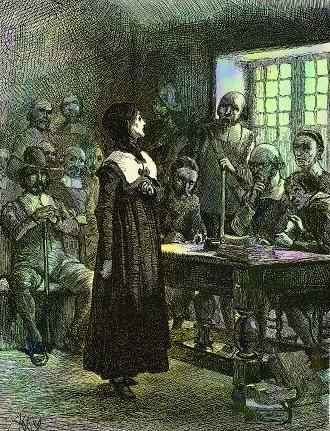
Winthrop's administration stabilized an uncertain colony but also faced controversies. He presided during disputes with dissenters whose religious practices diverged from the colony's leadership; prominent conflicts, including the trial of Anne Hutchinson, illustrated tensions between authority and religious freedom. His use of legal institutions and magistracy to preserve order has been interpreted variously as necessary stewardship and as authoritarian control. Scholars study these actions to understand how early New England balanced communal cohesion with individual conscience (legal training).
Relations with Native peoples
The colony's expansion under Winthrop involved complex interactions with Indigenous peoples. Early relations combined trade, diplomacy, contested land claims, and, over time, growing pressure on native territories. Winthrop's records offer evidence of attempts at negotiation as well as the conflicts that later shaped Anglo–Native relations in New England.
Legacy
Winthrop is widely regarded as a foundational figure in New England whose ideas on covenant, community, and moral example influenced colonial identity and later political rhetoric. Phrases and images drawn from his sermons have been invoked repeatedly in American public discourse to express ideals of moral leadership and national purpose. His journal remains a primary source for historians studying the early seventeenth-century Atlantic world.
- First governor (title and role)
- Massachusetts Bay Colony
- Edwardstone
- Suffolk county background
- English context
- Legal training and administration
- Role in New England settlement
- "City upon a hill" sermon and influence
For further reading, scholars consult annotated editions of Winthrop's journal and collections of his letters and sermons as well as modern studies of Puritan society, colonial law, and early American political thought.
Related articles
Author
AlegsaOnline.com John Winthrop — Early New England leader and Massachusetts Bay governor Leandro Alegsa
URL: https://en.alegsaonline.com/art/50866