
John Tory
John Tory (born May 28, 1954) is a Canadian politician who served as mayor of Toronto from 2014 to 2023. He led Ontario's Progressive Conservative Party (2004–2009) and was an Ontario MPP (2005–2007).

Overview
John Howard Tory (born May 28, 1954) is a Canadian public figure known for a long career in law, business and elected office. He served as mayor of Toronto from 2014 until his resignation in 2023. Earlier he led the Progressive Conservative Party of Ontario (2004–2009) and represented a provincial riding as a member of the Legislative Assembly (2005–2007). For a concise summary of his background see a brief biography.
Image gallery
7 Images



Early life and education
Tory was born and raised in Toronto and pursued postsecondary studies that prepared him for work in law and public affairs. Before entering elected politics he worked in the private and public sectors, combining legal training with roles in corporate and community organisations. Biographical profiles and local reporting provide further context about his upbringing and formative career steps: background summaries.
Professional career
Prior to holding major elected office, Tory's career included legal practice and executive positions in business and media, where he developed experience in management and public communications. Those roles contributed to his public profile and helped frame his later focus on pragmatic governance and fiscal management. Contemporary profiles and professional records discuss this period in greater detail: professional and media profiles.
Provincial politics and party leadership
Tory first sought the Toronto mayoralty in 2003, finishing second in a closely watched contest; that campaign raised his profile across the city and province and is documented in election coverage from the period: 2003 mayoral coverage. In 2004 he won the leadership of Ontario's Progressive Conservative Party and led the party until 2009. During his leadership he also served in the Ontario legislature from 2005 to 2007, representing the riding of Dufferin—Peel—Wellington—Grey. His leadership was associated with efforts to broaden the party's appeal and present a moderate conservative alternative in provincial politics; party materials and analyses describe those strategies: party materials and analysis.
Mayor of Toronto (2014–2023)
Tory returned to municipal politics and won the 2014 mayoral election against high-profile opponents. He campaigned on restoring fiscal stability to City Hall, rebuilding civic relationships after a turbulent period, and advancing major transit projects. His administration emphasised transit investment, economic competitiveness, and incremental infrastructure projects intended to ease congestion and support growth. Coverage of the 2014 campaign and aftermath provides contemporary reporting and election analysis: 2014 election reports.
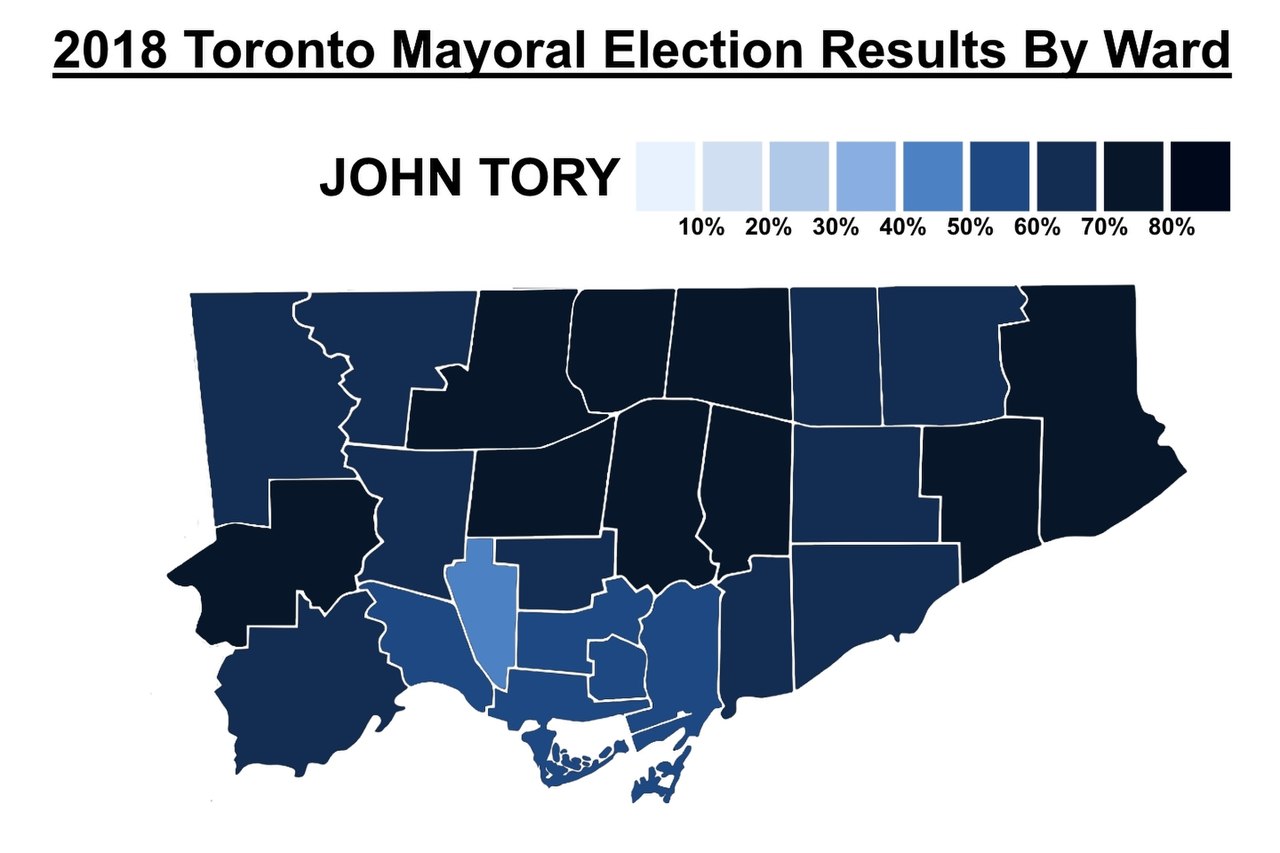
He was re-elected in 2018 in a campaign that included debates over transit priorities and urban planning; his main challenger in that race was a former chief city planner. See campaign reporting and analysis for details of the 2018 election: 2018 campaign coverage.
Policies and initiatives
- Transit: Tory promoted projects intended to expand subway and rapid-transit capacity and put forward initiatives to secure provincial and federal funding.
- Fiscal management: He emphasised balanced budgets, cost control, and targeted investments to support economic growth.
- Housing and social services: His administration addressed affordable housing and homelessness through a mix of local programs and advocacy for higher-level funding.
Resignation and later developments
In early 2023 Tory disclosed a personal relationship with a member of his staff and subsequently announced his resignation as mayor; he formally left office later that year. The resignation prompted a municipal by-election to select his successor and generated substantial media and civic discussion about workplace conduct and governance. Official statements and news reports document the transition and subsequent responses from civic institutions: official city communications and major news coverage.
Political style and legacy
Tory is widely described as a moderate, pragmatic conservative who sought to appeal to centrist and business-oriented voters while addressing urban priorities. Assessments of his mayoralty are mixed: supporters cite steady management, infrastructure progress and a conciliatory approach to governance; critics point to unmet transit ambitions, compromises on policy specifics, and controversies that affected public trust. His career exemplifies movement between private-sector leadership and public office and highlights the challenges of governing a rapidly growing, diverse city.
Further reading
For timelines, electoral results and policy documents consult biographical overviews and archival materials referenced above and specialist summaries of Ontario and Toronto politics at the linked resources.
Related articles
Author
AlegsaOnline.com John Tory Leandro Alegsa
URL: https://en.alegsaonline.com/art/50835
Sources
- www1.toronto.ca : "Mayor's biography"
- nationalpost.com : "John Tory cruises to second term as Toronto mayor as Ontario holds municipal elections"