
John Heartfield (Helmut Herzfeld): Pioneer of Photomontage and Political Satire
German-born photomontage artist who adopted the name John Heartfield in 1916. A key figure in Dada and anti-fascist graphic satire, he used photomontage to attack militarism, nationalism and Nazism.
Overview
John Heartfield was the English form of the name used by the German artist Helmut Herzfeld (born 1891). He adopted the Anglicized version in 1916 as a deliberate political gesture against German nationalism and anti‑British sentiment during World War I. Heartfield became internationally known as a pioneer of photomontage: assembling photographs, text and print material into sharply satirical images aimed at contemporary politics and mass audiences.
Image gallery
4 Images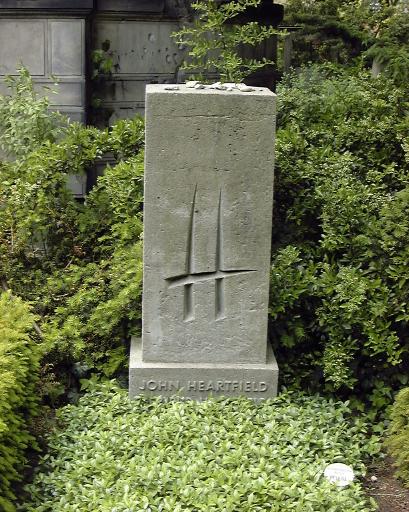


Technique and characteristics
Heartfield refined photomontage as a mass-media tool. Rather than private collage, his compositions were designed for reproduction in newspapers, posters and pamphlets. He combined found photographs, cutouts, mechanized printing techniques and brief captions to create ironic juxtapositions and visual arguments. His work is notable for clear visual rhetoric, bold contrasts and concise slogans that made complex political criticism immediately legible to broad readerships.
Historical context and life
Active in the Berlin avant‑garde, Heartfield was associated with Dada and progressive circles that opposed war, militarism and conservative culture. In the 1920s and early 1930s his photomontages regularly appeared in left‑wing publications, where they attacked economic inequality, reactionary politics and the growing threat of fascism. When the Nazi regime suppressed oppositional art and press, Heartfield left Germany and continued his anti‑fascist work in exile; after World War II he returned to Berlin, where he lived until his death in 1968.
Uses, examples and impact
Heartfield’s images were created specifically for political persuasion: they served as agitational posters, illustrated essays and magazine covers that shaped public debate. Some of his most widely cited works use grotesque irony to expose leaders and propaganda (for example the well‑known montage targeting Adolf Hitler). His methods influenced later documentary graphic design, photojournalism and visual satire, and his work remains a model for artists combining activism with print culture.
Notable works and legacy
- Photomontages for left‑wing illustrated magazines and newspapers.
- Iconic anti‑fascist images that circulated as posters and covers.
- A continuing influence on political graphic design and critical media practice.
Further reading and resources
- Biographical overview and early life
- Chronology and key dates
- Context: Berlin avant‑garde and Dada
- Exile and wartime activity
- Later life and return to Berlin
- Discussion of the name change to John Heartfield
- Photomontage as artistic technique
- Examples of published photomontages
- Political themes: nationalism and militarism
- Reception and influence in design
- Archival collections and exhibitions
Questions and answers
Q: Who was John Heartfield?
A: John Heartfield was a German photomontage artist born in Berlin in 1891.
Q: What is the English version of John Heartfield's birth name?
A: The English version of John Heartfield's birth name is Helmut Herzfeld.
Q: Why did John Heartfield start calling himself Heartfield in 1916?
A: John Heartfield started calling himself Heartfield in 1916 to criticize the rabid nationalism and anti-British sentiment in Germany during World War I.
Q: What was John Heartfield's profession?
A: John Heartfield was a photomontage artist.
Q: When did John Heartfield pass away?
A: John Heartfield passed away on April 26, 1968, in Berlin.
Q: What was the reason for John Heartfield's name change?
A: John Heartfield changed his name to criticize nationalism and anti-British sentiment during World War I.
Q: Is John Heartfield a well-known artist?
A: Yes, John Heartfield is a well-known photomontage artist.
Related articles
Author
AlegsaOnline.com John Heartfield (Helmut Herzfeld): Pioneer of Photomontage and Political Satire Leandro Alegsa
URL: https://en.alegsaonline.com/art/50666
Sources
- my.fit.edu : John Heartfield - The Hand has 5 Fingers