
Jenůfa — opera by Leoš Janáček
Jenůfa is a three-act opera by Leoš Janáček, adapted from Gabriela Preissová’s play. First staged in Brno (1904), it is known for its folk-inflected music, speech-derived style and stark moral drama.
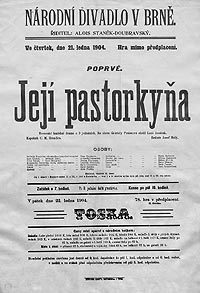
Jenůfa is a three-act opera for soloists, chorus and orchestra composed and written by Leoš Janáček. The libretto is adapted from the play Její pastorkyňa by Gabriela Preissová. The work received its first performance on 21 January 1904 in Brno, then part of the Austro-Hungarian lands and today in the Czech Republic. A later revival in Prague helped to establish the opera more widely in the repertory.
Image gallery
3 Images
History and context
Janáček wrote Jenůfa during a period when many artists explored local life and social realism on stage. He retained the play's psychological intensity while reshaping episodes and compressing action to suit musical drama. The composer drew on Moravian folk song and the natural rhythms of Czech speech to create a distinctive musical language. Early performances received mixed responses, but the opera gradually gained acceptance at home and abroad.
Synopsis and dramatic arc
The plot follows the young woman Jenůfa and the people around her in a Moravian village. Central to the drama are questions of honor, responsibility and compassion. A pregnancy, a rejected courtship and rival affections lead to a crisis in which the Kostelnička, a senior woman in the community, takes a tragic course of action. That act—the concealment and killing of a newborn—is described in many sources as murder and more specifically as infanticide. The opera then examines consequences: guilt, communal judgment and the possibility of repentance and forgiveness.
Music, language and style
Janáček's score is notable for its use of speech-derived melody: vocal lines often follow the contours and accents of spoken Czech rather than conventional operatic aria forms. Folk-inflected motifs and terse orchestral coloring support the emotional tone, while ensembles and choruses reflect communal life and tension. The result is an intense, concentrated drama in which music and text work closely together to portray inner conflict.
Performance and reception
Over the twentieth century Jenůfa became one of Janáček's most frequently performed works and a cornerstone of Czech operatic repertory. It demands strong dramatic singers able to convey both speech-like delivery and sustained lyrical intensity. Directors and conductors have repeatedly reinterpreted the piece, highlighting social context, ethical ambiguity and the possibility of moral renewal. For comparison and background, readers may consult the original play and local archives in Brno or national collections in the Czech Republic.
Themes and legacy
Jenůfa continues to be discussed for its candid portrayal of village life, its focus on the costs of social pressure, and its exploration of mercy and punishment. The demanding central roles and the opera's concentrated dramatic force ensure that new productions and recordings keep the work in active performance, introducing Janáček's particular blend of realism and musical individuality to new audiences.
- Source play: see Její pastorkyňa for the original dramatic framework.
- Premiere city: Brno retains historical ties to Janáček's work and to early stagings.
- Revival and wider recognition: the Prague staging of the work played a key role in its later acceptance in Czech cultural life and abroad; many modern productions continue to reinterpret its themes.
- Subject matter: the opera's handling of a newborn's death and the surrounding moral dilemmas is often framed in discussions of murder and infanticide, prompting ethical as well as artistic debate.
For further study consult authoritative music histories, opera house program notes and specialized scholarship; many such resources are available through national libraries and academic archives cited in general guides and collections. Jenůfa remains central to understanding Janáček's contribution to twentieth-century opera.
Related articles
Author
AlegsaOnline.com Jenůfa — opera by Leoš Janáček Leandro Alegsa
URL: https://en.alegsaonline.com/art/49923