
Jean Baptiste Charbonneau
Son of Sacagawea and Toussaint Charbonneau, explorer and frontiersman who grew up during the Lewis and Clark era, later worked as a fur trapper, guide and interpreter in the expanding American West.
Jean Baptiste Charbonneau (11 February 1805 – 16 May 1866) was born into a moment of continental exploration and later became a notable figure of the American frontier. He is best known as the infant carried by Sacagawea during the Lewis and Clark Expedition, and as a multilingual frontiersman who worked as a fur trapper and guide.
Image gallery
5 Images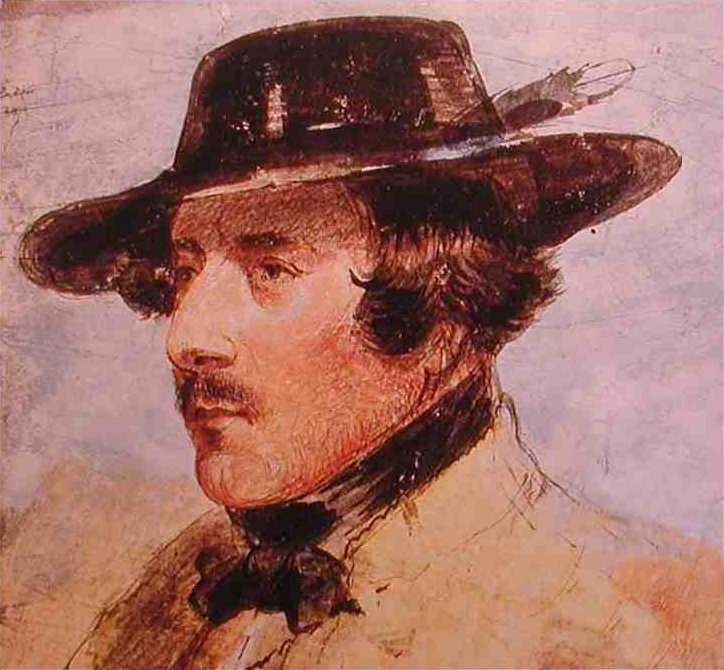


Early life and upbringing
Born at or near the Mandan villages on the upper Missouri River, Jean Baptiste received a mixture of Native and European influences from birth. Nicknamed "Pomp" or "Pompy," he spent his earliest months on the Corps of Discovery expedition and later moved east with the expedition members to St. Louis, where he was exposed to Anglo-American society and education.
Education and travels
As he matured, Charbonneau acquired several languages and skills valued on the frontier, including horsecraft, hunting, and navigation. In his youth he traveled beyond the United States, spending time in Europe as a curiosity and learner under the patronage of a German nobleman. These experiences distinguished him from many contemporaries and helped him operate across cultural boundaries.
Career on the frontier
Charbonneau worked for decades as a trapper, packer, guide and interpreter in the Rocky Mountains and the Southwest. He took part in trade networks centered on beaver trapping and later provided services to emigrants, military parties, and explorers. During conflicts and campaigns that accompanied territorial expansion, he served as a guide and interpreter, roles that required local knowledge and diplomacy.
Later life and legacy
In his later years Charbonneau lived in what became the American West and California, where he died in 1866. His life connects the era of transcontinental exploration to the subsequent period of western settlement. He and his mother are popularly commemorated on the United States Sacagawea dollar, which depicts the infant Jean Baptiste on Sacagawea's back—a symbol of their place in American cultural memory.
- Also known as: Pomp or Pompy
- Roles: interpreter, trapper, guide, traveler
- Notable fact: appears with his mother on a U.S. one-dollar coin
Related articles
Author
AlegsaOnline.com Jean Baptiste Charbonneau Leandro Alegsa
URL: https://en.alegsaonline.com/art/49697