
Jean-Baptiste-Siméon Chardin
French 18th-century painter (1699–1779) celebrated for still lifes and domestic genre scenes distinguished by subtle color, quiet composition, and a focus on everyday life.
Jean-Baptiste-Siméon Chardin (2 November 1699 – 6 December 1779) was a French painter whose reputation rests on carefully observed still lifes and intimate scenes of domestic life. Working in Paris, he rejected grand historical or mythological subjects in favor of humble objects and household moments, bringing a restrained dignity and painterly sensitivity to everyday things. For concise biographical introductions see further biography.
Image gallery
10 Images


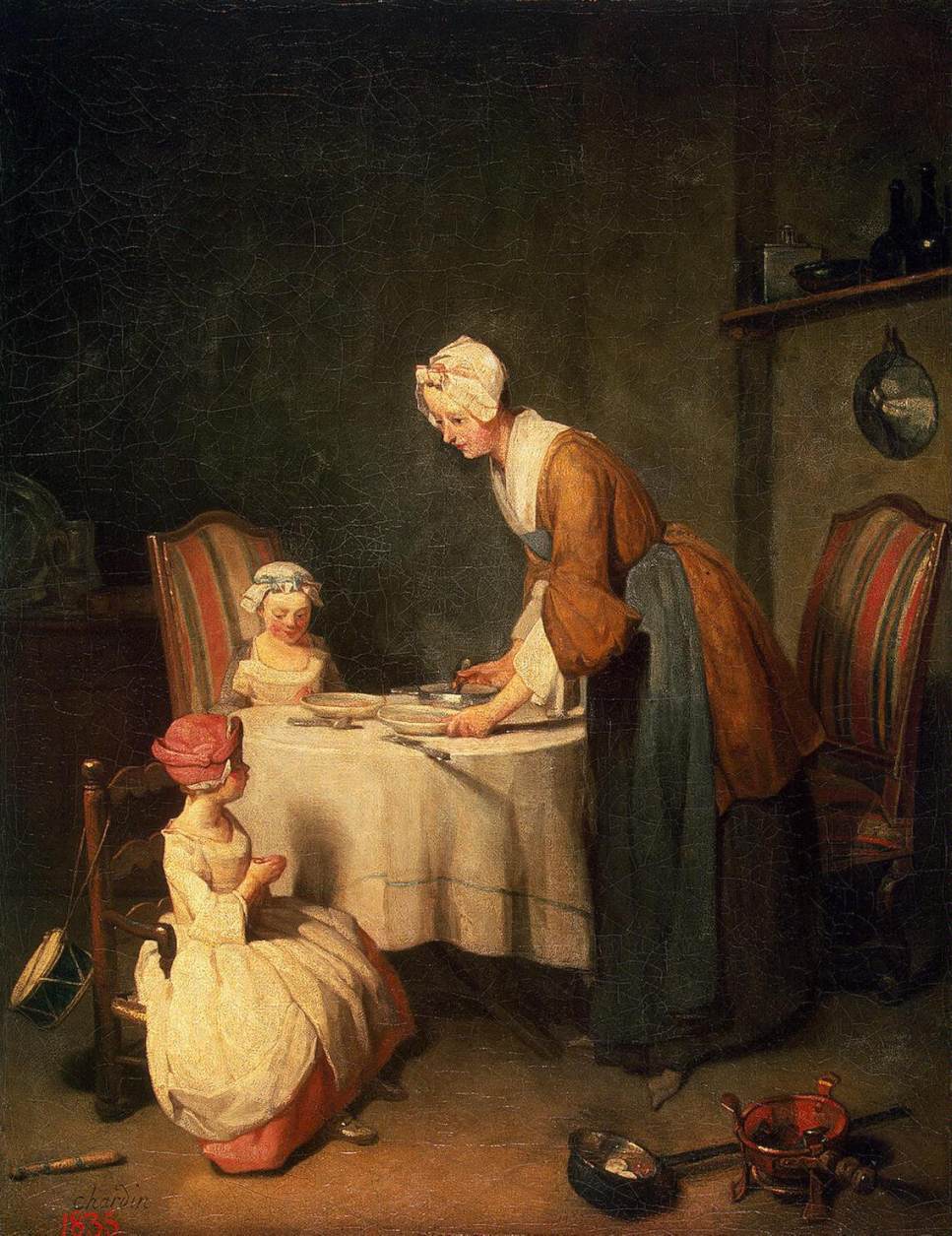


Style and subjects
Chardin's paintings are noted for subdued palettes, delicate handling of light, and a tactile sense of materials: fruit, pottery, glass, game, and textiles are rendered with attention to surface and volume. His genre scenes commonly depict women and children engaged in routine tasks—playing, learning, or caring for the home—infusing ordinary activities with stillness and moral warmth. Critics and later artists have praised his economy of means and compositional balance, qualities that make his work feel both simple and carefully composed. For context on still life traditions see still life painting.
Career and reception
Chardin exhibited regularly in Paris and became established within the artistic institutions of his time. Although his subjects seemed modest, his technical skill and originality won admiration from contemporary writers and collectors. Over the centuries his reputation persisted, with 19th- and 20th-century painters and critics often citing him as a model of painterly honesty and subtle observation.
Notable works and influence
Among works commonly associated with Chardin are still lifes and small genre compositions that emphasize quiet narrative or formal arrangement. Examples frequently discussed in collections and catalogs include The Ray, The Soap Bubbles, The House of Cards and The Basket of Apples. His focus on everyday reality influenced later artists who sought to renew attention to material truth and the expressive potential of ordinary subjects.
Legacy
Chardin is remembered for elevating commonplace subjects through compositional restraint and mastery of paint. His paintings continue to be studied for lessons in color harmony, light, and the depiction of texture, and they remain staples in exhibitions about 18th-century French art and the development of modern still life and genre painting.
Related articles
Author
AlegsaOnline.com Jean-Baptiste-Siméon Chardin Leandro Alegsa
URL: https://en.alegsaonline.com/art/49700
Sources
- artchive.com : Excerpt from Robert Hughes, Nothing if not Critical