
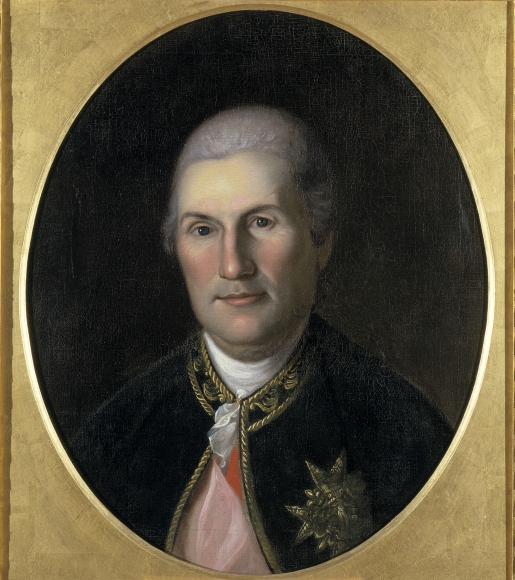
Jean-Baptiste Donatien de Vimeur, comte de Rochambeau
French nobleman and general (1725–1807) who commanded the 1780 French expeditionary force to America, cooperated with Washington at Yorktown, survived the Revolution, and was later honored by Napoleon.
Jean-Baptiste Donatien de Vimeur, comte de Rochambeau (1 July 1725 – 10 May 1807) was a French nobleman and professional soldier whose long career spanned dynastic wars in Europe and the revolutionary era. He is most widely remembered for leading the French Expédition Particulière to support the American struggle for independence and for the pivotal role his troops played in the campaign that ended with the British surrender at Yorktown.
Image gallery
5 Images


Military career and campaigns
Rochambeau entered military service in the mid‑18th century and served under the ancien régime of Louis XV. He fought in the major continental conflicts of his generation, including the War of the Austrian Succession, and took part in sieges and operations at places such as Antwerp and Namur. Over decades of service he developed a reputation for careful organization, attention to training and logistics, and the ability to lead large bodies of troops in combined operations.
Role in the American Revolution
In 1780 Rochambeau was appointed to command the French expeditionary corps sent to North America. The force, often called the Expédition Particulière, numbered several thousand soldiers and arrived to reinforce the rebel Continental Army during the American Revolutionary War. Rochambeau established lines of cooperation with George Washington and American political and military leaders and worked to coordinate movements, supplies and strategy.
In 1781 Rochambeau and Washington combined their forces for a campaign in Virginia. Close cooperation with the French fleet under Admiral de Grasse, which controlled the Chesapeake approaches, allowed allied forces to invest the British army under General Cornwallis at Yorktown. The siege ended with Cornwallis's surrender, a turning point that precipitated negotiations that ultimately led to American independence. Historians emphasize Rochambeau's role in planning the joint operation and in ensuring that French troops were disciplined and effective partners in the coalition.
Revolution, imprisonment, and later life
After returning to France, Rochambeau lived through the turbulent years of the Revolution. During the period known as the Reign of Terror he was arrested and faced the danger of execution by the guillotine, but he was not executed and was released following the fall of Maximilien de Robespierre. He continued to be respected for his past service and in 1803 Napoleon Bonaparte awarded him the Legion of Honor in recognition of his long military career and the services he had rendered to France (Napoleon).
Legacy and significance
- Rochambeau is remembered in both France and the United States for his leadership in the allied victory at Yorktown and for fostering Franco‑American military cooperation.
- His command is often cited as an example of effective expeditionary leadership: careful logistics, coordination with local forces, and the planning required for large joint operations.
- Monuments, place names and commemorations in the United States and France honor his contribution to the American cause and to the history of transatlantic alliance.
Rochambeau's career reflects the complexities of an age when European officers served in dynastic wars and then faced revolutionary change at home. His successful cooperation with American commanders and with the French navy at Yorktown remains a frequently cited case in studies of coalition warfare and civil‑military relations.
Questions and answers
Q: Who was Jean-Baptiste Donatien de Vimeur, comte de Rochambeau?
A: Jean-Baptiste Donatien de Vimeur, comte de Rochambeau was a French nobleman who served as a general under Louis XIV and took part in the War of the Austrian Succession.
Q: What wars did Rochambeau participate in?
A: Rochambeau participated in the War of the Austrian Succession and the American Revolutionary War.
Q: How did Rochambeau contribute to the American Revolutionary War?
A: Rochambeau helped George Washington with an army of 6,000 people during the American Revolutionary War.
Q: What was Rochambeau's involvement in the Reign of Terror?
A: During the Reign of Terror, Rochambeau was sentenced but not executed on the guillotine.
Q: Was Rochambeau's life in danger during the Reign of Terror?
A: Yes, Rochambeau's life was in danger during the Reign of Terror as he was sentenced to death.
Q: Who freed Rochambeau after the Reign of Terror?
A: Rochambeau was freed after the fall of Maximilien de Robespierre.
Q: What title was awarded to Rochambeau by Napoleon?
A: Napoleon awarded Rochambeau a title of the Legion of Honor in 1803.
Related articles
Author
AlegsaOnline.com Jean-Baptiste Donatien de Vimeur, comte de Rochambeau Leandro Alegsa
URL: https://en.alegsaonline.com/art/49698