
Applesauce
Applesauce (or apple sauce) is a mashed, stewed apple purée used as a condiment, snack, ingredient and baby food. It varies in texture, sweetness and seasoning and is sold both homemade and commercially.
Applesauce (often written as "apple sauce") is a soft purée made by cooking apples until tender and then mashing, sieving or blending them into a spreadable sauce. It can be prepared from peeled or unpeeled fruit and finished smooth or left coarse with visible pieces. Plain applesauce contains only apples and water, while many recipes add spices such as cinnamon, sweeteners like sugar or high‑fructose corn syrup, or a little acid (lemon juice) to balance sweetness.
Image gallery
5 Images
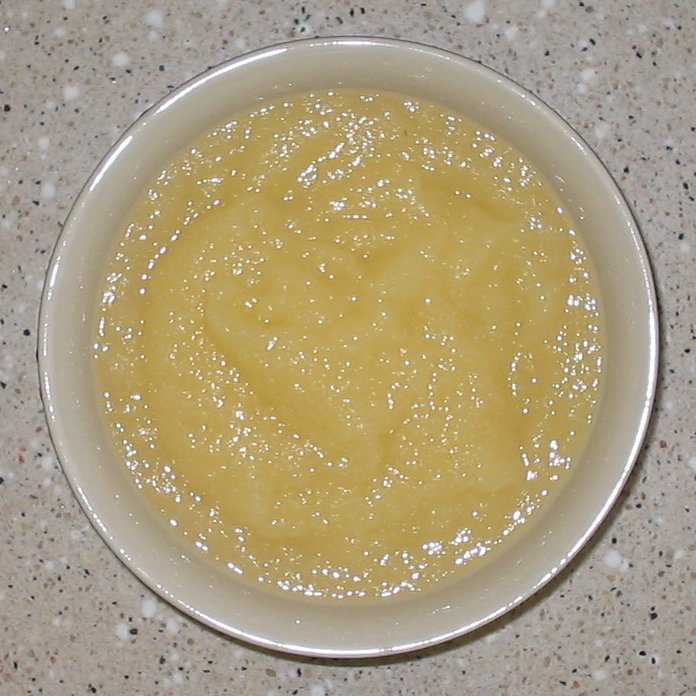


Characteristics and preparation
Basic preparation involves stewing chopped apples in a small amount of liquid until they break down. Modern methods range from a simple saucepan and wooden spoon to pressure cookers, slow cookers and electric appliances; the final texture is controlled by mashing, using a food mill, or blending. Variants are labeled as "smooth," "chunky" or "sauce" and may include extra ingredients such as apple peels for texture, spices for flavor, or sugar for sweetness. Commercially produced applesauce is typically pasteurised and packed into jars or single‑serve cups for shelf stability.
Uses and culinary pairings
Applesauce is versatile: it is eaten alone as a snack, served with porridge, pancakes or cakes, and used as an accompaniment for roasted or fried pork in many culinary traditions. In some regions, applesauce is the customary condiment for ham, gammon or pork chops. Bakers sometimes substitute applesauce for fat to reduce calories and add moisture to baked goods. Because it is soft and mild, applesauce is commonly used as a first solid food for infants and as a simple option for people who have difficulty chewing.
Nutrition, storage and commercial forms
Plain applesauce provides dietary fiber, small amounts of vitamins and minerals and a mostly carbohydrate energy content from natural fruit sugars; sweetened commercial varieties increase sugar and calorie content. Homemade applesauce can be made with little or no added sugar, or preserved by canning for long‑term storage. Industrial production involves heating, homogenizing and sealing to achieve consistent texture and safety.
History, regional traditions and distinctions
Making heated fruit purées is an old practice in regions where apples are abundant; applesauce and related preserves evolved as ways to use harvests and provide soft food through the year. Applesauce differs from apple butter (which is cooked longer and more concentrated), apple purée (often used for culinary ingredients), compote (which contains larger fruit pieces and sometimes sugar) and chutneys (which are spiced and vinegary). Regional serving traditions vary: in some European cuisines, applesauce is paired with savory pork dishes, while in others it appears mainly as dessert or breakfast fare.
Further reading and resources
- Applesauce basics and recipes
- Methods for stewing and cooking apples
- Using peeled or unpeeled apples
- Common spices for applesauce, including cinnamon
- Sweeteners and their effects
- Commercial sweetening practices
- Texture and processing options
- Where to buy prepared applesauce
- Applesauce as a snack
- Feeding applesauce to children
- Applesauce for infants and weaning
- Regional uses in the United Kingdom
- Pairing applesauce with ham
- Serving applesauce with pork
- Applesauce and gammon traditions
Note: This article describes general characteristics and uses of applesauce. Recipes, nutritional content and traditional pairings vary by region and personal preference.
Questions and answers
Q: What is apple sauce?
A: Apple sauce is a sauce made from stewed and mashed apples, which can be fine or coarse textured and include large pieces of apple.
Q: Can both peeled and unpeeled apples be used to make apple sauce?
A: Yes, both peeled and unpeeled apples can be used to make apple sauce.
Q: What are some additives that can be used to make apple sauce?
A: Different spices such as cinnamon can be added to apple sauce, and sugar or high fructose corn syrup can be used to sweeten it.
Q: Is apple sauce easy to make at home?
A: Yes, apple sauce is easy to make at home, and it is also sold ready-made in supermarkets.
Q: Who commonly eats apple sauce?
A: Apple sauce is a common food or snack for children and people who have problems eating solid food.
Q: Why do parents often feed apple sauce to their babies?
A: Parents often feed apple sauce to their babies because teeth are not needed to eat it.
Q: In which country is apple sauce normally used as a sauce for ham, pork, and gammon?
A: In the United Kingdom, apple sauce is normally used as a sauce for ham, pork, and gammon.
Related articles
Author
AlegsaOnline.com Applesauce Leandro Alegsa
URL: https://en.alegsaonline.com/art/4986
Sources
- simple.wiktionary.org : apple sauce
- commons.wikimedia.org : Apple sauce
- books.google.com : The good housekeeper: or, The way to live well and to be well while we live : containing directions for choosing and preparing food, in regard to health, economy and taste
- greatist.com : "Healthier Ways to Bake Without Butter or Oil"
- wilton.com : "Baking Alternatives - Reducing Fat in Your Favorite Baked Goods Recipes"
- recipes.howstuffworks.com : "HowStuffWorks "Ultimate Guide to Low-fat Baking""
- huffingtonpost.com : "5 Ingredients To Substitute For Eggs In Vegan Baking"