
Aquarius (constellation): the Water-Bearer of the sky
Aquarius is a zodiac constellation traditionally depicted as a water‑carrier. It contains several named stars and deep‑sky objects, has roots in ancient myth, and is one of Ptolemy's 48 constellations.
Overview
Aquarius is a constellation of the zodiac traditionally represented as a man pouring water from a vessel. The name is Latin for "water‑carrier" or "cup‑carrier" and the familiar glyph (♒) symbolizes flowing water. Aquarius is one of the 48 constellations cataloged by the ancient astronomer Ptolemy and remains one of the 88 modern constellations officially recognized today. As a zodiacal constellation, the ecliptic—the Sun's apparent path—passes through its region, which connects Aquarius culturally to calendars and seasonal observations in many societies. Constellation references and star charts place Aquarius between the neighboring constellations Capricornus and Pisces and near Pegasus.

Image gallery
6 Images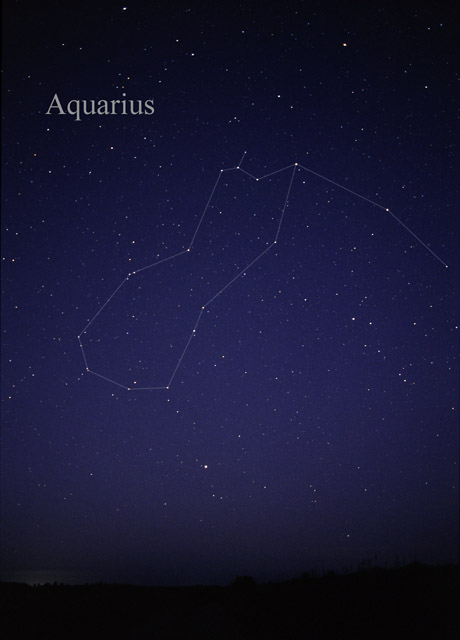





Appearance and notable objects
Visually, Aquarius is a large but relatively faint pattern lacking a single very bright star. Several stars with Arabic names form its traditional figure; among them are stars commonly called Sadalmelik and Sadalsuud. The constellation contains numerous interesting deep‑sky objects, including globular clusters and small planetary nebulae, which are targets for amateur telescopes. It also hosts portions of the Milky Way's star fields, so binoculars can reveal a rich background of stars in certain directions.
Myth and cultural history
Many myths explain the water‑carrier image. In Greek tradition Aquarius is often associated with Ganymede, a youth taken to Olympus to serve as cupbearer to the gods; this tale emphasizes the pouring of sacred water or nectar. Other cultures connected the figure to rivers, rainfall, or seasonal floods. For example, some scholars have suggested links between Aquarius imagery and the annual inundation of major rivers; alternative hypotheses propose Egyptian associations with the Nile and its life‑giving waters. A 20th‑century writer even interpreted the constellation as a river god related to the Nile, illustrating the variety of cultural readings that developed across time and place. These stories reflect how constellations were used as mnemonic devices for agricultural and ritual calendars.
Astronomical context and classification
From a modern astronomical standpoint Aquarius is defined by precise boundaries established in the 20th century, which allow astronomers to assign coordinates and identify objects unambiguously. The Sun, Moon and planets periodically pass through Aquarius's boundaries because it lies on the ecliptic; this is the basis for its role in astrology, though astronomical and astrological uses differ significantly. Historically important cataloging work placed Aquarius among the classical constellations documented by scholars such as Ptolemy, and later star maps refined its depiction and star names. For cultural and historical context see broader treatments of the zodiac and ancient sky lore.
Notable facts, distinctions and modern relevance
- Aquarius lacks extremely bright stars but is extensive in area, making it prominent on wide star charts rather than in single‑star observation.
- The constellation is associated with the mythic figure of Ganymede in Greek accounts and with water deities or river symbolism in other traditions.
- Aquarius's depiction has been interpreted in various cultures, including suggestions of Egyptian connections to the Nile, though such theories are part of larger scholarly debates about ancient sky lore.
For star maps and additional visual guides consult modern atlases and online resources. Historical summaries can be found in works on classical astronomy and studies of constellation mythology; more specialized discussions address how different cultures pictured the water‑bearer and used its rising and setting to mark seasons. See also related constellations and the broader Latin and linguistic heritage of star names up to contemporary star catalogs (comparative cultural studies provide interpretations across regions).
Further reading and observational charts are available in astronomy guides and planetarium resources; introductory materials on constellations can help locate Aquarius on the sky and identify its brighter stars and deep‑sky targets for amateur observation. For concise reference, consult an up‑to‑date star atlas or educational website that covers the Capricornus–Pisces neighborhood and zodiacal constellations.
Note: distinctions between astronomical and astrological uses of Aquarius are important—astronomy treats it as a fixed sky area, while astrology assigns symbolic personality and calendrical significance according to different systems.
Questions and answers
Q: What is the Latin name for Aquarius?
A: The Latin name for Aquarius is "water-carrier" or "cup-carrier".
Q: Who listed Aquarius as one of 48 constellations?
A: The astronomer Ptolemy listed Aquarius when he made a list of 48 constellations.
Q: Who was Ganymede in relation to the constellation Aquarius?
A: Ganymede was a human at one time and was also known as the Water Bearer, a servant to the gods. He was also the son of King Tors.
Q: What story is associated with Ganymede and Aquarius?
A: There is a story of Ganymede when he was watching over his father’s sheep, he was captured and held captive by the Goddess of the Dawn. In another version of the story, Zeus is captured by Ganymede. Than Zeus calls over his pet eagle to grab Ganymede and take him to the top of Mount Olympus and serve as a servant to the gods.
Q: What did Robert Graves think about Aquarius' origin?
A: Robert Graves thought that the origin of Aquarius was in Egypt. He thought that Aquarius represented the Nile River and that it was water pouring out from its jar which created it.
Q: Where does Aquarius sit in relation to other constellations?
A: As a constellation, it comes after Capricornus just by one month and is south of Pegasus and north of Pisces, which is considered to be brightest star in night sky.
Related articles
Author
AlegsaOnline.com Aquarius (constellation): the Water-Bearer of the sky Leandro Alegsa
URL: https://en.alegsaonline.com/art/5092
Sources
- astro.wisc.edu : "Aquarius"
- davidmalin.com : "Constellation of Aquarius"
- faculty.pepperdine.edu : faculty.pepperdine.edu/dgreen/
- domeofthesky.com : domeofthesky.com/clicks/constlist.html